
Tony Hsieh, the visionary founder of Zappos, once said:
“Customer service shouldn’t just be a department. It should be the entire company.”
I believe he was right. But before a company can become customer service, it needs to know what it’s actually working toward. Without clear customer service objectives, even the most passionate support team is just reacting, putting out fires instead of building something that lasts.
Well-defined customer service goals and objectives give your team direction. They set expectations, align efforts across departments, and help everyone focus on outcomes that actually matter, whether that’s improving response times, boosting customer satisfaction, increasing first-contact resolution, or building stronger customer relationships.
In this post, I’ll walk you through what meaningful customer service objectives look like, why so many businesses get them wrong, and how setting the right ones can help your team deliver support that doesn’t just solve problems, but creates lasting customer loyalty.
What Are Customer Service Objectives?
Customer service objectives are the specific goals a business sets to improve how it supports and interacts with customers. These objectives act as a roadmap for support teams, helping them focus on measurable outcomes like faster response times, higher customer satisfaction, and more efficient issue resolution.
They go beyond simply “providing good service.” Clear customer service objectives define what success looks like and give teams a structured way to track performance.For example, a company might aim to reduce ticket resolution time, improve first-contact resolution rates, or increase customer retention through better support experiences. Achieving these goals often starts with adopting the right ticketing software and dedicated help desk tools that can track, prioritize, and measure every customer interaction against defined benchmarks.
More importantly, customer service objectives align the entire team around a shared purpose, and the cost of not having that clarity is real. According to a study by PwC in 2025, 52% of consumers stopped buying from a brand altogether after a bad experience. Not a pattern of failures. Just one instance of falling short.
When agents know exactly what they’re working toward, those moments become far less frequent because the whole team is moving in the same direction, prioritizing the right things, and delivering the kind of support that keeps customers coming back.
What Are the Most Popular Customer Service Objectives?
Customer support objectives give support teams a clear direction and help turn everyday interactions into measurable success. Here are the 20+ most common objectives and goals businesses focus on to improve support quality and strengthen customer relationships.
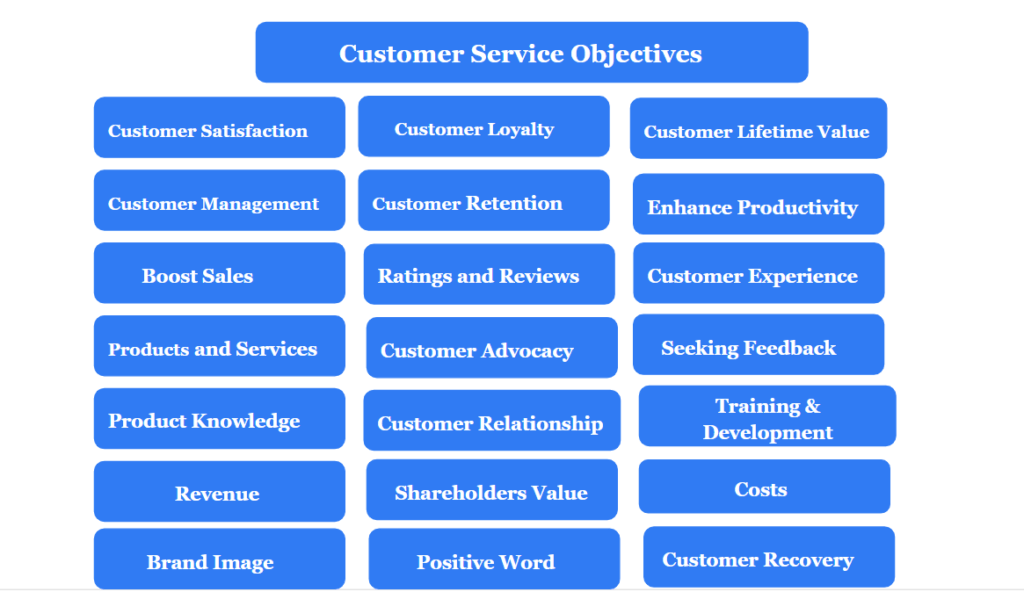
1. Enhance Customer Satisfaction
Customer satisfaction is the most important business objective and driving force behind all the achievements during the lifecycle of a business. Customer satisfaction can be measured by various means, such as surveys, feedback, etc. It is essential to evaluate customer feedback to unveil essential takeaways from it and implement them into business strategies.
It is also important to receive customer feedback using the right method. Depending on your customers and the nature of the service you offer, they may be more open to providing feedback one way over another. For example, some customers may prefer to be interviewed or asked for feedback over a phone call. Others might prefer being asked specific questions through a detailed and well-designed questionnaire. Choosing the right avenue is integral to receiving quality input from them.
The feedback collected via these channels, along with the recurring complaints raised by customers, can be used to address the flaws in the system and implement new strategies to enhance customer satisfaction.
2. Build Customer Loyalty
When a customer is happy with the service, he/she will come back and make regular purchases. This builds customer loyalty. A business can retain its customers by offering superior quality customer service. Customer loyalty can be measured in terms of regular/loyal customers who make regular purchases with a brand.
To build customer loyalty, a business can offer upgrades or exclusive discounts to customers to add value to their services.
3. Increase Customer Lifetime Value
Customer Lifetime Value refers to the amount of revenue that is likely to be generated by a customer during his/her entire life with the brand. You can increase the lifetime value of customers by offering the best customer service. You can design specific strategies with the help of the data you collect throughout the customer journey. You can collect data via surveys, chat history, support tickets, and self-help documentation.
4. Automate Repetitive Support Tasks With AI
One of the most practical customer service goals a team can set today is getting out of the business of doing the same things manually, over and over again. Repetitive tasks like answering the same FAQs, routing tickets, sending follow-up notifications, etc., quietly eat away at agent time, energy, and morale.
Automation breaks that cycle. By identifying the highest-volume, lowest-complexity tasks and automating them, support teams free up significant time to focus on work that actually requires human judgment, empathy, and expertise.
This is where an AI-powered help desk tool makes a real difference. ProProfs Help Desk, for instance, automatically summarizes long customer complaint threads so agents can grasp the issue instantly, suggests responses based on the incoming query, and lets agents prompt the AI to craft personalized replies in seconds. On top of that, tickets are auto-routed to the right agent so nothing falls through the cracks and no one gets overwhelmed.
Here is a short video that shows how AI help desk software works:
5. Improve Customer Retention
When customers have a problem with your products/services, they report it. The response of the support team decides whether the customers are delighted or disappointed. Hence, good customer service can satisfy the customers, which, in turn, leads to their retention.
Involving customers throughout the process of solvent extraction and educating them via self-help documentation helps in formulating effective strategies for customer retention. Read this blog if you wish to learn more about how to build a customer retention strategy
6. Boost Customer Recovery
Great customer service aims at converting a dissatisfied customer into a happy customer. When a customer is unhappy with your company’s product/service, you should take it as an opportunity to present them with the outstanding services that your business has to offer them.
The customer recovery process is also an opportunity to prove to the customer that he/she is valued, and you are ready to give them some special perks. You should resolve their issues in a friendly and diligent manner to ensure their recovery.
7. Enhance Productivity
The best customer service work objective is related to achieving enhanced productivity. Customer service productivity is measured in terms of calls handled in an hour or cases resolved in a day by the team.
You should train your service reps to solve most of the minor issues in a single reply. This enhances productivity considerably.
8. Boost sales
Customer service has a direct and indirect relationship with sales. Sometimes, potential customers may reach out to the agents to get more details about the company’s products/services. In such a scenario, the agents can enhance sales by convincing the customers to make a purchase.
Apart from the direct impact on sales, good customer service also impacts sales indirectly by satisfying the customers. When customers are satisfied, they’ll buy more products from the company and may even refer their friends.
9. Improve Ratings and Reviews
Potential customers often assess the ratings and reviews given to a company by its customers. A company with positive reviews and impressive ratings has more chances of acquiring new customers.
Excellent customer service ensures that the existing customers are happy with the company. They are most likely to give positive reviews and good ratings. Hence, customer service should aim at enhancing the ratings and reviews of the company.
10. Positive Customer Experience
A positive customer experience is the basic foundation of a successful business. It’s one of the most important factors that make or break a business. To frame a successful strategy for a positive customer experience, businesses should analyze the customer data from the support tools and integrate key takeaways from it.
Delightful customer experience creates a recurring effect and keeps the customers coming back for more business. These customers don’t hesitate to refer the brand to others, thereby helping in generating more business.
11. Improvement in the Existing Products and Services
All businesses should have a customer-centric model. When customers are kept at the heart of the business, the products and services turn out to be tailor-made for them. Through customer service, your representatives can understand the needs and pain points of customers. This gives valuable customer-related insights that can be used to improve existing products.
Furthermore, customer service procedures can also be improved to identify the problems of the customers effectively and resolve them on time. You can integrate help desk management software in your business to improve customer service.
12. Enhanced Customer Advocacy
Companies these days are stressing a lot on customer advocacy as it is turning the tide in favor of businesses. Appointing customer advocates helps businesses to frame customer-centric strategies for enhanced customer support and marketing. The customer advocates should be given targets related to ensuring customer satisfaction by taking feedback from the customers and improving the products based on the suggestions given by customers.
13. Seeking Feedback
To deliver a top-notch customer experience, you must know which areas need improvement. Seeking feedback from the customers helps in identifying grey areas, which can then be improved. Hence, constructive feedback helps in improving customer service.
Customer feedback can be collected via surveys, online questionnaires, emails, phone calls, net promoter score surveys, etc.
14. Product Knowledge
The customer service objectives related to product knowledge include upgrading the knowledge and skills of your employees. You should aim at offering training and certifications to the customer service team so that they are well-equipped to help the customers.
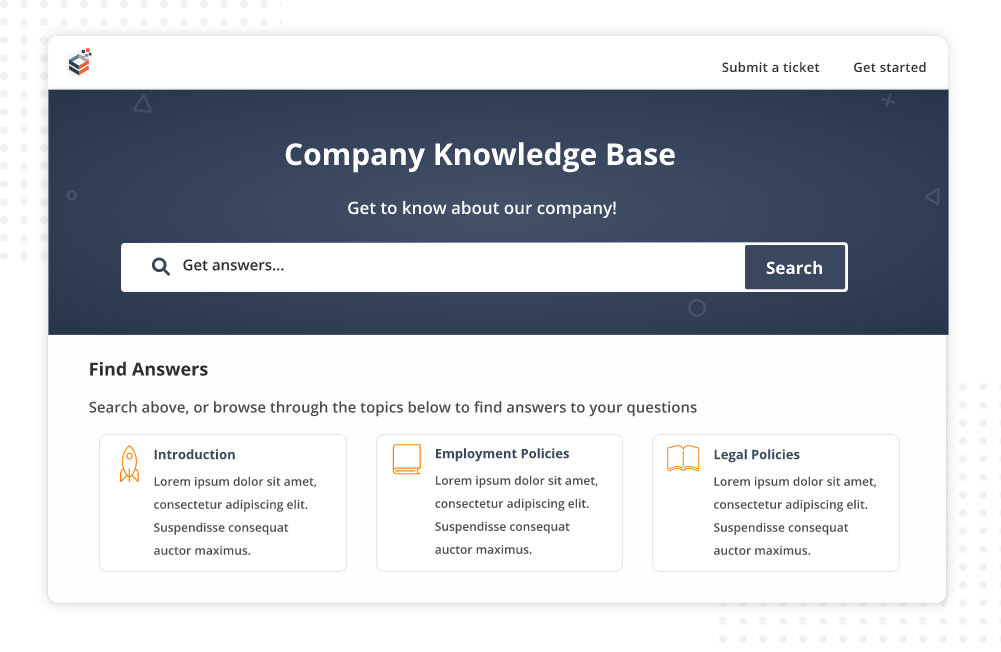
Also, having a well-placed internal knowledge base in place can fully equip your employees to efficiently handle customer concerns and create a delightful experience for your customers.
15. Fostering Customer Relationships
You should also set customer service work objectives that foster relationships with the customers. For instance, you can set a target for your account executive to call the customers from time to time and understand their problems. This fosters customer relationships. Sending emails on special occasions to customers is another way to build stronger bonds with customers.
You can also send special offers directly to customers’ inboxes to underscore their importance to your business. These strategies add value to the customer experience.
16. Training and Development
You should emphasize regular training and development of your service team to ensure good quality customer service. You can provide training on soft skills to the service reps to keep them on track with the industry’s latest customer service trends.
A great strategic move would be to model a support enhancement training program based on the feedback received from customers. Remember to appreciate the reps when they manage to delight customers.
17. Increase Revenue
Profits are essential for the success of any organization. You can boost the profitability of your business by enhancing its revenues. For this, you can define a revenue target for different departments/areas, including customer service.
Tracking the buying patterns of customers can be a way to understand the points where customers might be willing to spend extra. Accordingly, you can formulate revenue strategies to increase profitability.
18. Grow Value for Shareholders
The topmost customer service team goals example is related to growing the value for the shareholders. You should define the profits that your organization intends to increase for all the stakeholders, owners, and shareholders. Providing exceptional customer service enhances the benefits for all stakeholders.
And if you think you can do without stakeholders in your business, you might be wrong. You need stakeholders for financial and practical support. These people are the well-wishers of the company and form the core support system of a business.
19. Manage the Costs Effectively
A business rotates between the profit and loss margins. To keep businesses thriving, revenue and expenses should be maintained. This can be done by managing the cost. Good customer service can help with cost management in many ways.
Using a knowledge base for self-help for customers and agents can help in reducing the expenditure incurred in maintaining an extensive support team. Proactive problem-solving can reduce the number of customer issues, thereby reducing the requirement for support staff. There are several other ways in which customer service can help in maintaining costs.
20. Enhance Brand Image
You should also set targets related to enhancing your brand reputation. If you offer top-notch services to the customers, it will automatically elevate the brand’s reputation. On the other hand, poor service can deteriorate the reputation of the brand.
Customer reviews are a great way of building a positive brand image. Once you are sure that your customers are leaving on a happy note, you can ask them for reviews.
21. Positive Word of Mouth
You should set a target to deliver good customer service, resulting in loyal, happy customers who won’t hesitate to refer your brand to friends and family. Satisfied customers would post their experience on social media or create product descriptions, which is an excellent way of word-of-mouth marketing.
How to Measure Customer Service Objectives: Key KPIs
Setting customer service objectives is only half the job; the real value comes from measuring whether you’re actually meeting them.
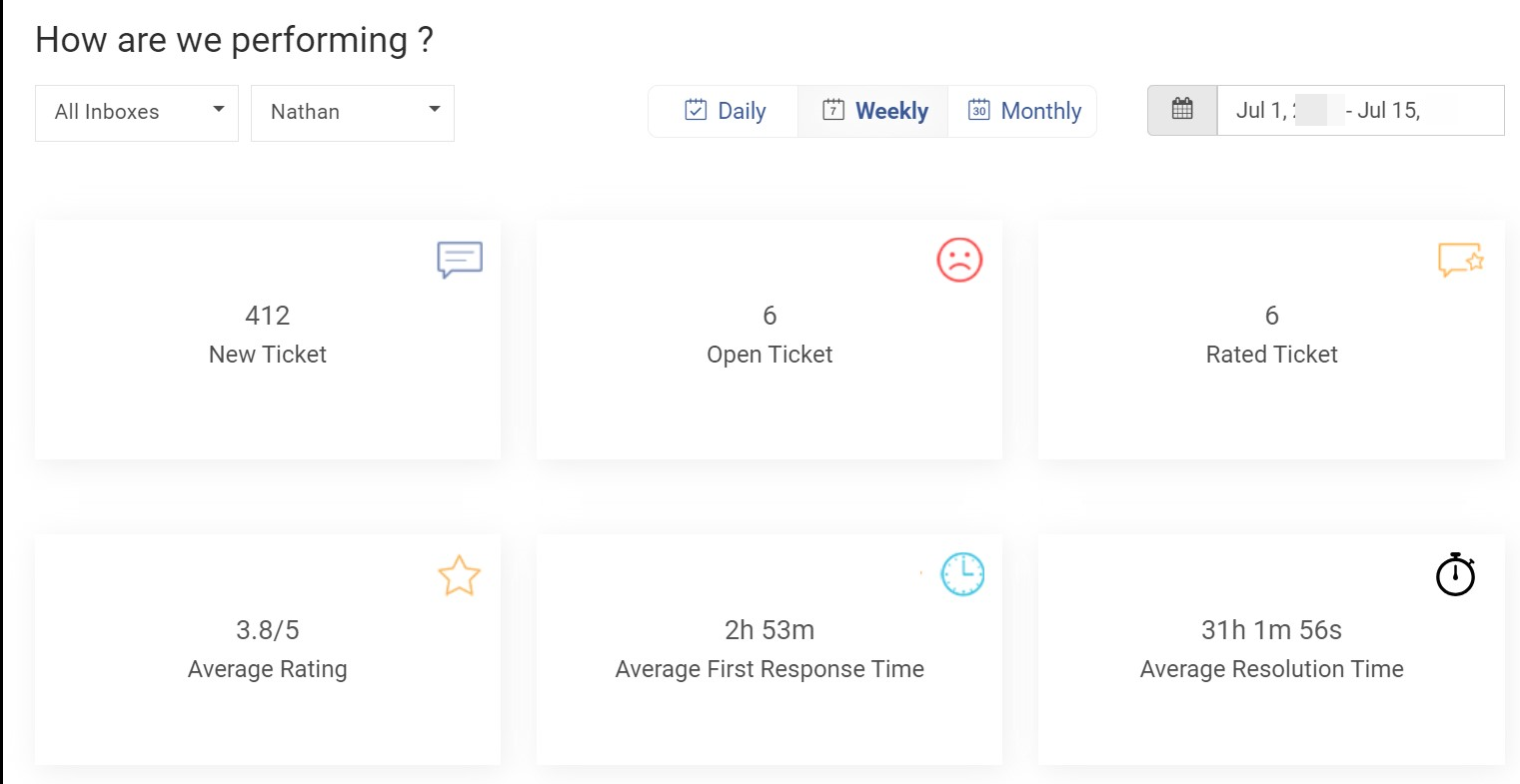
Tracking the right customer service KPIs helps teams evaluate performance, spot gaps, and continuously improve the customer experience.
Here are some common help desk metrics that will help you measure and improve each goal:
| Customer Service Objective | Key KPI to Measure It | What It Tells You |
|---|---|---|
| Improve Response Speed | First Response Time (FRT) | How quickly agents respond to customer inquiries |
| Resolve Issues Faster | Average Resolution Time | The average time taken to fully resolve a ticket |
| Increase Customer Satisfaction | CSAT Score | How satisfied customers are with the support they received |
| Build Customer Loyalty | Net Promoter Score (NPS) | How likely customers are to recommend your business |
| Improve First-Time Resolution | First Contact Resolution (FCR) | Percentage of issues resolved in the first interaction |
| Reduce Ticket Backlogs | Open Ticket Volume | Number of unresolved tickets at any given time |
| Enhance Agent Productivity | Tickets Resolved per Agent | How efficiently agents are handling workloads |
| Minimize Escalations | Ticket Escalation Rate | How often issues require higher-level intervention |
| Improve Service Quality | Quality Assurance (QA) Score | How well agents follow service standards |
| Increase Customer Retention | Customer Retention Rate | How well support contributes to keeping customers |
| Improve Self-Service Success | Knowledge Base Deflection Rate | Percentage of issues resolved through self-service resources |
| Reduce Customer Effort | Customer Effort Score (CES) | How easy it was for customers to get help |
| Improve Channel Efficiency | Channel-Specific Resolution Rate | Performance across email, chat, phone, or social support |
| Boost Agent Availability | Average Handle Time (AHT) | Time spent managing each customer interaction |
| Strengthen SLA Compliance | SLA Achievement Rate | How consistently your team meets promised service timelines |
What Are Some Powerful Strategies to Enhance Customer Service?
86% of millennials say they are influenced by negative reviews when purchasing a product or service. Hence, enhanced customer service has become the need of the hour. If you intend to enhance your customer service, then you can follow some tried and tested customer service strategies:
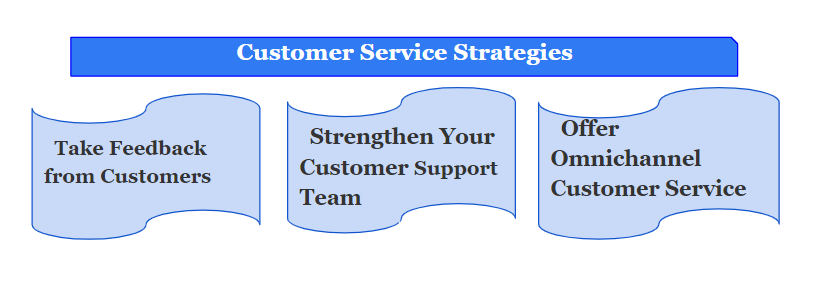
1. Take Feedback from Customers
Customers are at the core of every business, and their needs matter a lot. You should understand your customers’ needs and pain points. This would allow you to deliver customer service that caters to the customers.
You can create surveys to ask customers various questions and collect their feedback via multiple channels:
- Help Desk Satisfaction Survey
- Online Questionnaires
- Net Promoter Score Surveys
- Emails
- Phone Calls
In addition, you can create a complaint system so your customers can raise their issues.
Customer feedback helps you identify the positives and negatives of your services. You can modify your support system accordingly.
2. Strengthen Your Customer Support Team
Your service team represents your business while interacting with the customers. So, they should be trained to represent a positive brand image and gratify the customers at all times. You should hire the right candidates for your team who possess customer service qualities, such as empathy, knowledge, effective communication skills, and problem-solving skills.
There should be a process for performance appraisals, which can be used as a means to appreciate the work of outstanding reps. This will motivate all the employees to deliver superior quality customer service.
3. Offer Omnichannel Customer Service
The best way to attract customers and offer extraordinary experiences is by offering omnichannel service and support. You should ensure that your customer support pages are compatible with mobile phones so that customers can get their issues resolved on the go.
You should meet customers wherever they reach out, via email, live chat, social media, or web forms, from one unified inbox. The goal should be to deliver fast, consistent support across every channel without switching between tools.
FREE. All Features. FOREVER!
Try our Forever FREE account with all premium features!
Turn Customer Service Objectives Into Measurable Results
Customer service objectives aren’t just performance targets; they’re the foundation of exceptional support experiences. In my experience, when businesses set clear, measurable goals, they create stronger alignment across teams and give agents a clear sense of direction.
The key, however, is consistency. Setting objectives is only the first step; regularly tracking progress and making data-driven improvements is what leads to long-term success. By measuring the right KPIs and refining processes over time, businesses can create faster, more efficient, and more customer-centric support experiences that build trust and loyalty.
This is where tools like ProProfs Help Desk can make a real difference. With built-in reporting for metrics like response time, resolution time, ticket volume, and CSAT, teams can easily track how well they’re meeting their customer service objectives. Its automation capabilities, combined with AI-powered features like ticket summarization and response suggestions, help agents work faster and smarter, making it easier to continuously improve support performance and achieve service goals over time.
Frequently Asked Questions

How do customer service objectives differ from customer service goals?
Goals are broad, directional ambitions like "improve customer satisfaction," while objectives are the specific, measurable actions taken to achieve them. Think of goals as the destination and objectives as the turn-by-turn directions.
What are the most common mistakes when setting customer service objectives?
The biggest pitfalls are setting vague targets, focusing only on speed while ignoring quality, and failing to account for agent workload or customer effort. Objectives that can't be measured are also objectives that can't be improved.
How do you measure customer service objectives?
Key metrics include CSAT (Customer Satisfaction Score), NPS (Net Promoter Score), First Contact Resolution rate, Average Handle Time, and customer retention rate. The right mix depends on what your team is specifically trying to improve.
How often should customer service objectives be reviewed?
Most teams benefit from reviewing objectives quarterly, frequently enough to catch what isn't working, but not so often that targets feel constantly shifting. Monthly check-ins on the metrics that underpin those objectives are also a strong practice.
Can customer service objectives directly impact revenue?
Absolutely! Satisfied customers spend more, stay longer, and refer others. Setting objectives around retention and experience quality directly contributes to long-term revenue growth, making customer service as much a growth function as a support one.
How do you align customer service objectives with broader business goals?
Start by understanding the company's top priorities, whether that's growth, retention, or market expansion, and work backward to define what the support team needs to deliver to contribute to each. Objectives that don't connect to business outcomes rarely get the attention or resources they deserve.
FREE. All Features. FOREVER!
Try our Forever FREE account with all premium features!

 We'd love your feedback!
What did you like & how can we make it even better?
 Thanks for your feedback!
 Ask Your Question
Have a question? Get expert help to make your decision easier.