


The complaint you ignored last Tuesday is why someone is reading your competitor’s website right now.
I learned this the hard way: businesses don’t struggle because customers complain, they struggle because complaints are scattered, delayed, or simply ignored. One frustrated customer might send an email, another leaves a social media comment, and someone else calls support, while teams scramble to piece everything together.
That’s where complaint management software changes the game. Instead of treating complaints as isolated tickets to close, these tools help businesses organize conversations, speed up resolutions, and uncover patterns that point to larger product or service problems.
In this guide, I’ll walk you through the 12 best complaint management software solutions, comparing their features, strengths, pricing, and ideal use cases, so you can find the tool that fits your business needs and prevents customer dissatisfaction from becoming customer loss.
What Is Complaint Management Software?
Complaint management software is a tool that helps businesses collect, track, manage, and resolve customer complaints from multiple channels, such as email, phone, live chat, social media, and web forms. It centralizes complaints in one place, making it easier for teams to assign issues, monitor progress, and ensure timely resolution.
Beyond resolving tickets, complaint management software also helps businesses identify recurring problems, monitor service quality, and improve customer satisfaction. Many modern tools include features like automation, reporting, collaboration tools, and analytics to turn customer complaints into valuable business insights.
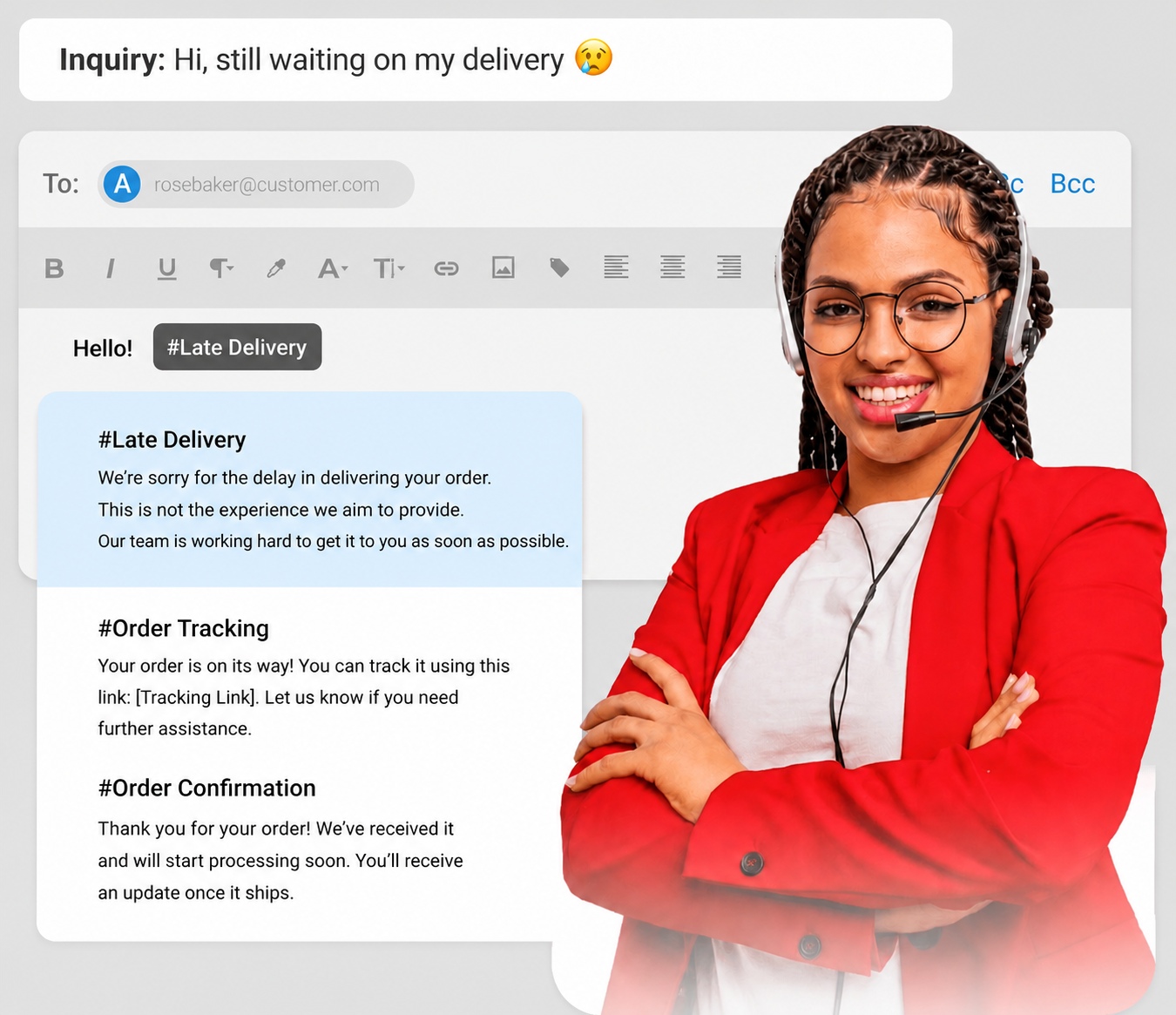
Most support teams use this tool to create and store hundreds of customer complaint response templates, also known as canned responses. These templates could be used for handling complaints, sharing follow-ups, issuing refunds, etc.
12 Best Complaint Management Software to Consider This Year
To make it easier for small, medium, and large companies to handle customer complaints, I’ve created this detailed list. While I’ve used most of these tools on my own, some were recommended by peers, and others were discovered after days of research on software review platforms.
Feel free to explore their unique features, pros and cons, and subscription plans.
1. ProProfs Help Desk – Easiest AI Help Desk for Shared Inboxes, Ticket Workflow Automation, and Scaling Support Teams
As free complaint management software, ProProfs Help Desk impressed me with its easy-to-use interface and powerful AI help desk capabilities.
I really like the customer intent analysis feature, which helps me decode lengthy and detailed complaints in seconds. Its AI-driven response suggestions enable my agents to reply quickly and accurately, reducing the time needed to address complex issues.
The integrated knowledge base lets customers self-serve on common questions, like returns, refunds, and billing, cutting down on complaint volume before it even reaches an agent. Besides third-party platforms, it tightly integrates with sibling tools – ProProfs Knowledge Base and ProProfs Chat – helping you provide 360° customer support.
Pros:
- AI resolves routine complaints automatically, freeing agents for escalations
- Canned responses can be created for common customer complaints
- Shared inbox to access multiple email inboxes like support@, complaints@, help@, etc.
- ProProfs Live Chat, Knowledge Base & CSAT for a complete solution
- Awesome 24/7 human support via phone, chat, and knowledge base
Cons:
- Dark user interface option is not available
- Cloud-only access; no on-premise version
Pricing:
A free plan is available for growing teams. Paid plan starts at $19.99/user/month
2. ProProfs Chat – Best for 24/7 Delightful Customer Support with AI Chatbots
Handling customer complaints well is what separates businesses that retain customers from those that lose them quietly. That’s why ProProfs Chat has become my go-to complaint management tool. Its AI-powered chatbot captures and responds to complaints the moment they come in, around the clock, without making customers wait or repeat themselves.
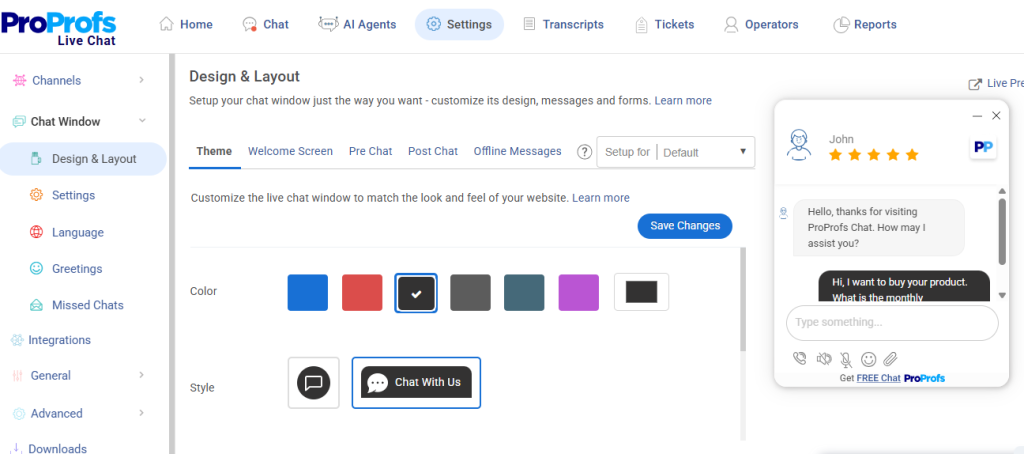
The ready-to-use templates for complaint intake, escalation routing, follow-up confirmations, and satisfaction feedback made deployment fast. What sets it apart is that you can train the AI directly on your help center or product documentation, so it resolves known issues on the spot rather than just logging them. It stops feeling like a widget and starts feeling like a frontline support rep.
On the agent side, ProProfs Chat keeps complaint queues organized and nothing falls through the cracks. Real-time visitor tracking, intelligent routing to the right department, canned responses for common resolutions, and full chat transcripts give agents the context they need to close complaints fast.
Pros:
- Proactive chat invitations to boost interaction and conversion.
- Train AI chatbots using your website or help center data for highly accurate responses
- Real-time visitor tracking for timely engagement
- Offer 360-degree support with the Customer Delight Suite (Live Chat + Help Desk + Knowledge Base + Survey + Qualaroo)
Cons:
- Cloud-only – no offline access
- No dark theme
Pricing: A free plan is available for growing teams. Paid plan starts at $19.99/user/month.
3. HappyFox – Best for Insightful Reports & Analytics
HappyFox is a complaint management solution focused on delivering insightful analytics and simplifying workflows. It enables businesses to capture complaints from various channels and organize them into a unified dashboard for easy tracking and resolution.
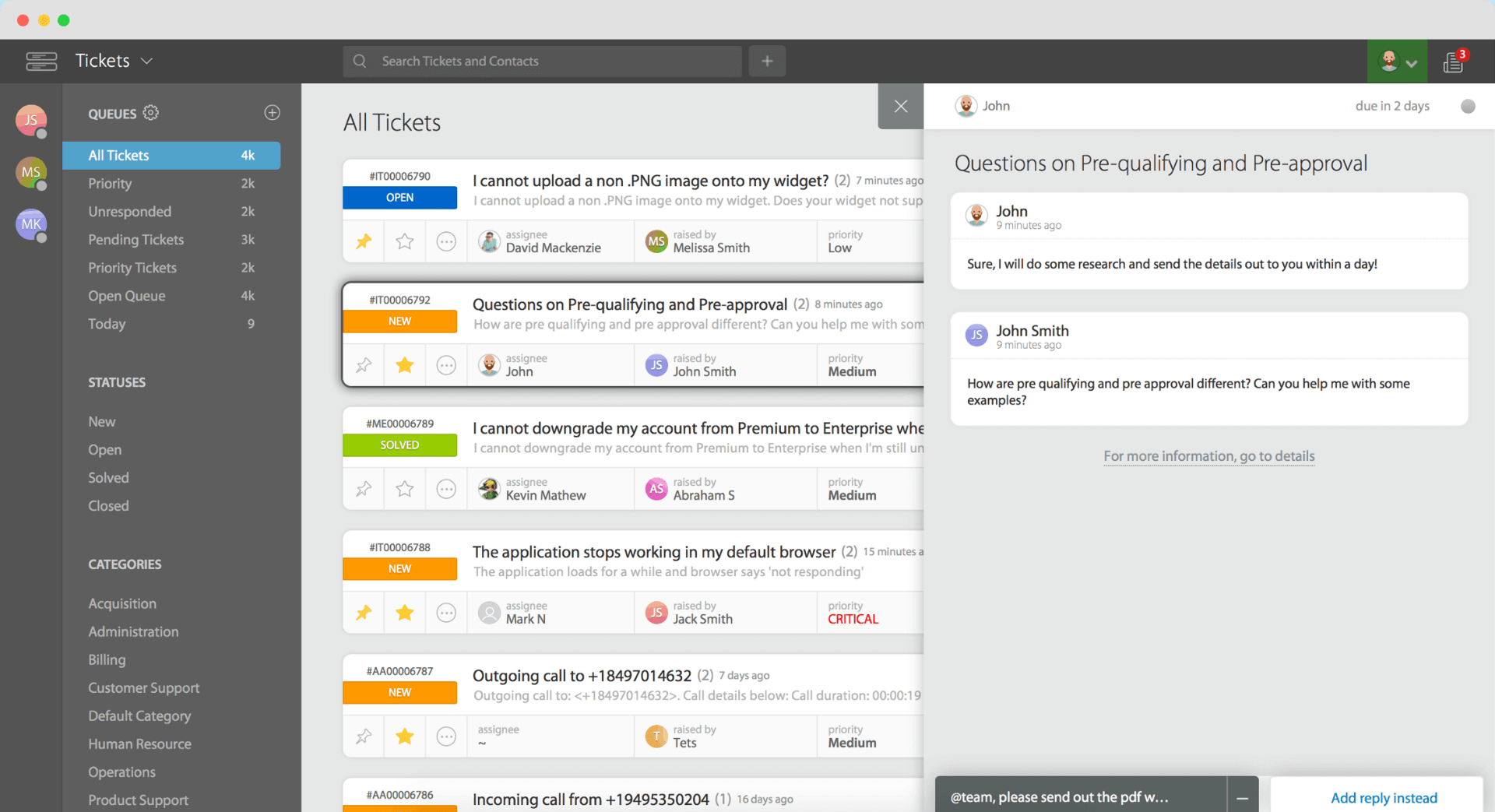
The platform’s automation tools allow you to prioritize complaints based on urgency and route them to the right team members. Its reporting features provide detailed insights into complaint trends, agent performance, and resolution times, helping businesses identify improvement areas.
HappyFox also offers customization options to align with your business needs, from tailored workflows to SLA policies. This flexibility ensures a smooth and effective complaint management process for your organization.
Pros:
- Advanced analytics for complaint tracking and performance monitoring.
- Omnichannel support for seamless communication.
- Workflow automation to reduce manual intervention.
- Customizable SLA policies to meet compliance standards.
Cons:
- Limited integration options with external tools
- No free plan for startups or small teams
Pricing:
Starts at $9/user/month.
4. Salesforce Service Cloud – Best for Large Enterprises Using Salesforce CRM
Salesforce Service Cloud is a powerhouse for managing complaints, combining AI-driven tools with seamless integration capabilities. It offers a unified platform to track and resolve customer complaints across channels, helping businesses maintain a 360-degree view of their customers.
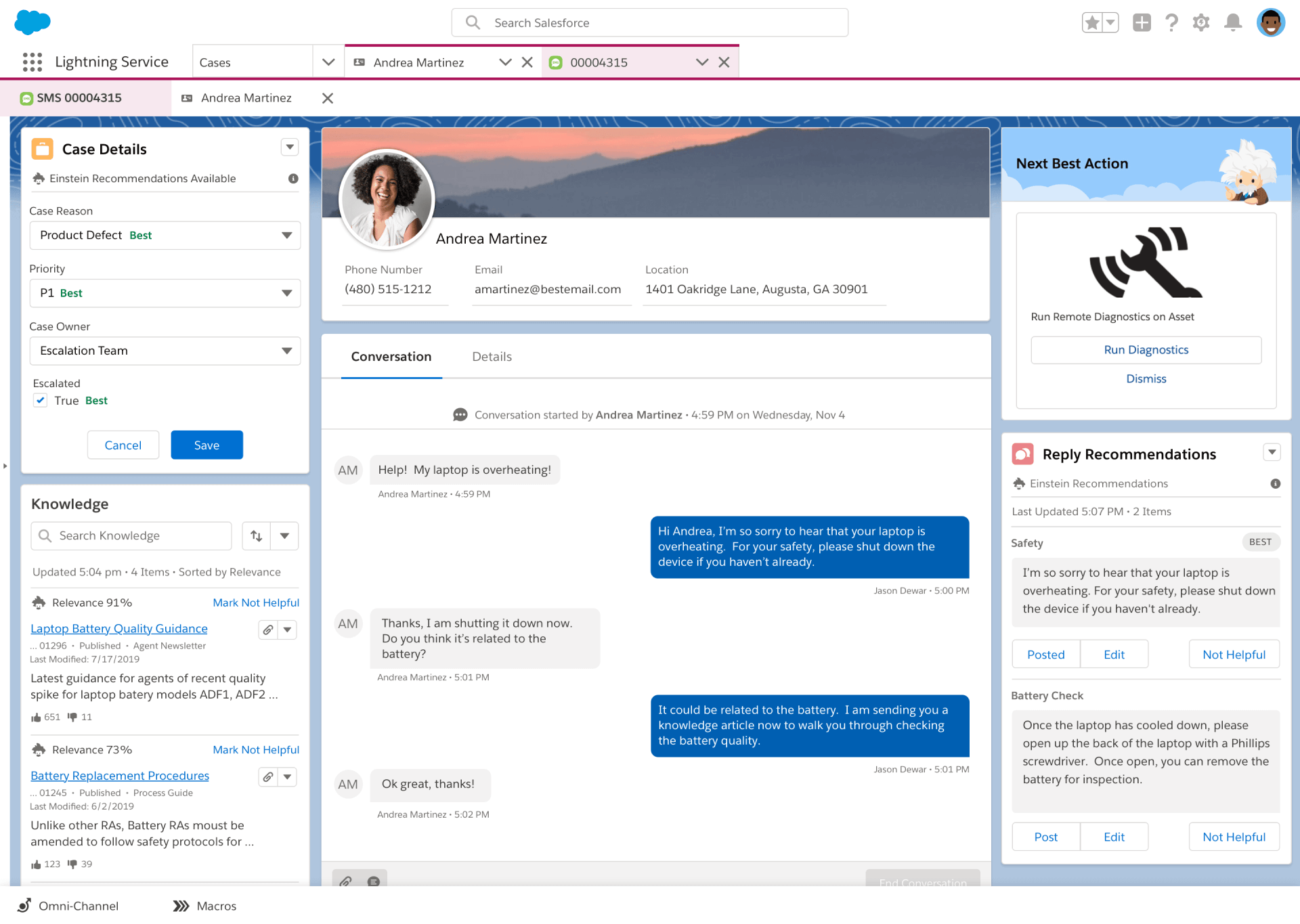
Einstein AI, Salesforce’s intelligent assistant, enhances complaint management by predicting issues, recommending solutions, and automating repetitive tasks. This enables your team to focus on resolving complex complaints while the system handles the rest.
With Salesforce, you can personalize complaint resolutions through detailed customer insights, making every interaction meaningful. The platform’s scalability makes it suitable for businesses of all sizes, ensuring you can meet your growing support needs.
Pros:
- Einstein AI for automated complaint categorization and response suggestions
- Seamless integration with Salesforce CRM for a complete customer view
- Customizable dashboards and reports to track complaint trends
- Mobile app for managing complaints on the go
Cons:
- Steep learning curve for new users
- High cost for small businesses or startups
Pricing:
Starts at $25/user/month.
5. Zoho Desk – Best for Context-Driven Support
After using Zoho Desk for more than six months, I can say one thing with confidence: it is designed to provide customer support agents with all the context they need to handle complaints effectively.
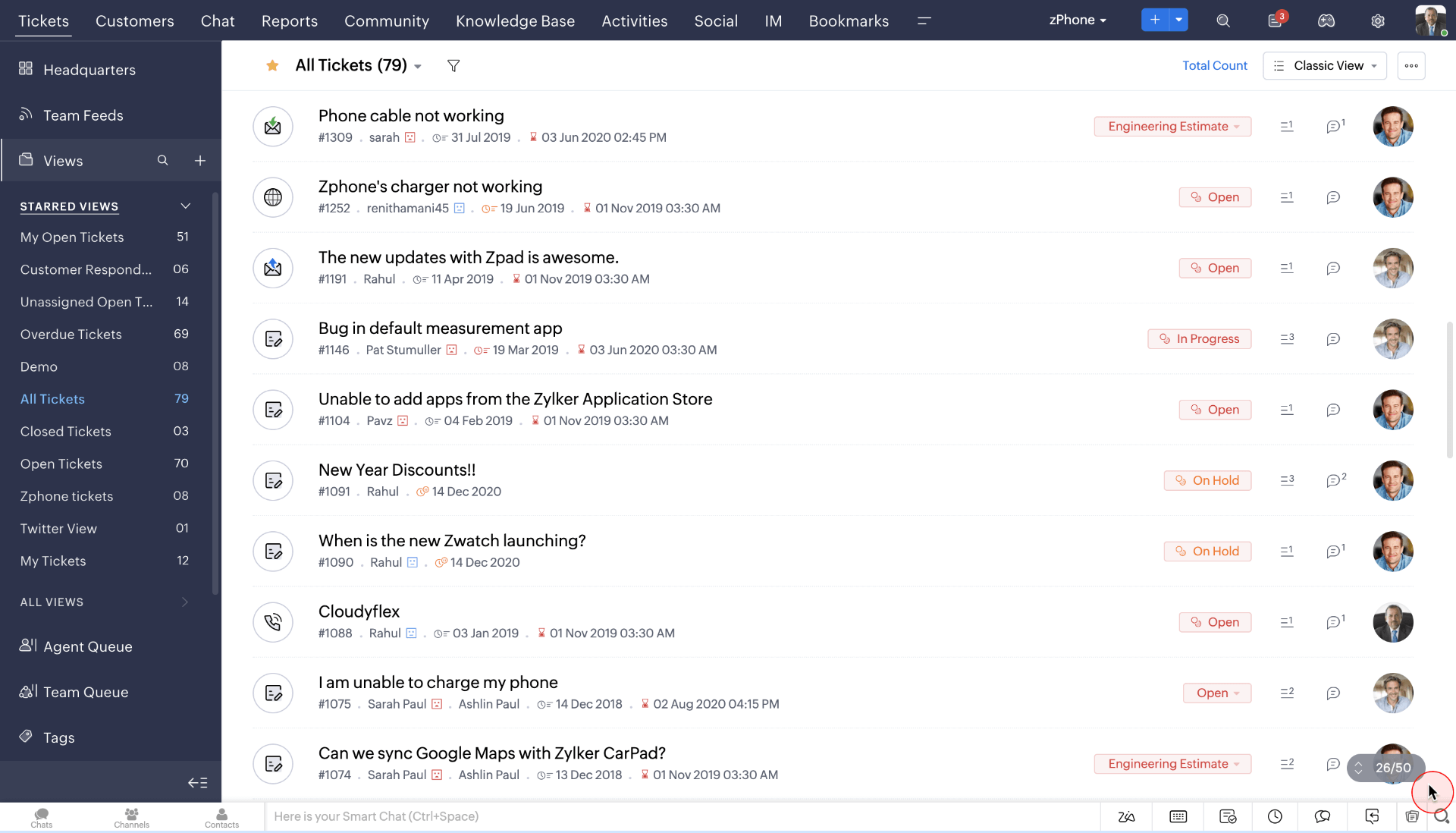
For example, my agents can offer faster and more personalized solutions by consolidating complaint history, customer interactions, and relevant information in one place.
The platform’s AI-driven assistant helps me predict customer needs and offer proactive solutions to their complaints. Also, Zoho Desk’s self-service portals enable users to manage their own complaints, reducing dependency on agents while maintaining excellent service levels.
Pros:
- AI assistant that offers suggested solutions for agents
- Contextual ticket views that showcase all customer interactions in one place
- Self-service portals for customers to track and manage their complaints
- Workflow automation for complaint escalation and resolution tracking
Cons:
- Limited functionality in the free version
- Zoho Desk’s focus on customer data may lead to information overload for agents
Pricing:
Starts at $14/user/month (a free plan is available with limitations)
6. Hiver – Best for Gmail-Based Help Desk
Hiver transformed our Gmail into a powerful help desk, allowing my support agents to manage complaints directly from their Gmail inboxes. This integration streamlined our support workflow and helped us manage email complaints effortlessly.
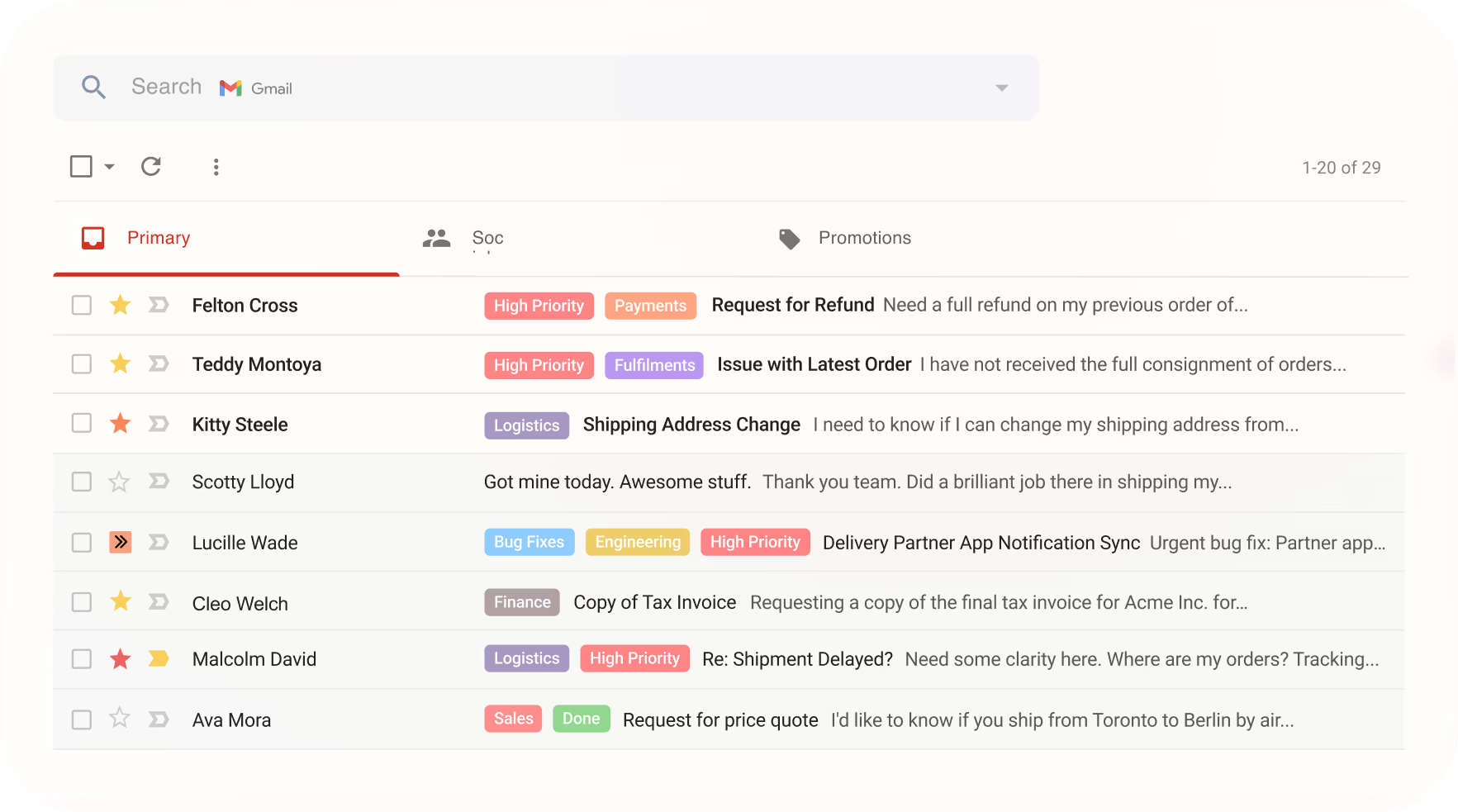
By using shared inboxes and collaboration features, Hiver allowed us to handle complaints more efficiently without leaving Gmail.
The tool also offers robust reporting and automation tools, making it a simple yet effective solution for complaint management right within a familiar interface.
On the downside, Hiver is strictly limited to Google Workspace users. So, if you use any other email client like Outlook or Yahoo Mail, the tool does not offer anything.
Pros:
- Complaint tracking and management directly from Gmail
- Shared inboxes for teams to handle complaints collaboratively
- In-depth reporting and analytics within Gmail
- Automated ticket assignment based on pre-set rules
Cons:
- Heavy reliance on Gmail, limiting integration with non-Google services
- Features like advanced reporting come with higher-tier pricing
Pricing:
Starts at $19/user/month
7. Vivantio – Best for Handling IT Service Management Complaints
If you want complaint handling software to track IT issues, you may want to consider Vivantio.
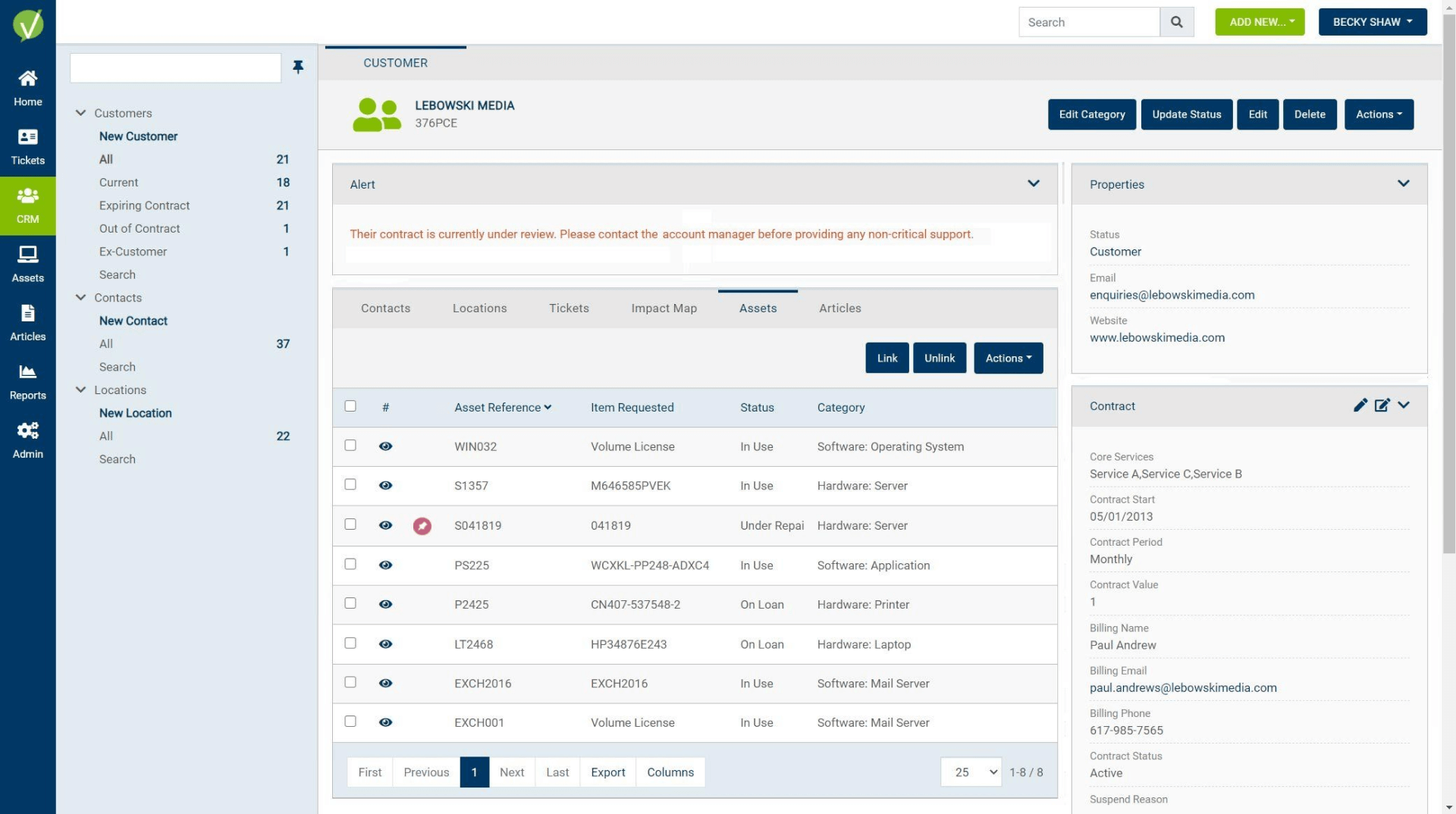
The tool is tailored for IT service management and provides powerful tools for managing technical complaints. It helps IT departments streamline the process of logging, tracking, and resolving complaints, ensuring that service disruptions are handled efficiently.
With its ITIL-aligned processes, Vivantio makes it easy to handle complex complaints while maintaining high standards of service delivery. This makes it a favorite among IT service teams.
Also, its integration capabilities with tools like Jira and SolarWinds further enhance the ability to manage large-scale IT complaints and improve collaboration across departments.
Pros:
- ITIL-aligned complaint management processes
- Advanced incident tracking and resolution workflows
- Customizable dashboards for real-time monitoring of complaints
- Integration with popular IT management tools like Jira and SolarWinds
Cons:
- Focuses heavily on IT complaints, less ideal for non-technical complaints
- Higher pricing may not be suitable for smaller businesses
Pricing:
Starts at $59/user/month.
8. LiveAgent – Best for Chat-Based Support
LiveAgent excels in managing complaints through its chat-first approach. Designed to deliver instant resolutions, this tool helps businesses handle complaints in real time via live chat, social media, email, and more.
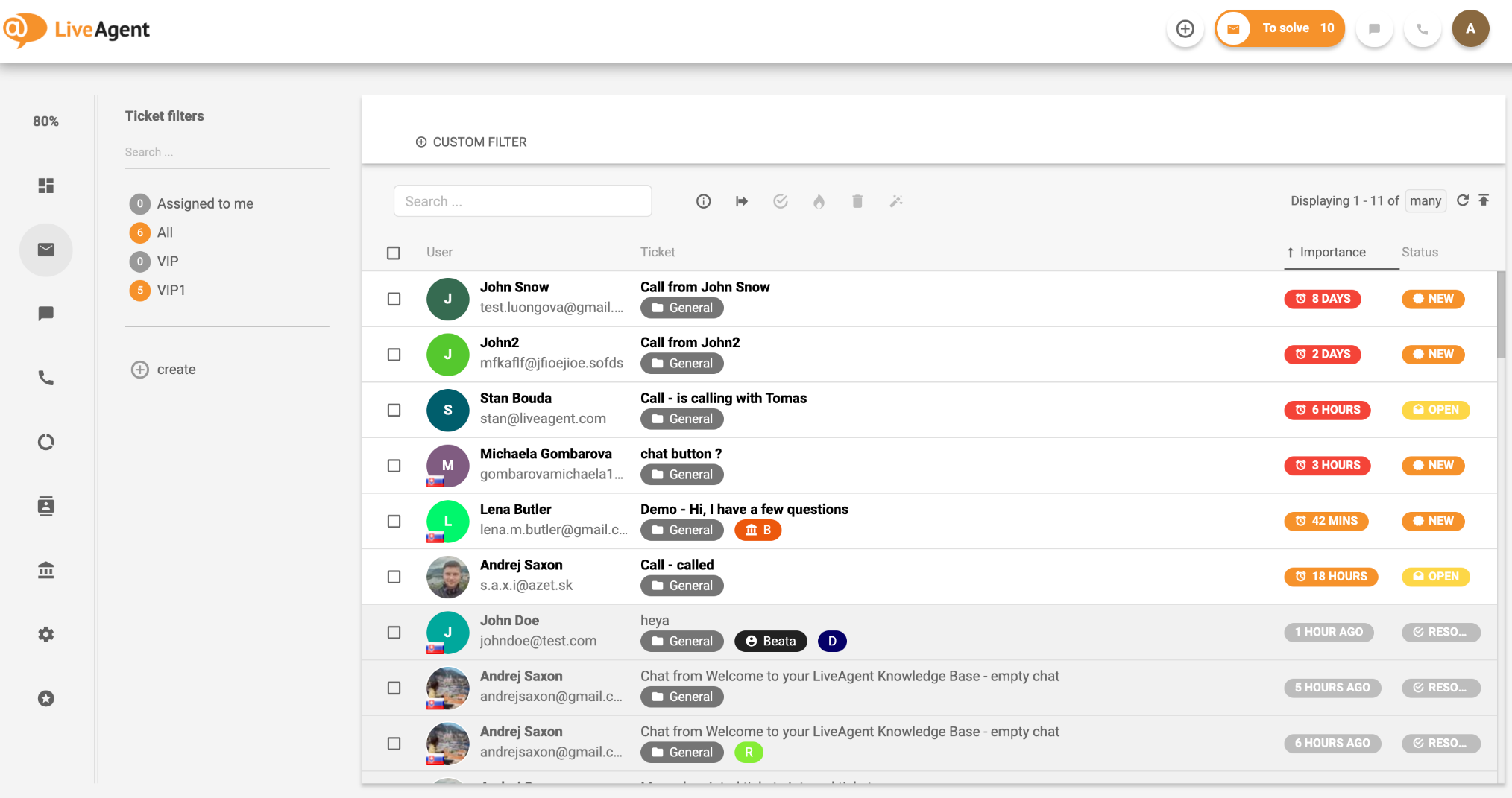
The platform’s customer complaint management system prioritizes speed and efficiency, making it ideal for businesses that want to reduce response times. LiveAgent’s ticketing system ensures complaints from multiple channels are categorized and routed to the right agents.
With a focus on team collaboration, LiveAgent enables agents to work together on complex complaints using shared inboxes and internal notes. It also includes performance reports to ensure you’re always improving your support processes.
Pros:
- Real-time chat support for instant complaint resolution
- Unified inbox to manage complaints from various channels
- Internal collaboration tools for handling complex complaints
- Performance tracking to optimize complaint management
Cons:
- Lacks advanced AI features compared to competitors
- The interface can feel outdated for some users
Pricing:
Starts at $15/user/month.
9. Apptivo Help Desk – Best for Complaint Management & Assignment
Apptivo Help Desk helps businesses manage customer complaints efficiently through its advanced assignment features. It ensures that complaints are directed to the right team or agent without delay, improving response times.
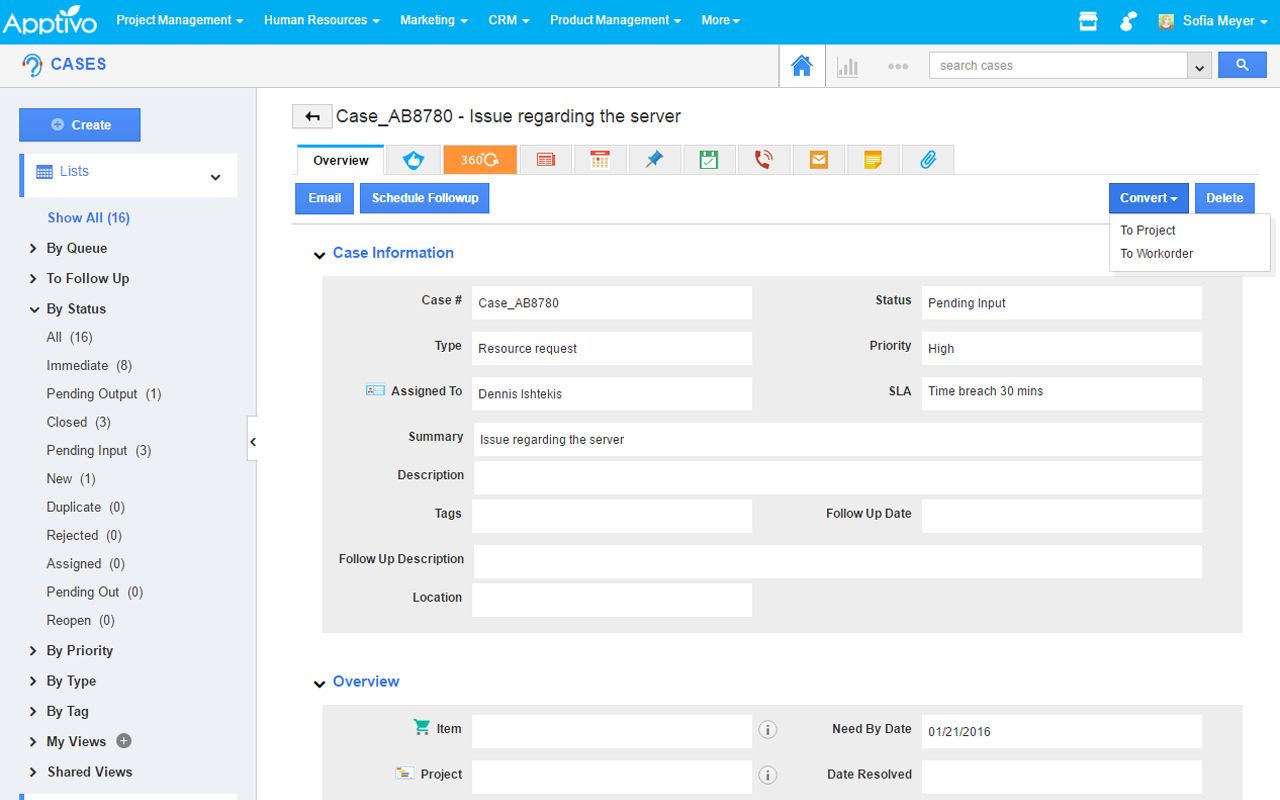
My favorite aspect is the platform’s easy-to-use interface, which allows users to organize and prioritize complaints, ensuring no issue is left unattended. This enhances overall customer satisfaction and team productivity.
Also, Apptivo offers multi-channel support, allowing businesses to capture complaints from various sources. On the downside, its chatbot lacks AI capabilities, unlike its closest competitors in the market.
Pros:
- Automatic complaint assignment to the most relevant team
- Intuitive dashboard for tracking the status and priority of complaints
- Multi-channel support to handle complaints from email, chat, and phone
- Integrated analytics for performance and complaint resolution tracking
Cons:
- Limited customization options for advanced users
- Can be overwhelming for very small teams due to the numerous features
Pricing:
Starts at $20/user/month.
10. Complaints Pro – Best for Workload Tracking
Complaints Pro is designed to help businesses manage their complaint workload efficiently, ensuring that no team member is overwhelmed. I’m impressed with its ability to automatically distribute complaints to agents based on availability, improving team efficiency.
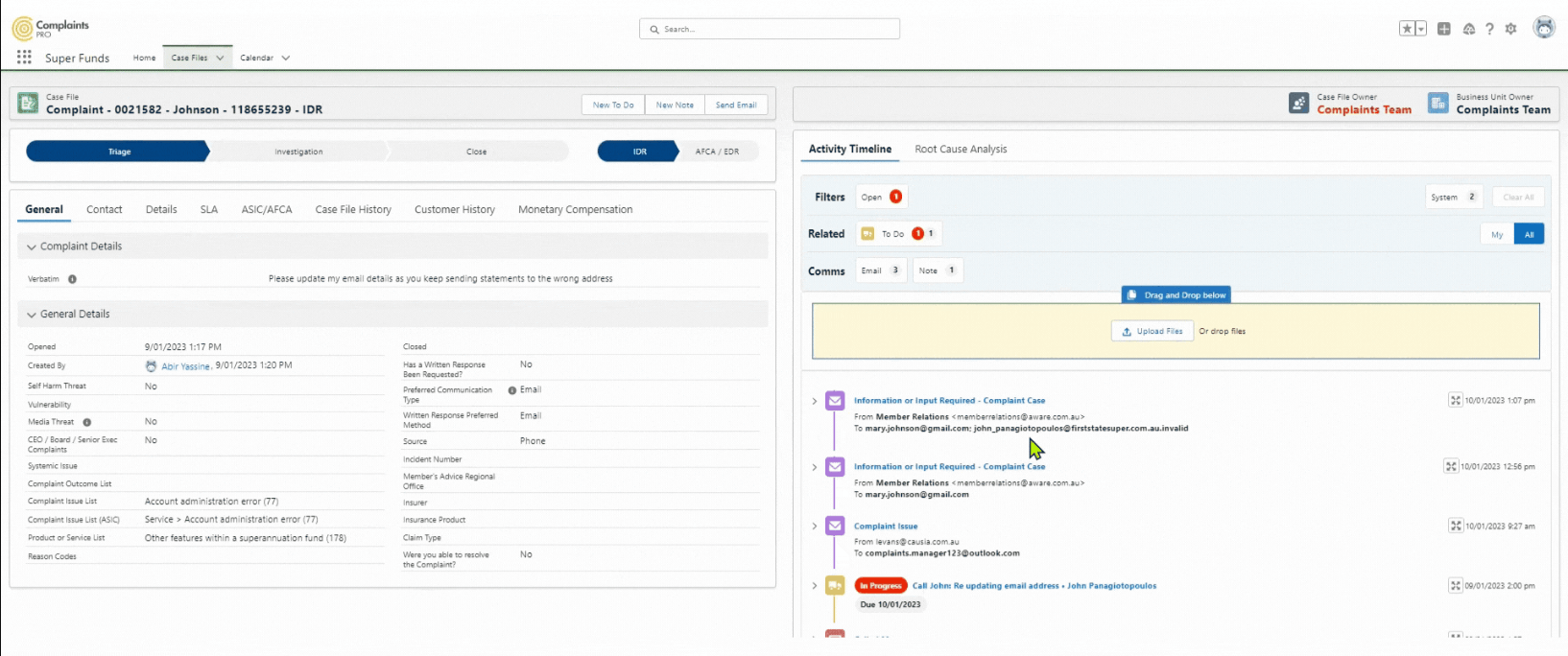
If you ask me, I think the platform is ideal for businesses that handle high volumes of complaints and need to balance the workload among multiple teams. This ensures that complaints are resolved promptly without overburdening any single team member.
With its dynamic workload tracking, Complaints Pro gives managers insight into team performance, helping them make informed decisions to optimize complaint resolution processes.
Pros:
- Dynamic workload tracking with automatic complaint distribution
- Performance analytics to monitor team efficiency
- SLA management to ensure complaints are resolved within the deadlines
- Multi-channel complaint intake, including email, phone, and social media
Cons:
- Not as flexible for non-complaint-related tasks
- Integration with third-party apps can be challenging
Pricing:
Custom pricing.
11. Jira Service Management – Best for Boosting Collaboration Between Dev & Ops Teams
Jira Service Management is a leading platform for managing complaints that require close collaboration between development and operations teams. The tool integrates seamlessly with Jira, allowing DevOps teams to handle complaints more effectively.
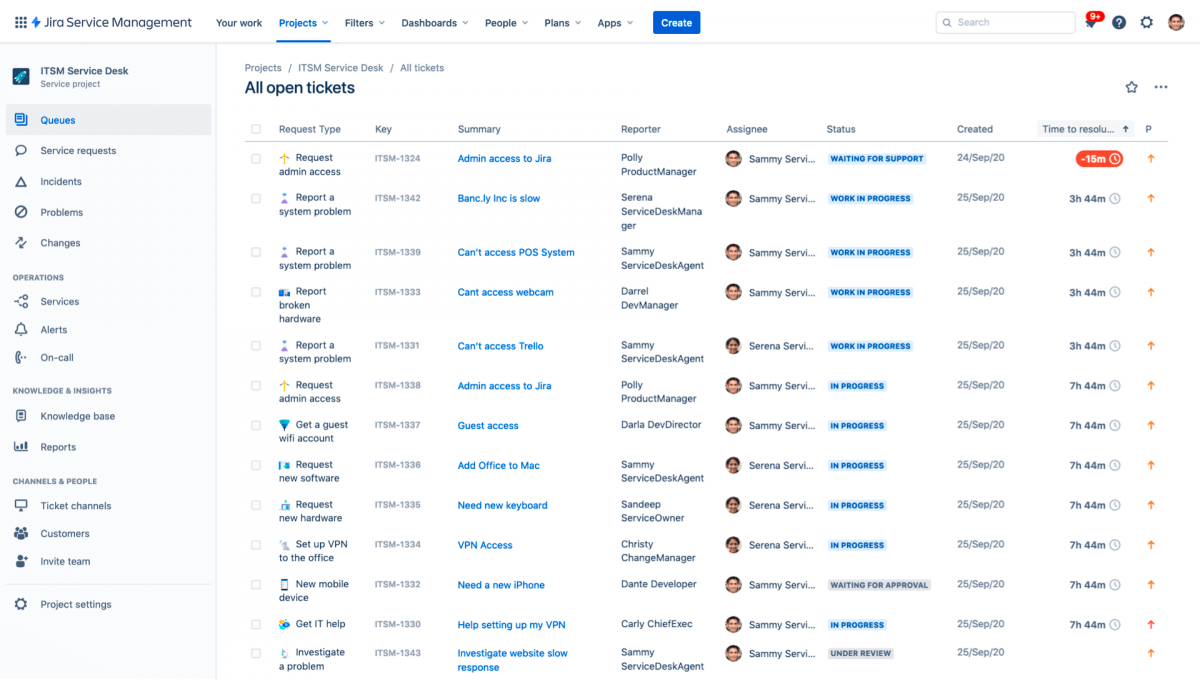
I think this platform is ideal for businesses that need to resolve IT and infrastructure-related complaints quickly, as it provides incident tracking and automated workflows. It ensures that complaints are addressed by the right teams without delay.
On the downside, the tool comes with a steep learning curve. You will have to devote additional time to agent training and learning.
Pros:
- Seamless integration with Jira for development and IT complaint handling
- Automated workflows for incident escalation and resolution
- Comprehensive SLA management and reporting
- Collaboration tools to connect DevOps teams for faster issue resolution
Cons:
- More suited for IT and DevOps complaints, less flexible for general complaints
- Requires time for users to learn and adapt to the interface
Pricing:
Starts at $17.65/user/month (a free plan is available with limitations)
12. Freshdesk – Best for Omnichannel Communications
Freshdesk offers a robust complaint management system tailored to businesses of all sizes. It centralizes customer complaints from multiple channels, such as email, social media, live chat, and phone, allowing your team to resolve issues seamlessly. The software simplifies complaint tracking and resolution, helping you ensure customer satisfaction at every touchpoint.
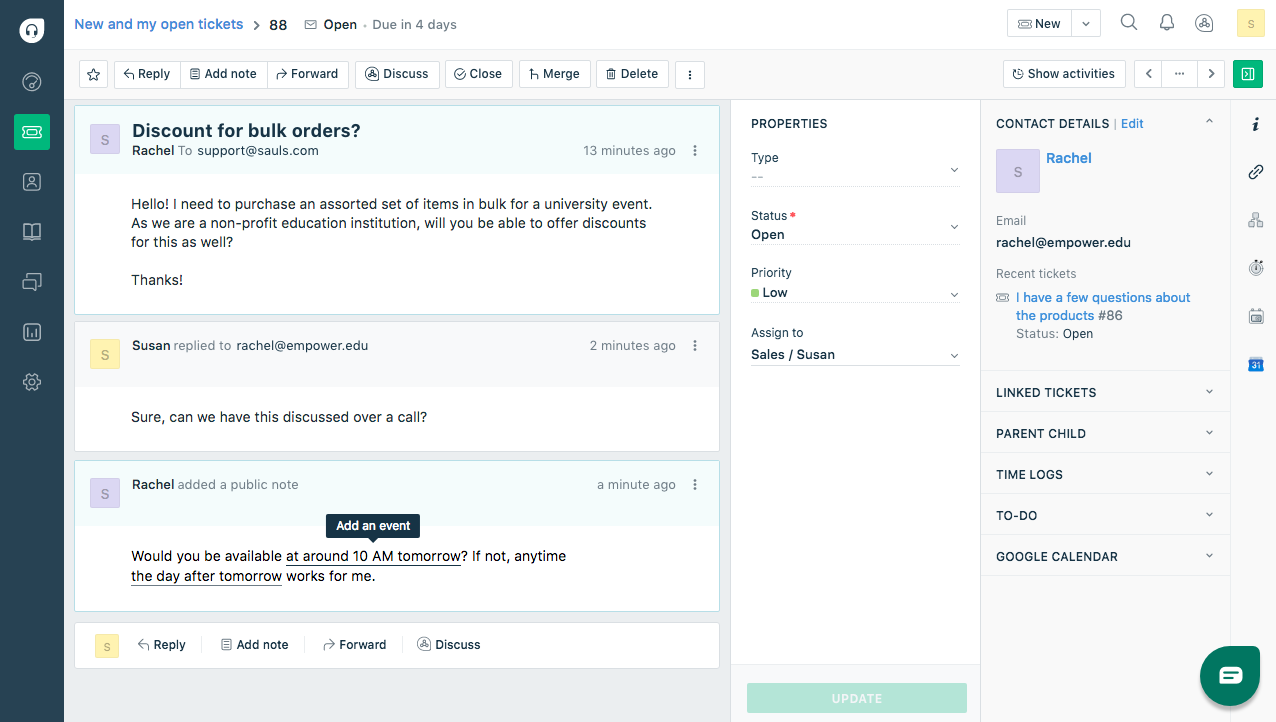
Its intuitive interface and automation capabilities allow you to streamline workflows and manage complaints efficiently. Freshdesk’s smart ticketing system categorizes and prioritizes complaints so no query goes unnoticed. With built-in collaboration tools, your team can work together to deliver quick and effective resolutions.
I like how Freshdesk is designed to scale with your business, offering customizable workflows, advanced analytics, and integrations with popular CRM and business tools.
Pros:
- Omnichannel support to manage complaints from multiple platforms
- AI-powered tools like Freddy to automate repetitive tasks and suggest solutions
- Robust SLA management to track response and resolution times
- Comprehensive reporting and analytics to monitor complaint trends
Cons:
- Advanced features are locked behind higher-tier plans
- Limited offline functionality for field teams
Pricing:
Starts at $15/user/month.
How Did I Evaluate These Complaint Management Systems?
To evaluate the complaint management systems featured in this article, I followed a systematic and unbiased approach that ensures a fair, well-rounded review. My assessment is built on six key factors:
User Reviews / Ratings: I analyzed real user feedback and ratings from reputable platforms like G2 and Capterra to understand how these tools perform in day-to-day use. This helped me gauge overall satisfaction and flag recurring pain points that teams commonly experience.
Essential Features & Functionality: I closely examined the core capabilities of each system, including ticket creation from multiple channels, automated routing, thread management, collision detection, AI automation, and reporting. This allowed me to assess how well each tool handles the actual demands of managing email-based support.
Ease of Use: I evaluated how intuitive each platform is to navigate, from setting up help desk inboxes to managing tickets and resolving queries. I paid special attention to whether support agents, regardless of technical skill, could hit the ground running without a steep learning curve.
Customer Support: I looked at the quality of support each vendor offers its own users, including response times, available channels (live chat, email, documentation), and how effectively they help teams during onboarding and when issues arise.
Value for Money: I compared each tool’s pricing against the features it offers, factoring in plan tiers, user limits, and any hidden costs. The goal was to help you determine whether the investment is justified for your team’s size and needs.
Personal Experience / Experts’ Opinions: My evaluations are further informed by hands-on testing and insights from customer support professionals. These perspectives helped me go beyond feature lists to assess real-world performance and reliability.
My Top 3 Picks for Best Complaint Management Software
Still on the edge? Let me help with your decision-making; here are my top 3 picks:
1. ProProfs Help Desk
ProProfs Help Desk offers powerful AI features to understand customer intent and share automated responses. With the knowledge base integration, you can reduce ticket volume by allowing customers to self-serve. Collaboration features like internal notes and parent-child ticketing also improve team coordination and efficiency.
2. Hiver
Hiver turns Gmail into a help desk, allowing teams to manage complaints directly within the Gmail interface. It offers shared inboxes, automation, and reporting tools, making it ideal for businesses using Google Workspace. While it’s great for email complaints, it misses out on other key channels.
3. Vivantio
Vivantio is tailored for IT service management, helping teams handle technical complaints with ITIL-aligned processes. It integrates with tools like Jira and SolarWinds, making it perfect for managing complex IT complaints efficiently. However, the tool comes with a steep learning curve.
FREE. All Features. FOREVER!
Try our Forever FREE account with all premium features!
What Are the Top Features of Complaint Management Software?
While looking for the right tool, there are certain must-have features you should know about. Here are some of the most popular and in-demand features of a complaint management system:
1. AI Response Suggestions
Leverage AI-powered response suggestions to craft accurate and empathetic replies in seconds. This feature ensures consistent communication while saving valuable time for support teams.
2. Ticket Prioritization
Organize and prioritize complaints based on urgency and complexity, ensuring high-priority issues are addressed first. This streamlines workflow and enhances customer satisfaction.
3. CSAT Surveys
Gather real-time feedback from customers using customer satisfaction surveys (CSAT). These insights help gauge the effectiveness of complaint resolutions and identify areas for improvement.
4. Performance Reports
Track team performance and response times through detailed analytics and reports. Use this data to optimize processes and maintain high service standards.
5. Knowledge Base
Offer customers self-service options with an online knowledge base. This repository of FAQs and guides reduces ticket volume by enabling users to resolve common issues independently.
How to Turn Complaint Data Into Product & Business Intelligence
Most companies use complaint data to close tickets. Smart companies use it to improve products, refine processes, and make better business decisions.
The truth is, complaints are one of the most valuable forms of customer feedback because they are specific, unfiltered, and tied to real experiences. While surveys and reviews provide opinions, complaints reveal exactly where customers are struggling and what needs attention. Here’s how to turn that raw feedback into actionable business intelligence:
1. Centralize Complaint Data From Every Channel
The first step is to collect complaints from all customer touchpoints, including email, phone, live chat, social media, review sites, and support tickets, in one centralized system. When complaint data is scattered, identifying patterns becomes nearly impossible.
2. Tag Root Causes, Not Just Symptoms
Many businesses make the mistake of using broad complaint labels like “technical issue” or “billing problem.” These categories rarely provide meaningful insight.
Instead, classify complaints based on:
- Problem type: Product defect, UX friction, expectation mismatch, delivery issue, process failure, or feature request
- Business impact: Major blocker vs. minor annoyance, isolated issue vs. recurring problem
This deeper tagging transforms complaints from random conversations into structured business data.
3. Look for Patterns & Emerging Trends
Once complaints are categorized, focus on trends, not just ticket volume.
Pay attention to:
- Complaint velocity: Sudden spikes after a product update may signal bugs or usability issues
- Customer cohorts: If complaints mainly come from new users, onboarding may be the problem
- Recurring combinations: Issues that repeatedly appear together often share the same root cause
- Workaround language: Phrases like “I had to…” or “I ended up…” often indicate missing features or broken workflows
The goal is to identify what’s repeatedly frustrating customers and why.
4. Analyze Strategic & Competitive Signals
Complaint data can reveal much more than operational problems.
For example:
- Customers mentioning competitors may highlight missing capabilities or feature gaps
- Billing complaints after pricing updates can reveal commercial friction
- Early-stage complaints from new users often expose onboarding weaknesses
- Repeated requests for the same feature may signal changing market expectations
These insights often appear long before traditional analytics or surveys detect them.
5. Prioritize Complaints Based on Business Impact
Not every complaint deserves the same level of urgency. Prioritize issues by considering:
- Frequency of complaints
- Customer frustration level
- Revenue or churn risk
- Impact on brand reputation
- Operational or support costs
This helps teams focus on problems that create the biggest business impact.
6. Share Complaint Intelligence Across Teams
Complaint insights should never stay trapped inside the support department. Product, engineering, marketing, operations, and leadership teams all need visibility into recurring customer pain points.
A simple monthly complaint report can include:
- Top complaint categories
- Fastest-growing issues
- Churn-related concerns
- Representative customer quotes
- Recommended actions
This keeps decision-makers connected to real customer experiences.
7. Turn Insights Into Product & Process Improvements
Complaint intelligence only creates value when it leads to action. Use the findings to improve products, simplify workflows, update policies, improve documentation, or launch new features.
The strongest businesses don’t aim to reduce complaints through better responses alone; they reduce complaints by solving the underlying problems.
8. Close the Feedback Loop & Measure Results
After improvements are implemented, monitor whether complaint volume declines and customer satisfaction improves. If a complaint-inspired fix is released, inform the customers who originally raised the issue.
This creates trust, strengthens loyalty, and reinforces a powerful cycle; better fixes lead to fewer repeat complaints, fewer complaints improve support efficiency, and better support data drives smarter business decisions over time.
Speed Up Issue Resolution With the Best Complaint Management Software
Handling customer complaints is no longer just about resolving tickets quickly; it’s about understanding customer pain points and using that feedback to improve products, services, and overall experiences. The right complaint management software can help you centralize issues, improve team collaboration, and ensure that no customer concern slips through the cracks.
As you compare the tools in this list, focus on what matters most to your business. Some platforms excel at automation and reporting, while others stand out for ease of use, integrations, or scalability.
If you’re looking for a solution that combines powerful complaint handling with modern support capabilities, ProProfs Help Desk is worth considering. Its AI-powered features, such as ticket summarization and response suggestions, help agents resolve complaints faster and more accurately. Also, with multichannel ticketing, you can capture every issue, and built-in CSAT surveys let you measure the effectiveness of your complaint handling process.
Frequently Asked Questions
How is complaint management software different from a regular help desk?
A help desk handles all support requests broadly, covering questions, how-tos, and account issues. Complaint management software is built specifically for grievances, with features like root-cause tagging, SLA escalation, regulatory compliance tracking, and complaint trend analytics that generic help desks don't prioritize.
What features should I look for in complaint management software?
At minimum, look for omnichannel intake, automated ticket routing, SLA tracking, escalation rules, and reporting dashboards. The features that separate good tools from great ones are root-cause categorization, customer notification on resolution, and the ability to spot recurring complaint patterns across your entire history.
What's the difference between complaint management software and a CRM?
A CRM manages the entire customer relationship, covering deals, contacts, and communication history. Complaint management software focuses on one specific part of that relationship, which is when something goes wrong. Learn how to integrate help desk with CRM.
Can small businesses use complaint management software, or is it only for large teams?
Complaint management software works at any scale, and what changes is the complexity you need. Tools like ProProfs Help Desk are built specifically for smaller teams, offering shared inboxes, canned responses, and AI-powered automation without the enterprise price tag or setup overhead.
How does complaint management software help reduce customer churn?
Unresolved or slow-handled complaints are one of the top drivers of silent churn, where customers leave without saying why. A complaint management system ensures every issue is acknowledged fast, routed to the right person, and followed up to closure, which directly improves the retention numbers most businesses struggle to explain.
Does complaint management software work across email, chat, and social media?
Yes, the best tools consolidate complaints from every channel into one queue, so your team works from a single view. ProProfs Help Desk, for example, lets agents manage email tickets, live chat conversations, and web form submissions without switching between platforms.
How long does it take to set up complaint management software?
Most cloud-based tools are live within a day or two once you connect your email and set up basic routing rules. More complex configurations like SLA policies, custom escalation workflows, and CRM integrations typically take one to two weeks, depending on your team's size.
FREE. All Features. FOREVER!
Try our Forever FREE account with all premium features!

 We'd love your feedback!
What did you like & how can we make it even better?
 Thanks for your feedback!
 Ask Your Question
Have a question? Get expert help to make your decision easier.