
The hardest email I ever had to send wasn’t a cold outreach or even a resignation. It was an apology email to a customer I had let down.
There’s a strange kind of trust that only gets built in the moment things go wrong. Not when the product works perfectly, not when the review is five stars, but in that uncomfortable moment when your business drops the ball and has to own it.
I’ve seen brands lose loyal customers over a single cold, “We apologize for the inconvenience.” And I’ve also seen a genuinely human and personalized apology email template transform a furious customer into a lifelong advocate.
That’s exactly why I put together these 10 apology email templates, each one crafted for a different situation. Whether you’re addressing a delayed shipment, a billing error, or a broken promise, you’ll find a starting point here that feels human and not robotic or defensive.
Let’s fix each broken customer relationship, one email at a time.
What Is an Apology Email?
An apology email to customers is a message businesses send to acknowledge a mistake, inconvenience, or service issue and express genuine regret. Whether it’s a delayed delivery, billing error, product defect, or poor support experience, the email serves as a direct way to address the problem and reassure customers that their concerns are being taken seriously.
A good apology email goes beyond saying “sorry.” It explains what happened, takes responsibility where appropriate, and outlines the steps being taken to fix the issue or prevent it from happening again. When written with empathy and transparency, apology emails can help rebuild trust and strengthen customer relationships.
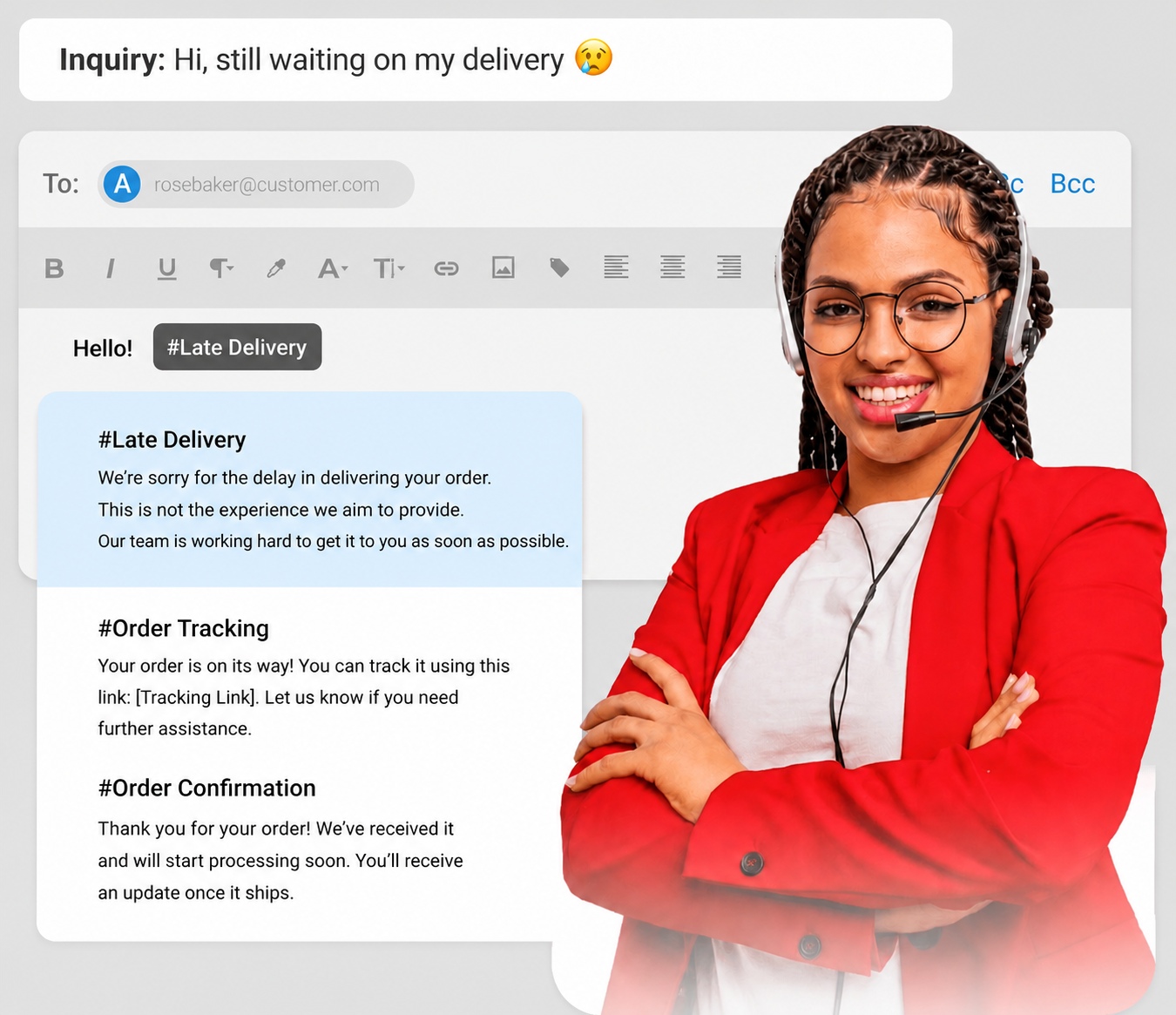
Instead of writing every apology email from scratch, most support teams use help desk software to create and store hundreds of response templates, also known as canned responses. These templates can be used for sharing sincere apologies, sending follow-ups, issuing refunds, etc. Many AI-powered help desk software like ProProfs Help Desk help teams leverage AI to summarize long complaints, understand customer intent, and use response suggestions for faster issue resolution.
The Apology Timing Playbook: When to Apologize to Customers
Everyone says “respond fast.” But how fast depends on the issue. Use this matrix to decide exactly when to send your apology email based on issue severity.
High
Medium
Low
| Issue type | Severity | Send within | Channel | Key actions |
|---|---|---|---|---|
|
Service / platform outage
App down, API failure, site unreachable
|
Critical | ≤ 1 hr |
EmailStatus pageSMS
|
|
|
Data / security breach
Customer data exposed or potentially compromised
|
Critical | ≤ 2 hrs |
EmailIn-app
|
|
|
Wrong / duplicate charge
Billing error, overcharge, unauthorized transaction
|
High | ≤ 4 hrs |
EmailPhone
|
|
|
Poor customer service experience
Rude agent, long wait, unresolved complaint
|
High | ≤ 6 hrs |
EmailPhone
|
|
|
Late or lost delivery
Delayed shipment, wrong item sent, lost parcel
|
Medium | ≤ 12 hrs |
EmailSMS
|
|
|
Wrong / misleading information sent
Incorrect email, outdated pricing, wrong policy
|
Medium | ≤ 24 hrs |
Email
|
|
|
Missed appointment / booking
No-show, scheduling error, cancelled without notice
|
Medium | ≤ 24 hrs |
EmailSMS
|
|
|
Minor product bug / glitch
Non-critical UI issues, cosmetic errors, slow load
|
Low | ≤ 48 hrs |
EmailIn-app
|
|
|
Policy / pricing change
Unexpected changes affecting existing customers
|
Low | ≤ 48 hrs |
Email
|
|
10 Customer Apology Email Templates for Every Scenario
When mistakes happen, the right words can make all the difference.
Over the last few years, I’ve used these 10 templates to apologize to customers across various industries. Feel free to tweak and personalize them to match your specific situation and brand voice.
1. Service / Platform Outage
Service outages can quickly frustrate customers, especially when they disrupt daily operations or prevent access to important tools. A prompt apology email should acknowledge the issue, explain that your team is actively working on it, and reassure customers that updates will follow.
Dear [Customer Name],
We sincerely apologize for the unexpected service disruption that affected your access to [Platform/Service Name].
We understand how disruptive this may have been and want you to know that our technical team began working on the issue immediately.
At this time, services are being restored, and we are closely monitoring the platform to ensure stability. You can follow live updates here: [Status Page Link].
We truly appreciate your patience and regret any inconvenience this outage may have caused.
Regards,
[Signature]
2. Data / Security Breach
Security-related incidents require immediate and transparent communication. Your apology email should clearly acknowledge the situation, explain the steps being taken, and reassure customers that protecting their information remains your top priority.
Dear [Customer Name],
We are writing to inform you about a recent security incident that may have affected certain customer information.
We sincerely apologize for this situation and understand the concern it may cause. Protecting your data is extremely important to us.
As soon as we discovered the issue, we launched an investigation, secured our systems, and engaged cybersecurity experts to assess the impact.
At this stage, we recommend that you [Reset Password/Review Account Activity]. We will continue to share updates as more information becomes available.
We deeply regret this incident and appreciate your trust and patience as we work through it.
Regards,
[Signature]
3. Wrong / Duplicate Charge
Billing mistakes can damage trust and often require quick action. A good apology email to client should acknowledge the error, explain how it is being corrected, and provide a clear timeline for resolution.
Dear [Customer Name],
We sincerely apologize for the incorrect/duplicate charge associated with your account.
We understand how frustrating billing errors can be and appreciate you bringing this to our attention.
Our team has reviewed the issue and initiated a correction. The refunded amount of [Amount] should reflect in your account within [Timeframe].
We regret this mistake and are reviewing our billing processes to help prevent similar issues in the future.
Regards,
[Signature]
4. Poor Customer Service Experience
Almost every customer has encountered a poor service experience where either nobody picked up the call, or they came across a rude agent. If you’re writing an apology email to customer for bad experience, focus on empathy, accountability, and a clear commitment to improving support quality.
Dear [Customer Name],
I want to personally apologize for the experience you had while interacting with our support team.
The level of service you received does not reflect the standards we strive to provide, and I understand your disappointment.
We have reviewed your feedback and are taking steps internally to address the issue and improve future interactions.
Thank you for bringing this matter to our attention and giving us the opportunity to make things right.
Regards,
[Signature]
5. Late or Lost Delivery
Shipping delays or missing deliveries can create frustration and uncertainty for customers. A strong apology email should acknowledge the inconvenience, provide tracking or status details, and reassure customers that support is available.
Dear [Customer Name],
We are extremely sorry to hear that your order of [Product/Order ID] has not reached you yet.
I completely understand how frustrating this must be for you.
I’ve contacted our logistics partner, and it is currently at the warehouse nearest to your location. Here is a link you can use to track your package in real-time [Mention Link].
From the current status, I’m positive that the package should reach you on or before [Mention Date]. However, if there is any further delay, you can contact me directly at this number [Mention Contact Number].
Once again, I would like to apologize for any inconvenience caused to you. I appreciate your patience.
Regards,
[Signature]
6. Wrong or Misleading Information Sent
Sending incorrect information, whether related to pricing, product details, or promotions, can confuse customers and damage credibility. A good apology email should correct the mistake quickly, clarify the right information, and reassure customers that the issue is being addressed.
Dear [Customer Name],
We recently discovered that incorrect information was shared regarding [Mention Topic/Product/Offer].
We sincerely apologize for any confusion or inconvenience this may have caused.
The correct information is as follows: [Provide Correct Details]. Our team is reviewing the issue to ensure similar mistakes do not happen again.
Thank you for your understanding and patience while we correct this matter.
Regards,
[Signature]
7. Missed Appointment / Booking
Missed appointments or scheduling errors can inconvenience customers and disrupt their plans. Here is a sample apology email to customer, which will help you acknowledge the mistake, take responsibility, and offer a convenient way to reschedule or resolve the issue.
Dear [Customer Name],
We sincerely apologize for missing your scheduled appointment/booking on [Date/Time].
We understand how valuable your time is and regret any inconvenience this situation may have caused.
Our team would like to make this right by helping you reschedule at a time that works best for you. Please use this link [Booking Link] or contact us directly at [Phone Number].
Thank you for your patience and for giving us the opportunity to serve you better.
Regards,
[Signature]
8. Minor Product Bug / Glitch
Even minor bugs can interrupt the customer experience and create frustration. An apology email should acknowledge the issue, explain that your team is working on a fix, and reassure customers that updates will follow.
Dear [Customer Name],
We want to apologize for the recent issue affecting [Feature/Product Name].
Our team identified a bug that may have impacted your experience, and we understand how frustrating this can be.
We are actively working on a fix and expect the issue to be resolved by [Expected Timeframe]. We’ll continue to share updates until the matter is fully addressed.
Thank you for your patience and continued support.
Regards,
[Signature]
9. Policy / Pricing Change
Unexpected pricing or policy updates can catch customers off guard. A thoughtful apology email should communicate the change transparently, explain the reason behind it, and reassure customers about any support or transition options available.
Dear [Customer Name],
We understand that recent changes to our [Pricing/Policy] may have come as an unexpected surprise.
We sincerely apologize for any frustration or inconvenience this may have caused.
These updates were introduced to [Brief Reason], and we remain committed to providing the best possible experience and value to our customers.
If you have questions or would like help understanding how these changes affect your account, our team is here to assist.
Regards,
[Signature]
10. Mass Apology Email
Sometimes businesses need to apologize to a large group of customers at once—for outages, delays, errors, or company-wide issues. In such cases, the message should be transparent, empathetic, and focused on restoring confidence.
Dear Valued Customer,
We want to sincerely apologize for the recent issue affecting your experience with [Company/Product Name].
We understand the inconvenience and frustration this situation may have caused and take full responsibility for the disruption.
Our team has been working diligently to resolve the matter and implement measures that help prevent similar issues moving forward.
We value your trust and appreciate your patience and continued support during this time.
Regards,
[Company Name / Signature]
How “Not” to Apologize to Customers (With Examples)
A poorly written apology can damage customer trust more than the original mistake. Customers want honesty, empathy, and a clear resolution, not excuses or generic responses. Here are some common apology mistakes to avoid, along with better alternatives.
1. Don’t Shift the Blame
Blaming another team, vendor, or the customer often sounds defensive and avoids accountability.
❌ Wrong:
“Your delivery was delayed because the courier company failed to update tracking.”
✅ Better:
“We’re sorry your delivery was delayed. We’re working with our shipping partner to resolve the issue and will keep you updated.”
2. Don’t Use Conditional Apologies
Phrases like “if you were offended” or “if this caused inconvenience” can sound dismissive and insincere.
❌ Wrong:
“We apologize if you experienced any inconvenience.”
✅ Better:
“We sincerely apologize for the inconvenience this caused and understand your frustration.”
3. Don’t Sound Robotic or Generic
Copy-paste apologies lacking empathy often make customers feel like just another ticket number.
❌ Wrong:
“We regret the inconvenience caused. Thank you for your patience.”
✅ Better:
“We understand how frustrating this situation has been and are sorry for the delay you experienced.”
4. Don’t Over-Explain or Make Excuses
Long explanations can sound like justification rather than accountability.
❌ Wrong:
“We’ve been extremely busy lately and short-staffed, which led to this issue.”
✅ Better:
“We’re sorry for the delay and take full responsibility for the experience you had.”
5. Don’t Apologize Without Offering a Solution
A “sorry” without action leaves customers wondering what happens next.
❌ Wrong:
“We apologize for the billing error.”
✅ Better:
“We apologize for the billing error. The charge has been corrected, and you should see the updated amount within 24 hours.”
6. Don’t Delay the Apology
Waiting too long to acknowledge a mistake can increase frustration and erode trust.
❌ Wrong:
Sending no communication until customers follow up repeatedly.
✅ Better:
“We wanted to reach out immediately to apologize for the service disruption and share the steps we’re taking to resolve it.”
FREE. All Features. FOREVER!
Try our Forever FREE account with all premium features!
How to Measure if Your Apology Worked
Sending an apology email is only half the job, the real question is whether it actually helped rebuild customer trust. By tracking a few key metrics, businesses can understand whether their apology reduced frustration, restored confidence, and improved customer relationships.
1. Customer Response Rate
One of the easiest ways to measure apology effectiveness is to track how customers respond. Positive replies, acknowledgments, or follow-up conversations often indicate that the message was received well.
What to track:
- Reply rate to apology emails
- Positive vs. negative responses
- Tone of customer replies
2. Complaint Resolution Rate
A successful apology should help move complaints toward closure rather than prolong the issue.
What to track:
- Percentage of complaints resolved after the apology
- Number of reopened tickets
- Time taken to close the issue
3. Customer Satisfaction (CSAT) Score
CSAT surveys can reveal whether customers felt satisfied with how the company handled the situation.
What to track:
- Post-resolution CSAT ratings
- Satisfaction trends before and after apology emails
- Customer feedback comments
4. Customer Retention or Churn Rate
If customers continue doing business with you after a mistake, it often signals that your apology and recovery efforts were effective.
What to track:
- Repeat purchases
- Subscription renewals
- Cancellation or churn rate after the incident
5. Social Media & Brand Sentiment
Customers often share their experiences publicly, especially after negative incidents. Monitoring online sentiment can help measure whether your apology improved perception.
What to track:
- Social media mentions
- Review sentiment
- Positive vs. negative brand discussions
- Reputation recovery trends
Turn Mistakes Into Opportunities to Rebuild Customer Trust
Mistakes are inevitable, but losing customer trust doesn’t have to be. A thoughtful apology email, one that acknowledges the issue, takes responsibility, and offers a clear path forward, can help calm frustration and strengthen relationships rather than damage them.
Use the ten customer apology examples shared in this guide to respond faster and more confidently when things go wrong. Remember, the most effective apologies are not just about saying sorry; they’re about showing customers that their experience matters and that you’re committed to making things right.
You can use a tool like ProProfs Help Desk to automate your ticket handling process. You can prioritize urgent issues, create hundreds of response templates, leverage AI for ticket summaries and apology response suggestions, and send automated CSAT surveys to identify if the apology really worked.
Frequently Asked Questions
Should you apologize even if the issue was not your fault?
Yes. Apologizing for the customer's inconvenience is not the same as admitting fault. Phrases like "I'm sorry this is causing you delays, let me see what we can do" work regardless of who is responsible.
How long should an apology email actually be?
Short is almost always better. A genuine apology, a specific acknowledgment of what went wrong, and a clear next step can all fit in three to four sentences.
Should you always offer compensation in an apology email?
Not always. For minor issues, a sincere apology and a fix are enough. Compensation makes sense for mid to high severity problems where the customer lost real time, money, or trust.
What do you do when you do not yet know why the problem happened?
Be upfront about it. Tell the customer you are investigating and give them a specific time by which you will follow up. Customers respond better to honesty than to a rushed explanation that turns out to be wrong.
Is a discount always the right way to say sorry?
It depends on the issue. A discount on a future order feels hollow when the customer's current order is still broken. Match the gesture to what actually fixes the customer's problem right now.
Can a well-handled apology make customers more loyal than if the issue never happened?
Yes, this is known as the service recovery paradox. Customers who receive a fast, genuine, and well-resolved apology often report higher satisfaction than those who never had a problem at all.
Should apology emails be sent from a real person or a no-reply address?
Always from a real name and a replyable address. A no-reply apology sends the message that you want to express regret but not actually hear back, which undercuts the entire point.
How do you handle a customer who is still angry after receiving an apology?
Acknowledge that the apology alone may not be enough and ask directly what would make it right. Giving the customer a say in the resolution converts a venting interaction into a problem-solving one.
FREE. All Features. FOREVER!
Try our Forever FREE account with all premium features!

 We'd love your feedback!
What did you like & how can we make it even better?
 Thanks for your feedback!
 Ask Your Question
Have a question? Get expert help to make your decision easier.