


I once made a customer so angry that she cc’d my CEO. Here’s what I learned.
A loyal customer of three years had been charged twice for the same order, once in October, once again in November, apparently because of a glitch in our billing system.
My response? A copy-pasted customer complaint response template that started with “Dear Valued Customer” and ended with “We appreciate your patience.” Not only did we lose the VIP customer, but she also took four referrals with her.
That experience taught me a hard truth: complaint response templates only work when they sound human. Customers don’t want generic, polished replies when something goes wrong. They want empathy, accountability, and a clear solution.
I’ve built and refined hundreds of response templates across industries, from e-commerce to SaaS to hospitality. In this blog, I’m going to share the best ones with you; those that have rescued customer relationships that looked unsavable. Let’s go!
What Is a Complaint Response Template?
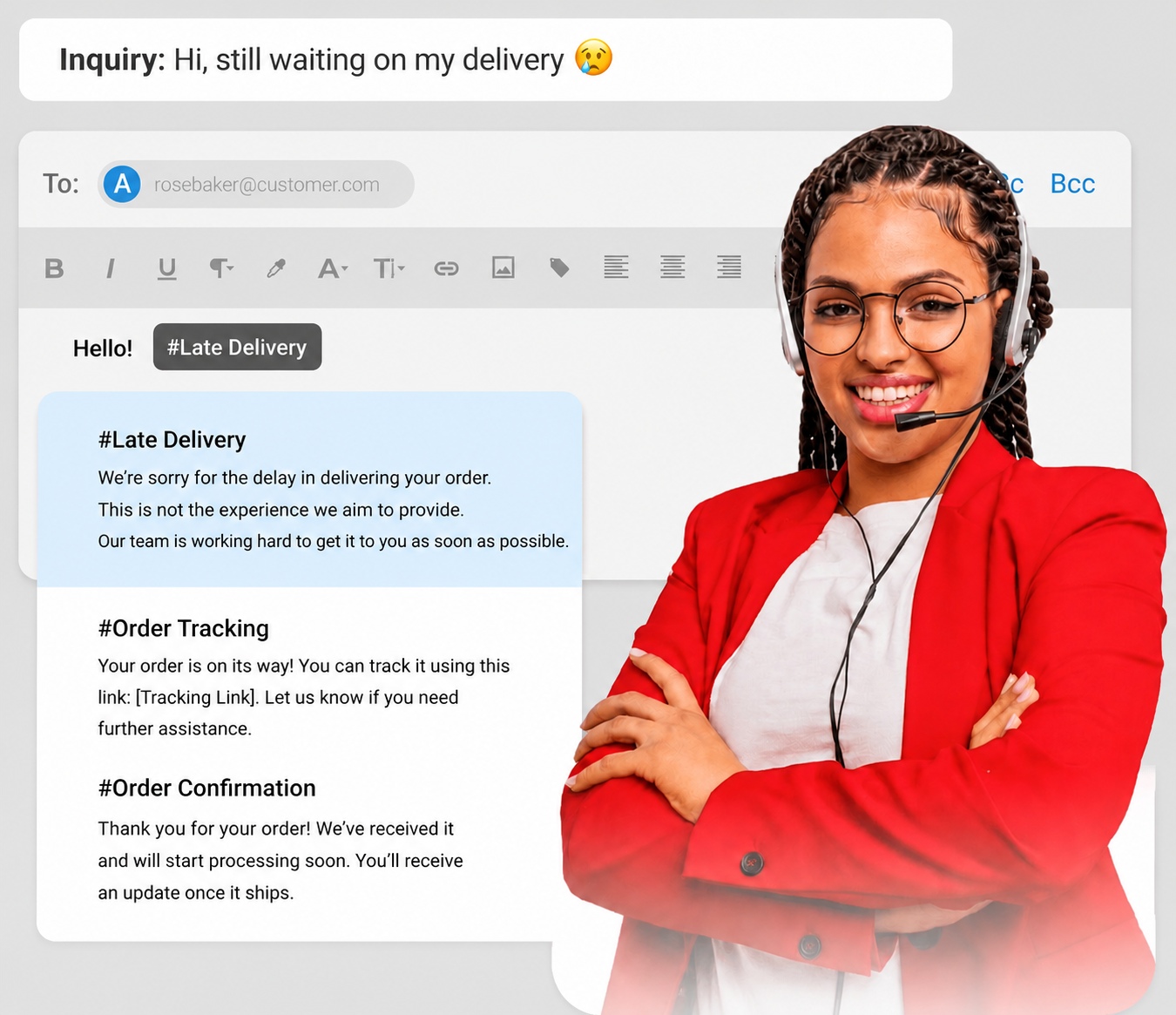
A complaint response template is a pre-written framework businesses use to respond to customer complaints quickly and professionally. It typically includes key elements like acknowledging the issue, apologizing for the inconvenience, explaining the resolution, and outlining the next steps.
These templates help support teams maintain consistency, save time, and ensure every complaint is handled with empathy and clarity. Instead of drafting responses from scratch, agents can customize the template to address the customer’s specific concern while keeping communication thoughtful and effective.
Most support teams use help desk software to create and store hundreds of response templates, also known as canned responses. These templates could be used for handling complaints, sharing follow-ups, issuing refunds, etc. Many AI-powered help desk software like ProProfs Desk help teams leverage AI to summarize long complaints, understand customer intent, and use response suggestions for faster ticket resolution.
To scale this across all channels, it’s smart to pair canned responses with robust help desk solutions that centralize tickets, automate workflows, and track performance in one place.
What Are the Key Elements of a Complaint Response?
A good complaint response isn’t about sounding overly apologetic. People can spot that from a mile away. The goal is to embrace complaints, take ownership where appropriate, and offer a clear path forward.
The key elements of a complaint response are:
10 Customer Complaint Response Templates for Every Issue
Did your product never reach the customer? Are your customers raving in anger during website downtime? Don’t worry! We have got you covered. Here are ten examples of email response templates that will help you handle customer complaints with ease:
1. Late Product Delivery
I understand that delays in product deliveries can happen due to a number of reasons that are outside your control, like poor weather conditions, accidents, and so on.
According to a study by Capital One Shopping in 2025, 80% of consumers expect retailers to offer same-day delivery, and among them, around 30% expect “free” same-day delivery. Amid such high expectations, late deliveries can make you lose your hard-earned customers.
Use this sample email reply for customer complaints related to late product deliveries.
Dear [Customer Name],
We are extremely sorry to hear that your order of [Product/Order ID] has not reached you yet.
I completely understand how frustrating this must be for you.
I’ve contacted our logistics partner, and it is currently at the warehouse nearest
to your location. Here is a link you can use to track your package in real-time
[Mention Link].
From the current status, I’m positive that the package should reach you on or before
[Mention Date]. However, if there is any further delay, you can contact me directly
at this number [Mention Contact Number].
Once again, I would like to apologize for any inconvenience caused to you.
I appreciate your patience.
Regards,
[Signature]
💡Action Tip: If the delay crosses 3 days, don’t wait for the customer to follow up. Proactively reaching out before they complain converts a potential 1-star review into a loyalty moment, and costs you nothing but a 2-minute email.
2. When an Item Is Out of Stock
If there is one feeling that comes close to getting punched in the gut, it is realizing that your favorite product is out of stock. Products can go out of stock due to poor inventory management or a sudden rise in demand during a sales or festive season.
However, the good news is that customers are waiting in line to buy your products. Done right, an out-of-stock response keeps the customer in your orbit, gives them a reason to come back, and even directs them toward alternatives they hadn’t considered yet.
Dear [Customer Name],
We regret to inform you that our product [Mention Product Name] is currently out of stock at all our offline and online stores.
However, we do have some good news for you. You can expect the product to be back in stock by [Mention Date].
If you wish to receive a further reminder, you can click on the “Notify when product is back in stock” icon from the product page.
Here is the link: [Add Link]
Feel free to check out similar products we have available now. You can use the coupon [Mention Coupon Code] to get an instant [Mention Percentage] discount.
It is indeed heartwarming to see your interest in our products. See you soon!
Regards,
[Signature]
💡Action Tip: Don’t just tell customers when the product is back, give them a one-click way to be notified automatically. Customers who opt into restock alerts convert at nearly 3x the rate of cold visitors, because the intent is already there.
3. Delayed Response
Customers expect a prompt response, whether they contact you to inquire about upcoming offers or share their complaints.
If your team dropped the ball on response time, the worst thing you can do is pretend it didn’t happen and jump straight to the answer. Use the complaint response example below to lead with an acknowledgment, then solve the problem.
Dear [Customer Name],
I hope this message finds you well. I want to personally apologize for the delay
in our response to your recent inquiry. We understand how frustrating it can be
when you’re waiting for assistance, and we sincerely regret any inconvenience
this may have caused.
At [Company Name], we strive to provide timely and effective support, and it’s
clear we fell short of that standard in this instance. Please know that we are
taking steps to ensure this doesn’t happen again in the future.
In the meantime, we have reviewed your request and
[Provide a Brief Update on the Status or Resolution of Their Issue].
If you have any further questions or concerns, please don’t hesitate to reach out
at [Mention Contact Number]. We’re here to help!
Once again, our sincere apologies for the delay, and thank you for your
understanding and patience.
Best regards,
[Signature]
💡Action Tip: You can use a help desk ticketing system to ensure every customer message gets a prompt response. For instance, you can prioritize urgent tickets and never lose track of them.
4. Refund Not Received
Here’s a stat you can’t ignore: According to a study by Statista in 2024, US shoppers return approximately 24.5% of their online purchases.
This means that your customer service team will frequently be dealing with product return and refund requests. A clear, specific update delivered before they have to chase you is worth more than the refund itself and helps build trust.
Hello [Customer Name],
Thanks a lot for bringing this to our notice. As I can see, you had requested
a complete refund for the returned item [Mention Product Name], bought on
[Mention Order Date].
Your refund was successfully processed on [Mention Date]. The complete amount shall be credited to your bank account ending with [Mention Last 3-4 Digits]. Typically, it takes anywhere from 4-7 business days for the amount to reflect in your account.
You can visit our refund FAQ page for more details: [Add Link]
I would request you to kindly wait for a couple of days more. You can expect
the refund amount to reflect in your account by [Mention Date].
If you are facing any other issues or have more questions, do feel free to
contact me. I would be more than happy to be of assistance. Thanks for choosing us!
Regards,
[Signature]
💡Action Tip: If a refund complaint comes in via social media or live chat, move it to email immediately, not to hide it, but because refund details involve account and payment information that needs a proper paper trail. Resolving it publicly feels satisfying in the moment but creates privacy and liability risks.
5. Rude or Unhelpful Staff
We all have encountered situations where an employee was rude to us, whether on the phone or in person. In such cases, the customer has every right to escalate the matter and bring it to the manager’s attention.
Use this template to validate their experience without making excuses, and leave them feeling valued rather than processed.
Dear [Customer Name],
I am extremely disheartened and shocked to hear about your negative experience
with one of our customer service representatives. We highly appreciate your
efforts in bringing this to our attention. Kindly accept our sincerest apologies
for the inconvenience.
I would like to inform you that our customer service team goes through consistent
training programs that involve sessions on both soft skills and technical knowledge.
However, such instances are extremely rare, and we are not taking this lightly.
To appreciate your efforts and keep our relationship moving forward, we would
like to offer a discount coupon [Coupon Code] that you can redeem during your
next online or offline purchase.
If there’s anything else that you want us to know, please get in touch.
Call us at: [Contact Number].
Sincerely,
[Signature]
💡Action Tip: Never name the employee or over-explain the internal action taken in your response as it shifts the focus from customer recovery to internal drama. A simple “we’ve addressed this with our team” is enough. What the customer needs is assurance it won’t happen again, not a performance review.
6. Defective Item
I get this question a lot: “How to respond to customer complaints when they receive a broken or defective item.” It is not uncommon for business owners to receive customer complaints about poor-quality products or defective items.
Receiving a broken or faulty product is frustrating enough. Having to fight for a resolution makes it unforgivable. The fastest way to recover from this situation is to lead with action; offer the fix before the customer has to ask for it, and make the process of getting it as frictionless as possible.
Dear [Customer Name],
I am extremely sorry to learn that you received a defective product in your
order received on [Mention Delivery Date]. Kindly accept my sincere apologies
for the inconvenience.
Our quality team ensures every product is scanned properly before they are
shipped to meet our quality standards. Chances are that the product might
have been damaged in transit.
However, I have some good news for you. Here are two offers for you:
1. If you wish to get the same product, I can initiate the shipment today
(no delivery charges shall apply).
2. If you want to order another similar product, here are some personalized
recommendations [Share Product Links]
If you have any other questions, feel free to get in touch. We look forward
to continuing this beautiful relationship we have built over the years.
Thanks for your patience!
Sincerely,
[Signature]
💡Action Tip: Offer to ship the replacement before asking the customer to return the defective one. Making someone package and post a broken item before seeing any resolution feels like punishment — and doubles their frustration with an experience that was already negative.
7. Technical Complaint
If you run a software or electronic business, you are likely to receive technical customer complaints. For example, imagine a customer complaining about software that runs incorrect reports. Now, even though you can train your customer service agents on some technical details, they might not be able to resolve the whole issue on their own.
The best option is to escalate the issue to the technical team if no solution is available. If the issue affects all users (for example, a software bug), you can proactively draft an email explaining the situation.
Hello [Customer Name],
I would like to take this moment to apologize to you for the technical issues
you are facing. I understand how frustrating this must be for you.
It seems like the issue you are facing is caused due to [Mention Problem].
I have escalated your complaint to our technical team, and they are already
working on this as we speak. You can expect our team to fix your issue within
the next [Mention Hours/Days].
Rest assured, your complaint is kept on top priority. We always strive for
customer service excellence and will make it a point to ensure such instances
are not repeated.
Thank you for your valuable feedback.
Regards,
[Signature]
💡Action Tip: Before escalating, always check if the issue is isolated to one customer or affecting multiple users. A personal bug gets a personalized fix; a systemic issue deserves a proactive broadcast to everyone affected, not a one-by-one reply chain.
8. Website Down
“Error 404.” We all have seen this error code while trying to open a website. It does feel frustrating, right? Technology isn’t perfect, and there will be times when your e-commerce website is down, and customers can’t stop complaining about it.
When your site is down, you not only lose customers, but also SEO rankings. This complaint email template will help you update customers about what’s happening and when the website will be restored.
Hello [Customer Name],
Thanks for bringing this to our notice. We are aware that our website
[Mention Website Address] is currently experiencing some technical issues.
As a result, our website will be inaccessible for some time.
Our backend team is actively looking into what caused the issue and working
to resolve it as soon as possible. You can expect our website to be fully
functional by [Mention Date or Time]. You will surely get a notification
about the same on your registered mobile number and email address.
We appreciate your patience during this time! Thanks for choosing us, as always!
Sincerely,
[Signature]
💡Action Tip: Send a second email the moment the issue is fully resolved, even if you already sent an acknowledgment during the outage. Customers assume silence means the problem is still ongoing. A clean “we’re back up” message closes the anxiety loop and often generates more goodwill than the apology itself.
9. Feature Request
Most customers request new features when they feel your current product is inadequate. For example, a customer can request a new feature in your app that a competitor company offers.
The first thing you need to do is stop considering feature requests or complaints as negative feedback. In fact, it means your users care enough to share their ideas and want to see your products improve. Sometimes, these requests may be too over-the-top and not align with your product roadmap. However, if they do, you can use this complaint response template and share the good news with your customers.
Hello [Customer Name],
Thank you for reaching out to us. We are always excited to know what customers
feel will be a good addition to our products.
I do have some amazing news for you. The feature that you are looking for is
already in the works. It will be available in one of our upcoming releases.
You can expect the requested feature to be live by [Mention Date].
You can always receive news about our upcoming products and features on
[Mention Website/Social Media/Forum Link].
Product feedback like this helps us improve and delight like-minded people
like you. Thanks for choosing us!
Cheers,
[Signature]
💡Action Tip: If the feature is on your roadmap, share a rough timeline; even a quarter like “we’re targeting Q3” builds far more loyalty than a vague “coming soon.” Customers who feel heard on product feedback become your loudest advocates, often before the feature even ships.
10. Missed Project Deadline
Missed deadlines are any project manager’s worst nightmare. In order to maintain your professional brand image, it’s always better to inform your clients in advance about any sort of delay in meeting project deadlines.
Clients can absorb delays when they’re communicated early and honestly. What they can’t absorb is the feeling that they were kept in the dark. This template helps you have the hard conversation before it becomes an even harder one.
Hello [Customer Name],
I am writing this email to inform you that our team will not be able to deliver
your project [Mention Project Name] on the agreed timeline. We are extremely
sorry as we could not live up to your expectations.
Here are some reasons that have led to the unexpected delay in project delivery:
- [Mention Reason 1]
- [Mention Reason 2]
- [Mention Reason 3]
However, I assure you that my team has been working day in and day out to
complete the remaining work as quickly as possible. I would like to request
a short extension to the deadline. We will need [Mention Days] to finish your
project and hand it over to you without further delay.
I hope you will understand my situation and grant us an extension. I highly
value the relationship that we have built and look forward to working together
on more exciting projects in the future.
Thank you for your patience and understanding on this matter.
Regards,
[Signature]
💡Action Tip: When you are listing reasons for the delay, pair each one with what you did about it. A list of problems without actions reads as excuse-making. But “X happened, so we did Y” reads as accountability. The client doesn’t need to understand why things went wrong; they need to believe you’re in control.
How to Follow-Up After Resolving Customer Complaints
Resolving a complaint shouldn’t be the end of the conversation. A thoughtful follow-up reassures customers that their concerns were genuinely addressed and shows your commitment to long-term satisfaction. Here are some practical tips to handle follow-ups effectively:
1. Check In After Resolution
Reach out after the issue has been resolved to confirm that the customer is satisfied with the outcome. A simple follow-up message can reinforce trust.
This extra touch shows customers they’re more than just another ticket number. It also gives them a chance to raise any unresolved concerns before frustration builds again.
Here is a customer complaint follow-up template you can use:
Subject Line: Following Up on Your Recent Support Request
Hi [Customer Name],
I wanted to follow up regarding the issue you recently reported about
[brief issue description]. Our team has taken the necessary steps to resolve it,
and I wanted to check in to ensure everything is now working as expected.
Your experience matters to us, and we truly appreciate your patience while
we worked on this. If you’re still facing any concerns or have additional
questions, please reply to this message, we’ll be happy to assist further.
Thank you for giving us the opportunity to make this right.
Best regards,
[Agent Name]
[Company Name]
2. Ask for Honest Feedback
After resolving the issue, send a brief customer satisfaction help desk survey. Invite customers to share their experience with how the complaint was handled. Their feedback can reveal gaps in your support process and highlight areas for improvement.
Sometimes, the most valuable insights come directly from dissatisfied customers. Their input can help you refine workflows and strengthen future support interactions.
3. Keep Communication Personal
Avoid generic follow-up messages. Reference the specific issue they faced and the steps taken to resolve it to make the interaction feel genuine.
Personalized communication demonstrates attention to detail and empathy. It reminds customers that their concerns were heard and addressed thoughtfully.
4. Offer Additional Support
Let customers know they can reach out again if they face further issues. This reassurance helps rebuild confidence in your support team.
Customers feel more secure when they know help is still available after resolution. It creates a sense of reliability that strengthens long-term relationships.
5. Document Lessons & Train Agents
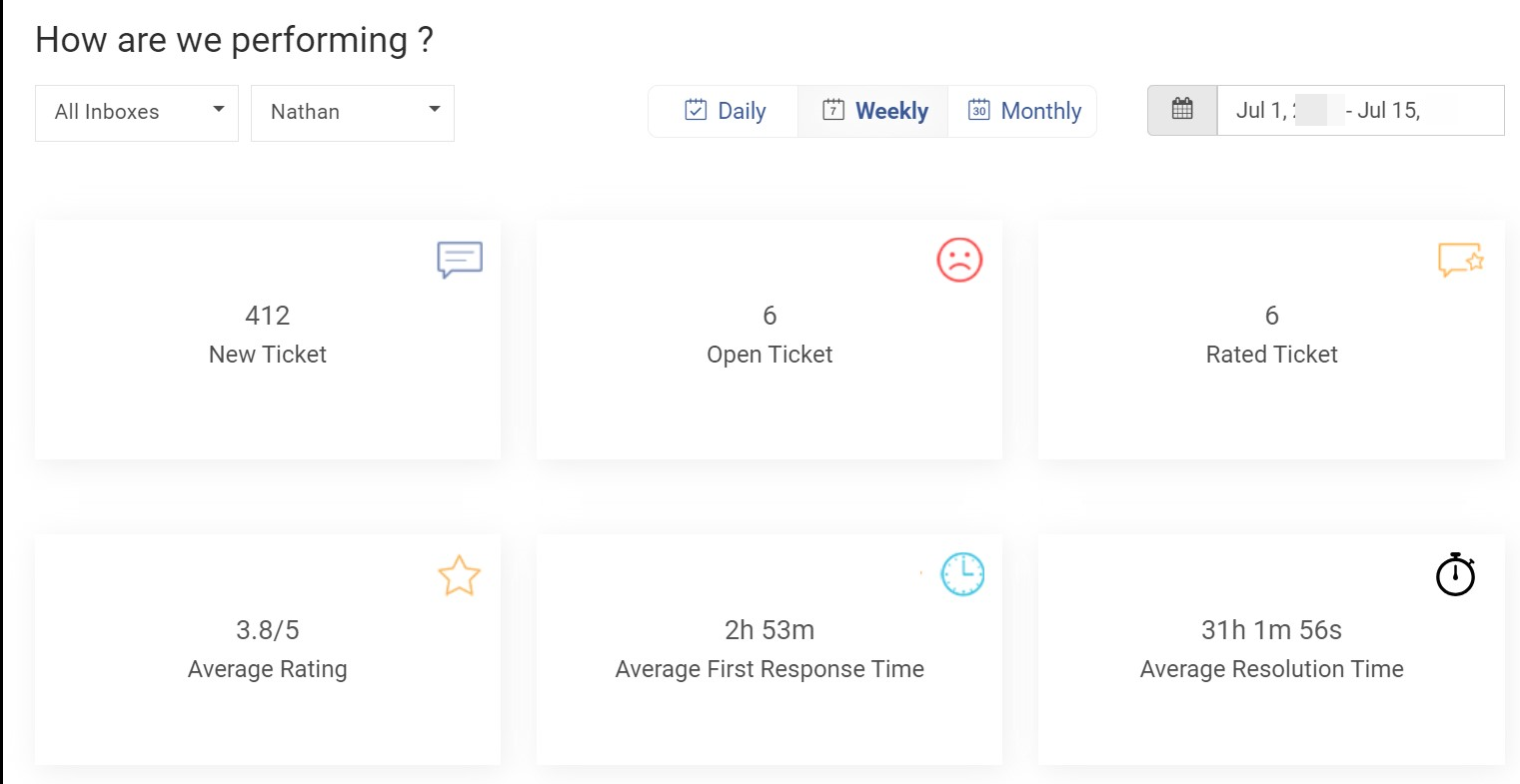
Use complaints as learning opportunities. Identify recurring patterns and train your team to prevent similar issues in the future. Monitor agent performance by tracking help desk metrics like response time, resolution time, CSAT ratings, etc. This will help identify agents that aren’t handling complaints efficiently and reveal training gaps.
A single complaint can uncover deeper operational issues worth fixing. Addressing these patterns helps reduce repeat complaints and improve service quality.
6. Turn Recovery Into Loyalty
When appropriate, consider offering a goodwill gesture such as a discount, account credit, or priority assistance. Small gestures can leave a lasting positive impression.
When handled thoughtfully, service recovery can actually strengthen customer loyalty. Customers often remember how you fixed the problem more than the problem itself.
FREE. All Features. FOREVER!
Try our Forever FREE account with all premium features!
What Are the Best Practices for Handling Customer Complaints on Different Channels?
Customer complaint handling isn’t one-size-fits-all. A detailed email response may feel appropriate over email, but the same approach could frustrate a live chat user or appear too slow and formal on social media.
Each support channel demands its own response style, speed, and level of personalization to resolve complaints effectively. Here are complaint management best practices for email, live chat, and social media:
| Best Practice | Email Support | Live Chat Support | Social Media Support |
| Respond Quickly | Acknowledge complaints within a few hours, even if full resolution takes longer. | Respond within minutes to prevent frustration from escalating. | Reply within an hour since delays are publicly visible. |
| Personalize the Response | Use the customer’s name and reference their specific issue clearly. | Keep replies conversational and tailored to the real-time interaction. | Avoid generic public replies; address the exact concern raised. |
| Show Empathy | Use thoughtful language to acknowledge inconvenience and frustration. | Express understanding naturally without sounding scripted. | Publicly acknowledge the concern with professionalism and care. |
| Provide Clear Next Steps | Outline exactly what action will be taken and expected timelines. | Clearly explain the resolution process during the conversation. | Direct the customer to private messages if detailed troubleshooting is needed. |
| Maintain Professional Tone | Keep responses polished, respectful, and solution-focused. | Balance professionalism with a friendly conversational tone. | Stay calm and brand-consistent, even if comments are harsh. |
| Take Sensitive Issues Private | Handle billing, account, or personal details securely via email. | Shift to secure channels if sensitive information is required. | Move complex or private complaints to DM or email immediately. |
| Follow Up After Resolution | Send a confirmation email to ensure satisfaction. | Confirm issue resolution before ending the chat session. | Follow up publicly (when appropriate) to show accountability. |
| Document the Complaint | Log the issue for future reference and trend analysis. | Record transcripts for training and process improvement. | Track recurring public complaints to identify systemic issues. |
What NOT to Say in a Complaint Response?
A bad complaint response doesn’t just fail to fix the problem. It becomes the problem.
The wrong words can escalate a customer complaint faster than the original issue itself. Even when your intention is good, certain phrases can come across as dismissive, defensive, or insincere, making frustrated customers feel unheard.
Here are some common mistakes to avoid when responding to complaints:
1. “That’s our policy.”
While policies matter, using them as a rigid response can sound cold and unhelpful. Customers want solutions, not a reminder of rules they may already find frustrating.
Instead, explain the policy clearly and pair it with empathy or an alternative solution whenever possible.
2. “There’s nothing we can do.”
This immediately shuts down the conversation and signals indifference. It leaves customers feeling abandoned rather than supported.
Even if options are limited, offer guidance on the next best step or explain what can be done.
3. “Calm down.”
Few phrases escalate frustration faster. It can feel dismissive and invalidating, especially when a customer is already upset.
A better approach is to acknowledge their frustration and reassure them that you’re actively working on a resolution.
4. “You misunderstood.”
This can sound accusatory and shift blame onto the customer. Even if there was confusion, pointing fingers rarely helps.
Focus on clarifying the issue respectfully and taking ownership of helping resolve it.
5. Generic Apologies Like “Sorry for the inconvenience.”
Overused apologies often feel robotic and insincere, especially when not paired with action.
Make your apology specific by referencing the actual issue and clearly stating how you’re fixing it.
6. “Please be patient.”
While sometimes necessary, repeated requests for patience can frustrate customers if no timeline or update is provided.
Instead, give a realistic timeframe and keep customers informed throughout the resolution process.
7. Overly Technical Explanations
Detailed internal jargon or technical excuses can confuse customers and make the issue seem more complicated than it is.
Keep explanations simple, clear, and focused on what matters most: the resolution.
Pro Tip: Here’s the rule I give every team I work with: before hitting send, read your response out loud as if you’re the one who’s been wronged. If any sentence makes you flinch, rewrite it. Using ticketing system software to track complaint history also helps agents reference past interactions and craft more empathetic, context-aware responses. Using ticketing system software to track complaint history also helps agents reference past interactions and craft more empathetic, context-aware responses.. The best complaint responses don’t sound like customer service. They sound like one human talking to another.
Handle & Delight Angry Customers With Complaint Response Templates
When you run a business, there are a hundred things that can go wrong and make your customers angry. It might seem like the more you try to avoid mistakes, the more they happen.
However, even the world’s top-rated companies are dealing with complaints almost every minute. The good news is that you can use customer complaint email response templates to pacify angry customers, educate them about what is going on, and share an appropriate apology.
The ten examples shared in this blog will help you handle complaints related to late product deliveries, impolite employees, defective items, technical issues, etc. You can use ProProfs Help Desk to automate your complaint-handling process. You can prioritize urgent issues, create hundreds of response templates, leverage AI for complaint summaries and response suggestions, and send automated CSAT surveys to identify customer pain points. Ready to turn customer complaints into compliments?
Frequently Asked Questions
What should a customer complaint response template always include?
It should cover acknowledgment of the issue, a genuine apology, a clear explanation of what went wrong, and the specific action being taken to fix it. Missing any one of these makes the response feel incomplete or dismissive.
How quickly should you respond to a customer complaint?
Ideally, within 24 hours. The longer you wait, the more the frustration compounds. For social media complaints, customers expect a reply even faster, often within the hour.
Should you apologize even if the complaint isn't your fault?
Yes. Apologize for the customer's experience, not necessarily for the cause. Saying "I'm sorry this happened to you" is very different from admitting liability, and it goes a long way.
Can a complaint response template sound too robotic?
Absolutely, and that's the biggest risk of using templates. Personalizing emails with the customer's name and referencing their specific issue is what separates a template that builds trust from one that makes things worse.
What's the difference between a good apology and a non-apology in a complaint response?
A non-apology uses hedged phrases like "We're sorry you feel this way," while a real apology takes full ownership: "You're right, we take full responsibility for what happened."
Should you respond to every customer complaint, even the unreasonable ones?
Yes, even if the complaint doesn't reflect reality, stay professional and respond with respect. A public non-response is often worse than an imperfect reply.
Do complaint response templates work for social media complaints, too?
The core structure works, but the tone must shift. Address the complaint publicly on the same platform first to show transparency, then move sensitive details to a DM.
FREE. All Features. FOREVER!
Try our Forever FREE account with all premium features!

 We'd love your feedback!
What did you like & how can we make it even better?
 Thanks for your feedback!
 Ask Your Question
Have a question? Get expert help to make your decision easier.