


Every week, I talk to IT managers, help desk leads, and operations teams who are drowning in tickets. Not because their teams aren’t capable, but because their tools are holding them back. Some are still running on legacy systems that were never designed for today’s volume. Others are paying enterprise-grade prices for features they’ll never use.
I’ve spent years working at the intersection of IT support and service delivery, evaluating ITSM tools across organizations of all sizes. What I’ve learned is this: the right ITSM tools don’t just reduce ticket backlogs. They transform how your entire organization delivers and experiences IT services.
A study by Grand View Research in 2024 shows the global ITSM market was valued at USD 13.46 billion in 2024 and is projected to reach USD 29.9 billion by 2030, a clear signal that businesses everywhere are doubling down on structured IT service management.
In this guide, I’ve hand-picked 12 of the best ITSM tools available this year. I’ve evaluated each one on features, AI capabilities, pricing, ease of use, and real-world usability. Let’s start!
What Are ITSM Tools?
ITSM tools (IT service management tools) are software platforms that help organizations design, deliver, manage, and continuously improve IT services. They provide structured workflows for incident management, change management, problem management, service requests, and asset tracking, all aligned to frameworks like ITIL (Information Technology Infrastructure Library).
In simple terms, when something breaks, someone requests something, or IT needs to make a change, ITSM tools are what keep that process organized, trackable, and fast.
Over the years, ITSM tools have evolved from basic ticketing systems into comprehensive platforms that serve IT teams of all sizes, across industries ranging from healthcare and finance to retail and education. Whether you are a five-person IT department or a global enterprise team, the right ITSM tool brings structure to what can otherwise be a chaotic, reactive environment.
If you are new to the concept, here is a short video explaining what ITSM means and how it can benefit your business.
Why Do Organizations Use ITSM Tools and Where Are They Deployed?
IT service management tools exist because IT support, at scale, simply cannot run on emails and spreadsheets. But the story doesn’t stop at the IT help desk anymore.
Organizations use ITSM solutions to centralize support across email, chat, web forms, and self-service portals into one system. They use them to automate repetitive tasks like ticket routing, notifications, and escalations. They use them to track and resolve incidents faster with structured workflows and SLA enforcement, to reduce ticket volume through knowledge bases, and to measure performance with dashboards, CSAT scores, and resolution time reports.
Modern ITSM platforms are also being deployed well beyond the IT department, a trend known as Enterprise Service Management (ESM). Today, ITSM tools are actively used in IT departments for incident management, change management, and asset tracking.
HR teams use them for onboarding requests, benefits inquiries, and employee relations. Facilities teams use them for maintenance requests and room bookings. Finance departments use them for software licensing and procurement approvals. Operations teams use them for shared inbox management and workflow coordination.
12 Best ITSM Software & Tools in This Year
Whether you’re a 10-person IT team or a service desk managing thousands of tickets monthly, there’s a tool on this list for you.
Here’s a quick comparison of all 12 best ITMS software before we dive into the details:
| Tool | Best For | Pricing |
|---|---|---|
| ProProfs Help Desk | Easiest AI Help Desk for Shared Inboxes, Ticket Workflow Automation, and Scaling Support Teams | A free plan is available for growing teams. Paid plan starts at $19.99/user/month |
| Zendesk | Large enterprise IT support | $55/user/month |
| Salesforce Service Cloud | Salesforce ecosystem users | $25/user/month |
| SolarWinds Service Desk | Network monitoring + ticketing | $39/user/month |
| SysAid | AI-powered ITSM automation | Custom pricing |
| HubSpot Service Hub | HubSpot CRM users | $15/user/month |
| Freshservice | Reporting & analytics | $19/user/month |
| TOPdesk | Self-service portal | Custom pricing |
| JitBit | Mobile-first IT support | $29/user/month |
| Jira Service Management | Dev & Ops collaboration | $22/user/month |
| ManageEngine ServiceDesk Plus | Incident tracking & asset management | Custom pricing |
| InvGate Service Management | Enterprise Service Management (ESM) | $17/agent/month |
1. ProProfs Help Desk – Easiest AI Help Desk for Shared Inboxes, Ticket Workflow Automation, and Scaling Support Teams
ProProfs Help Desk is an AI-powered IT ticketing and help desk platform built for teams that want fast, intelligent, and affordable IT support management.
I currently use ProProfs Help Desk to manage IT requests across multiple teams, and what sets it apart is how seamlessly AI is embedded into the actual support workflow; not bolted on as an afterthought. When an end-user reports a server outage or a data access issue, ProProfs AI reads the intent behind the message and instantly surfaces automated response suggestions. This alone has saved our team hours every week that used to go into crafting repetitive replies.
What I love most is how it centralizes everything. Incidents and service requests from email, live chat, user portal, and web forms all land in one shared inbox. There’s no toggling between platforms, no duplicate tickets, and no “who owns this?” confusion. I’ve also set up a self-service IT knowledge base with articles on common issues like password resets, VPN troubleshooting, hardware FAQs, etc., and it has visibly reduced our ticket volume by around 80%
Pros:
- ProProfs AI suggests automated responses based on ticket intent, speeding up resolution significantly
- Centralized shared inbox pulls in tickets from email, chat, web forms, and more
- Self-service knowledge base reduces IT ticket volume by enabling end-user self-help
- CSAT surveys and performance reports help measure and improve service quality
- The forever-free plan includes all premium features for a single user, with no hidden costs
Cons:
- No on-premise deployment option – cloud-only
- Dark mode for the user interface is not currently available
Pricing:
A free plan is available for growing teams. Paid plans start at $19.99/user/month
2. Zendesk – Best ITSM Tool for Large Enterprises
Zendesk is a comprehensive ITSM and customer service platform built to handle the complexity of large-scale IT support operations.
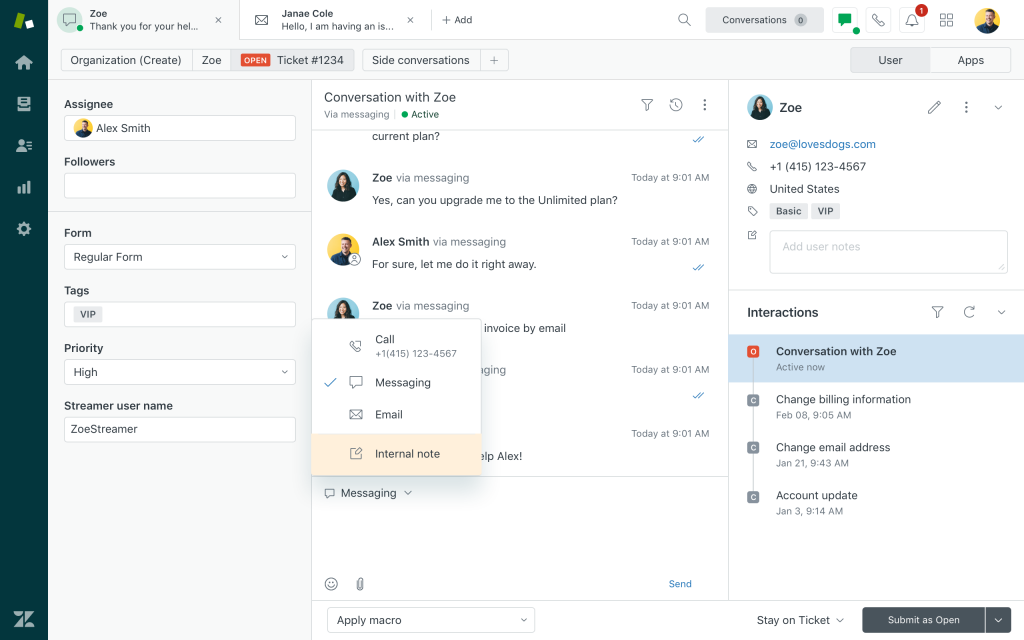
After spending a significant stretch managing enterprise support operations on Zendesk, I came away with a clear appreciation for what it’s built to do – and equal clarity on where it stretches the budget. The platform’s omnichannel capability is genuinely impressive. Phone, email, chat, social – every channel funnels into a single workspace, and the automation engine handles routing with remarkable accuracy at volume.
Where things get complicated is cost and configuration. For large organizations with complex support hierarchies, Zendesk required dedicated admin time and multiple rounds of workflow customization before it felt truly dialed in. And if you’re a small or mid-sized team, the per-seat pricing adds up fast. It’s a platform built for scale – and it shows, for better and for worse.
Pros:
- Omnichannel support consolidates phone, email, chat, and social into one unified workspace
- Advanced AI and automation capabilities handle ticket routing, tagging, and response suggestions
- Customizable workflows adapt to complex support hierarchies and escalation paths
- Robust analytics and reporting suite provides deep performance and SLA insights
Cons:
- Initial setup and configuration can be complex, particularly for large-scale deployments
- Pricing is steep for small to mid-sized teams – costs escalate quickly with additional features
Pricing:
Starts at $55/user/month.
3. Salesforce Service Cloud – Best ITSM Tool for Salesforce Ecosystem Users
Salesforce Service Cloud is an enterprise customer and IT service management platform tightly integrated with the Salesforce CRM ecosystem.
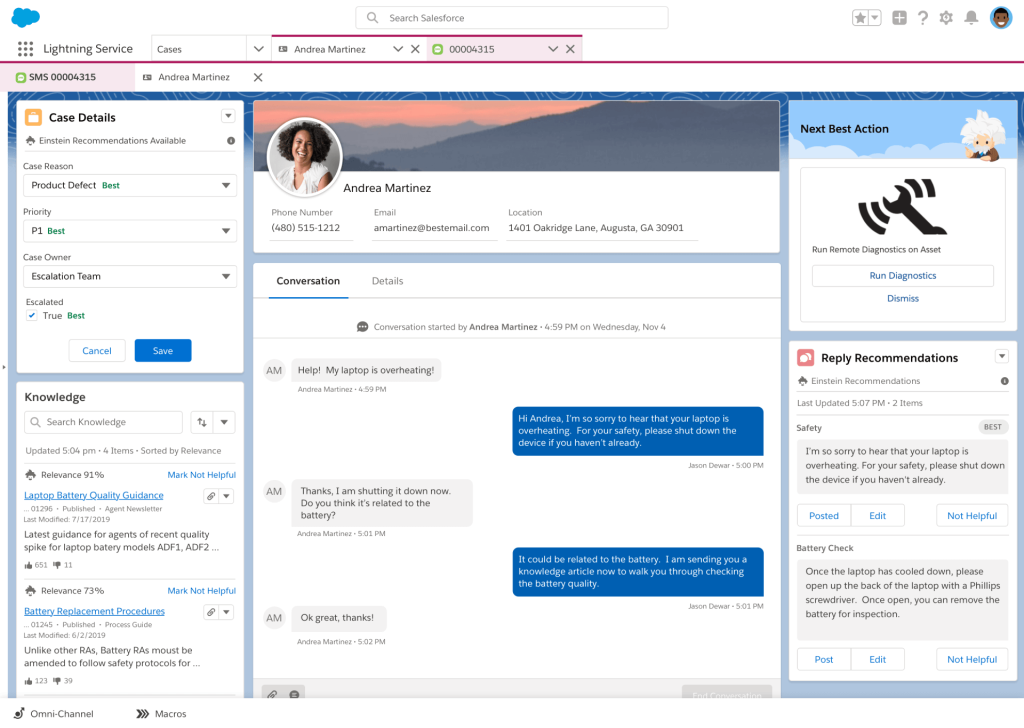
Working within the Salesforce ecosystem for an extended period, I found that Service Cloud’s biggest asset is also its biggest qualifier: if you’re already in Salesforce, this tool feels like a natural extension rather than a separate product. The 360-degree customer view – where IT tickets are linked to account history, open cases, and support interactions – was genuinely useful for prioritizing issues from high-value users.
Einstein AI added a layer of predictive intelligence I hadn’t experienced with lighter tools. It surfaced patterns in recurring incidents and flagged risk before things escalated. That said, the platform’s complexity is real – onboarding the team required structured training and, in some cases, external consultants. For organizations not already embedded in Salesforce, the ROI calculus gets harder to justify.
Pros:
- Deep, native integration with Salesforce CRM provides a unified view of all customer and employee data
- Einstein AI delivers predictive insights, issue classification, and resolution recommendations
- Omnichannel support covers email, chat, phone, and social media from a single platform
- Field service management module supports on-site technician dispatch and scheduling
Cons:
- Pricing escalates quickly when adding modules, additional users, or advanced AI features
- Not cost-effective for teams that don’t already use or plan to use the Salesforce ecosystem
Pricing:
Starts at $25/user/month.
4. SolarWinds Service Desk – Best ITSM Tool for Network Monitoring with Built-in Ticketing
SolarWinds Service Desk is an IT service management platform that uniquely combines help desk ticketing with network and infrastructure monitoring capabilities.
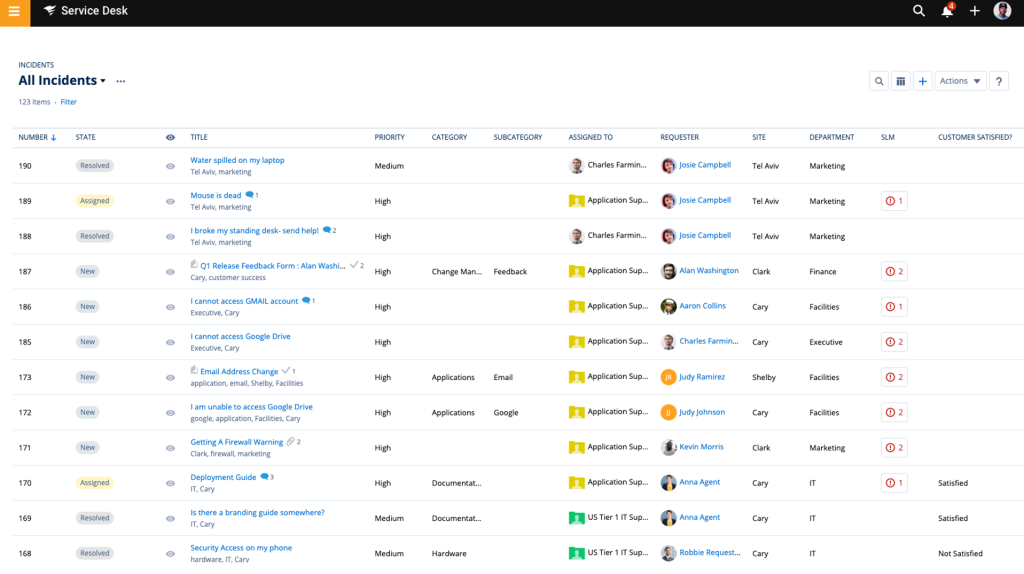
When I evaluated SolarWinds Service Desk, the standout was its integration of network monitoring within the ITSM layer – something most help desk tools treat as a completely separate concern. For infrastructure-heavy IT teams, this means proactive issue detection rather than reactive firefighting. Alerts from the network layer could auto-generate tickets, which reduced the lag between “something’s wrong” and “someone’s working on it.”
The ITSM capabilities are solid – incident management, change management, and asset tracking all work well together. The SolarWinds 2025 State of ITSM Report found that customers with GenAI-enabled tools collectively saved over 323,000 hours between August 2024 and July 2025 – a striking indicator of what this category of tool can do. The trade-off is a steeper learning curve given the breadth of functionality. Teams looking for a simple ticketing tool will find this platform more than they bargained for.
Pros:
- Integrated network monitoring enables proactive incident detection before users report issues
- Incident management supports automation, escalation rules, and SLA enforcement
- Change management module enforces controlled processes for IT modifications
- IT asset management tracks hardware and software inventory linked to service records
Cons:
- Less suited for customer-facing or non-IT service management use cases
- Some advanced reporting features require additional configuration effort
Pricing:
Starts at $39/user/month.
5. SysAid – Best ITSM Tool for AI-Powered Automation
SysAid is an AI-first ITSM platform designed to automate ticket management, asset tracking, and service delivery across IT organizations.
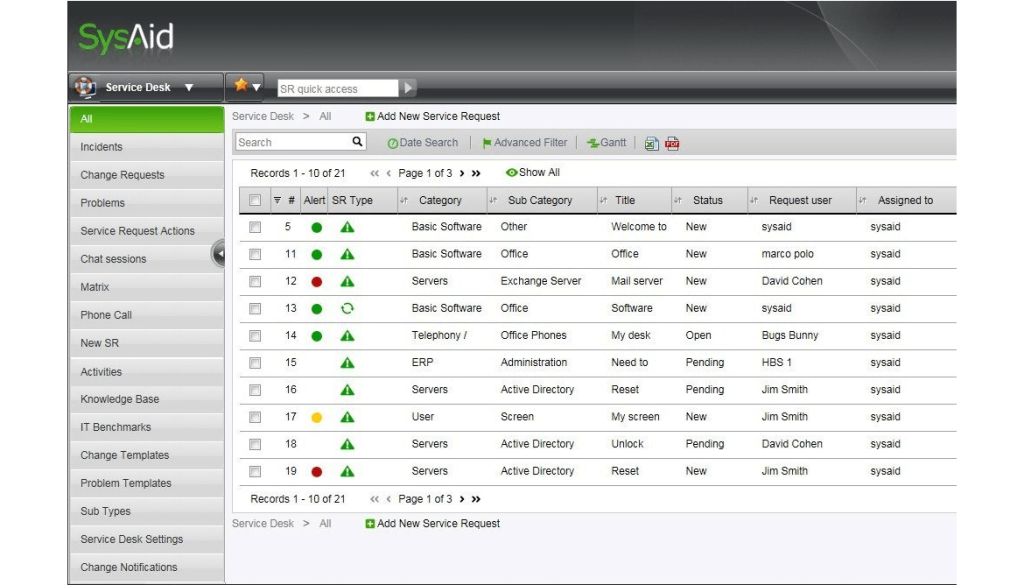
After spending roughly a year with SysAid, I became a believer in what a genuinely AI-native ITSM platform can do. The AI capabilities here go beyond response suggestions – SysAid’s AI prioritizes incoming tickets automatically based on urgency and category, surfaces relevant knowledge base articles for agents before they even open a reply, and automates entire workflows for routine requests.
The self-service portal is well-designed for end-users who want to submit and track tickets without calling the help desk. Asset management is also a strong suit – the CMDB integration means every ticket is automatically enriched with device and configuration context. For mid-sized IT teams that want ITIL-aligned capabilities without enterprise complexity, SysAid punches above its weight.
Pros:
- AI-powered ticket prioritization and automated workflow suggestions accelerate resolution
- Self-service portal enables end-users to log, track, and update tickets independently
- Asset management with CMDB integration provides configuration context inside every ticket
- Remote control capabilities allow technicians to troubleshoot user devices directly
Cons:
- AI capabilities have limitations in highly complex or edge-case scenarios
- Reporting and analytics features are less robust compared to dedicated analytics-first tools
Pricing:
Custom pricing – contact SysAid for a quote.
6. HubSpot Service Hub – Best ITSM Tool for HubSpot Users
HubSpot Service Hub is a customer service and IT ticketing platform built within the HubSpot CRM ecosystem.
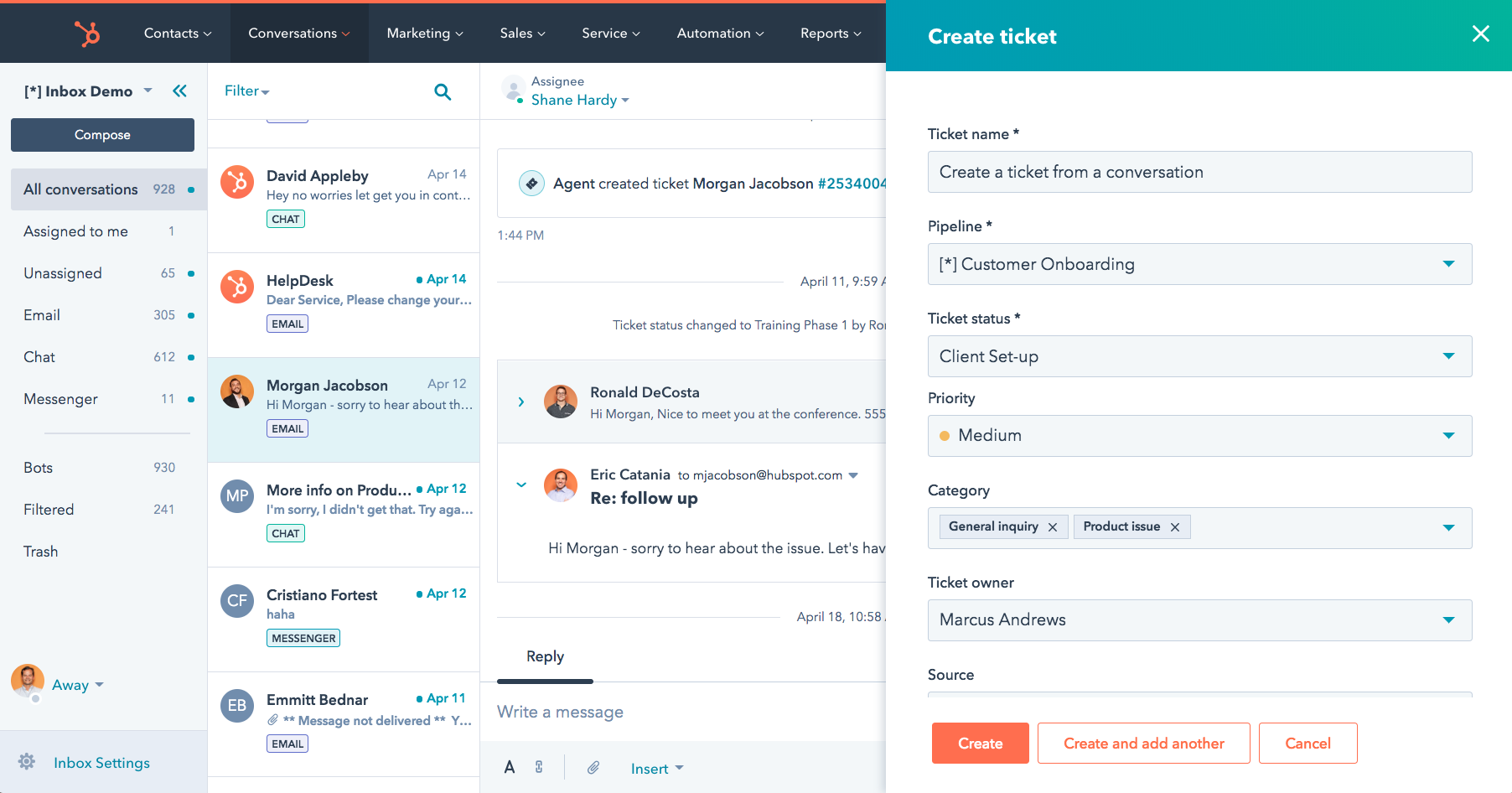
I spent time evaluating HubSpot Service Hub for a team that had outgrown a basic shared inbox but wasn’t ready for full enterprise ITSM. The value proposition is clearest when you’re already in the HubSpot ecosystem – every ticket automatically inherits the full customer or employee history from the CRM, which gives agents immediate context. The live chat and chatbot setup was straightforward and went live faster than I anticipated.
For IT-specific ITSM needs – particularly ITIL process adherence, asset management, or complex change workflows – Service Hub shows its limitations. It was designed primarily as a customer service tool, not a dedicated ITSM platform. But for SMBs that want to consolidate their helpdesk with their CRM without jumping to an enterprise solution, it offers real value at an accessible entry price.
Pros:
- Seamless native integration with HubSpot CRM provides unified contact and ticket history
- Live chat and AI chatbot capabilities enable real-time self-service for end-users
- CSAT surveys measure service quality and agent performance automatically
- In-depth analytics and reporting dashboards support data-driven service improvement
Cons:
- Limited customization compared to dedicated standalone ITSM platforms
- Not purpose-built for ITSM – lacks native ITIL process support, asset management, and CMDB
Pricing:
Starts at $15/user/month.
7. Freshservice – Best ITSM Tool for Reporting & Analytics
Freshservice is an ITIL-aligned IT service management platform known for its clean interface, comprehensive reporting, and mid-market accessibility.
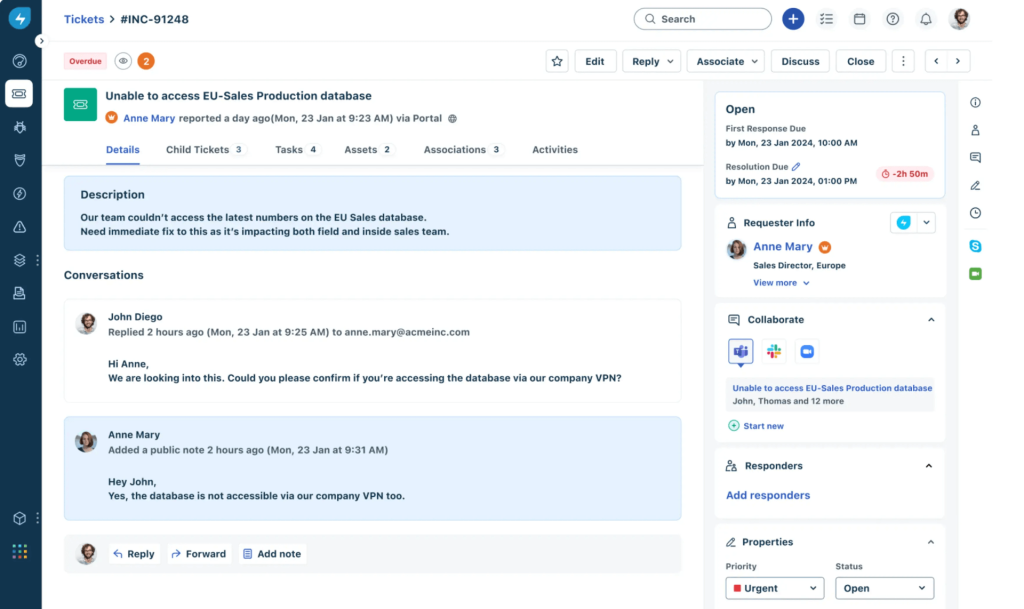
The first thing that struck me about Freshservice was how quickly the team adapted to it. For a platform with this much ITSM capability, the onboarding experience was remarkably smooth. The reporting suite stood out most – over 30 pre-built reports covering assets, incidents, SLA compliance, and agent performance. Being able to select a report type, set a timeline, and get clean visualized data within seconds made monthly stakeholder reviews far less painful.
The incident, problem, and change management modules are ITIL-aligned and well-structured. SLA policies can be customized by business hours and incident category, which gave us the precision we needed for priority-based routing. My one consistent gripe was the interface – while functional, it can feel cluttered before you’ve reorganized your workspace.
Pros:
- Advanced reporting suite with 30+ pre-built dashboards for incidents, assets, SLAs, and agents
- ITIL-aligned incident, problem, change, and release management workflows
- SLA policies are configurable by business hours and incident priority level
- IT asset management tracks hardware and software across the entire organization
Cons:
- User interface can feel cluttered and takes time to get used to
- Automation features are less advanced compared to AI-native competitors
Pricing:
Starts at $19/user/month.
8. TOPdesk – Best ITSM Tool for Self-Service Portal
TOPdesk is an ITSM solution with a strong focus on end-user self-service and is widely adopted in education and public sector organizations.
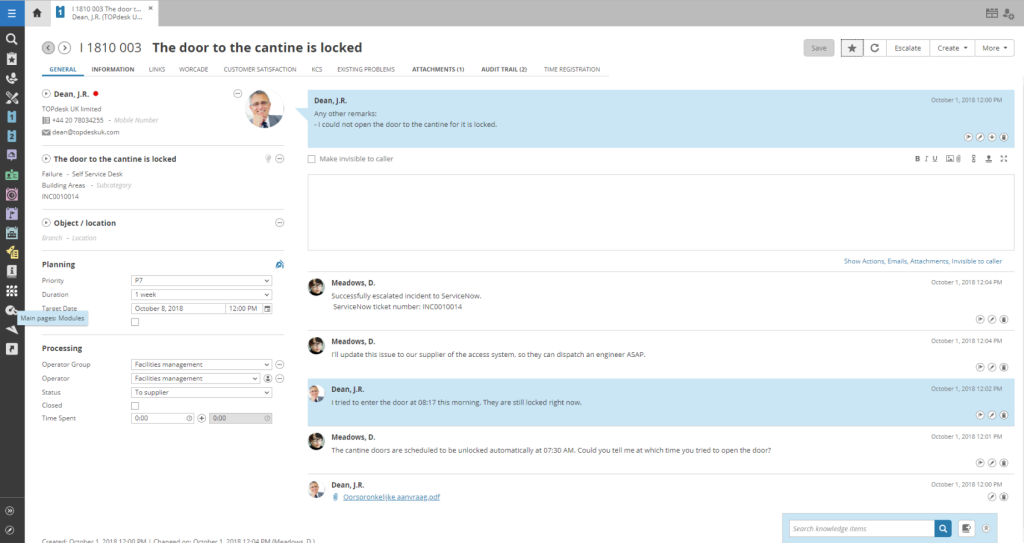
What drew me to TOPdesk was its self-service portal – one of the more user-friendly I’ve seen in this category. End-users could submit tickets, track their requests, browse knowledge base articles, and even manage IT asset requests from a single interface without needing to call or email anyone. For an organization where reducing first-contact volume was a priority, that mattered. The Kanban board for IT task management also gave the team a visual way to manage ticket priorities that agents actually enjoyed using.
TOPdesk has found strong footing in education and public sector environments, which makes sense – the interface is accessible, the self-service emphasis is real, and the implementation process is collaborative. Configuration does take time upfront, and the self-service portal’s customization ceiling is lower than some competitors, but the end result is a clean, usable system that end-users actually engage with.
Pros:
- Intuitive self-service portal reduces first-contact ticket volume by enabling independent issue resolution
- Knowledge management module centralizes IT documentation for agents and end-users alike
- Kanban board view gives agents a visual, prioritized task management experience
- Dedicated mobile app lets technicians manage and resolve tickets remotely
Cons:
- Self-service portal customization options are more limited than other platforms offer
- Initial configuration and setup can be complex and time-consuming
Pricing:
Custom pricing.
9. JitBit – Best ITSM Tool for Mobile-First IT Support
JitBit is a lightweight IT helpdesk platform with a strong emphasis on mobile accessibility and simplicity. What made JitBit stand out when I first used it was the mobile experience – it wasn’t an afterthought. The iOS and Android apps gave technicians the ability to receive notifications, respond to tickets, update statuses, and communicate with end-users from anywhere.
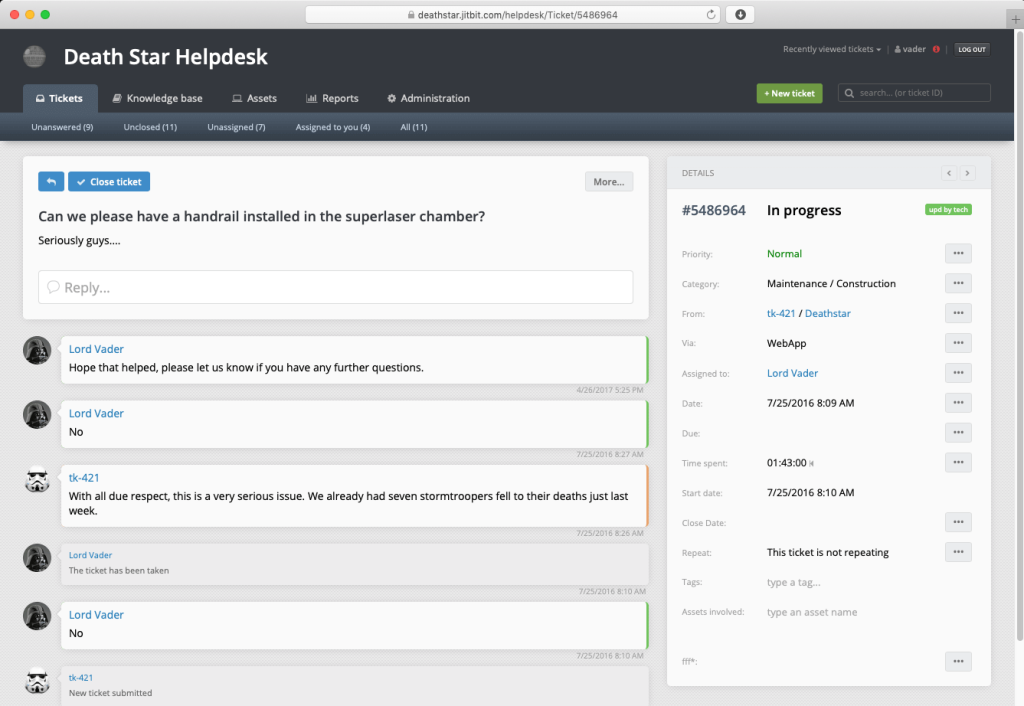
For a team managing IT support across multiple sites where technicians aren’t always at a desk, that responsiveness made a real operational difference.
Beyond mobility, I was particularly impressed with the custom ticket status feature. Creating statuses like “Escalated to Vendor” or “Pending Hardware Delivery” meant the team had real visibility into where every ticket stood – not just “open” or “closed.” Canned responses and automation kept routine ticket handling fast. It’s not the most feature-rich ITSM platform on this list, but for teams that want simplicity, speed, and strong mobile support, JitBit delivers.
Pros:
- Native mobile app for iOS and Android enables full ticket management from any location
- Custom ticket statuses provide granular workflow visibility beyond default open/closed states
- Canned responses allow agents to handle high-volume, repetitive queries quickly
- Time tracking built into the platform supports billing and productivity analysis
Cons:
- Reporting and analytics features are limited compared to analytics-focused ITSM tools
- Not designed for full ITSM maturity – lacks ITIL process modules and asset management depth
Pricing:
Starts at $29/user/month.
10. Jira Service Management – Best ITSM Tool for Dev & Ops Collaboration
Jira Service Management is an ITSM platform built on the Atlassian ecosystem, designed to bridge the gap between IT service teams and software development.
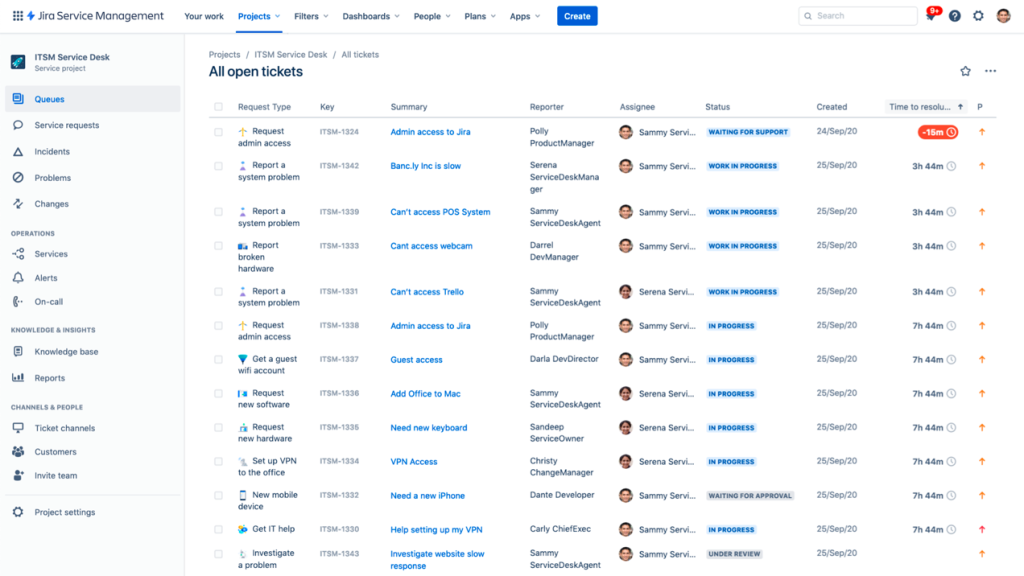
Having used Jira for project management for years, transitioning to Jira Service Management felt natural – but what surprised me was how well it actually worked as an ITSM platform in a DevOps environment. Incidents raised in JSM linked directly to Jira Software issues, Confluence documentation, and Opsgenie alerts. The result was a genuinely connected workflow where Dev and Ops weren’t operating in separate silos with separate tools.
The agile-focused approach to incident and change management brought a pace to service delivery that traditional ITSM tools rarely match. Customizable workflows meant we could model our specific approval and escalation chains without heavy admin overhead.
Pros:
- Deep native integration with Jira Software, Confluence, and Opsgenie enables true DevOps alignment
- Agile-focused ITSM capabilities support faster, iterative service delivery
- Customizable workflows adapt to specific team escalation and approval processes
- Cloud-first architecture with a data center option for organizations with on-premise requirements
Cons:
- Weaker customer-facing support features compared to dedicated customer service platforms
- Total cost of ownership can increase significantly when adding Atlassian marketplace apps
Pricing:
Starts at $22/user/month.
11. ManageEngine ServiceDesk Plus – Best ITSM Tool for Incident Tracking & Asset Management
ManageEngine ServiceDesk Plus is a comprehensive ITSM platform with deep incident management and IT asset tracking capabilities.
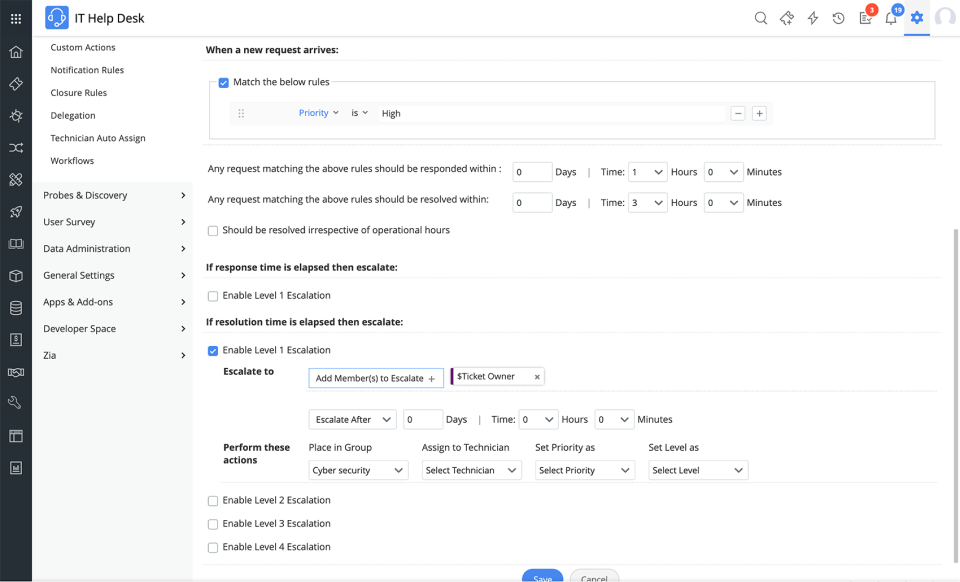
ManageEngine ServiceDesk Plus was the most feature-complete ITSM tool I evaluated, particularly around the intersection of incident management and asset management. Every ticket was automatically linked to the relevant asset record – hardware specs, software licenses, configuration history – which meant agents had full context before they opened a conversation. Change management workflows were strict and auditable, which made it the right fit for compliance-sensitive environments.
The depth comes with a cost, though. It took a few weeks of dedicated configuration and internal training before the team felt comfortable navigating the platform independently. The interface is functional but dated in places. That said, for IT teams managing large hardware and software estates who can’t afford to make undocumented changes, ServiceDesk Plus is hard to beat on substance.
Pros:
- Robust incident and problem management with full audit trails and SLA tracking
- Comprehensive IT asset management links every ticket to the relevant asset record
- Change management module enforces ITIL-aligned approval workflows
- Configuration Management Database (CMDB) provides infrastructure dependency mapping
Cons:
- User interface feels dated and could benefit from a modernization update
- Implementation requires significant upfront configuration effort
Pricing:
Custom pricing – contact ManageEngine for a quote.
12. InvGate Service Management – Best ITSM Tool for Enterprise Service Management (ESM)
InvGate Service Management is a flexible, no-code ITSM and ESM platform designed for organizations that want to extend IT service management practices across multiple business departments.
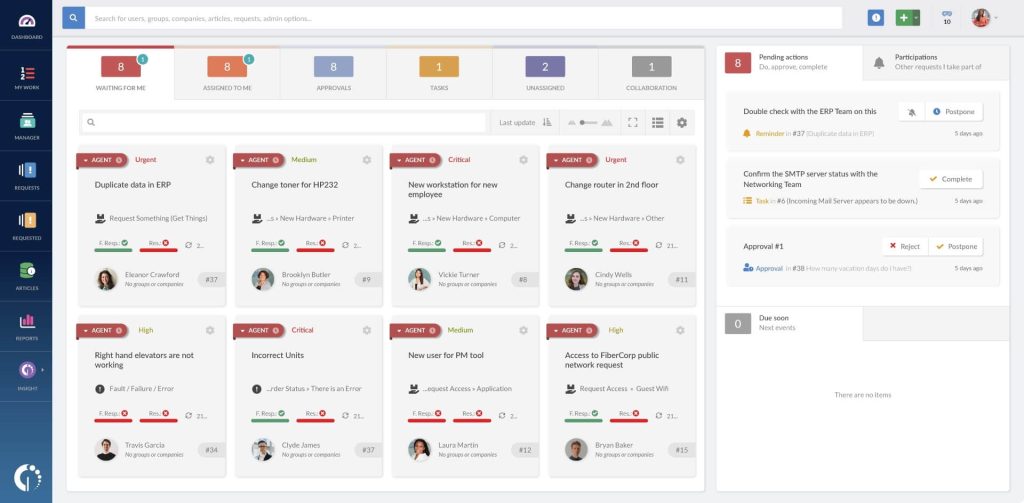
The ESM angle is where InvGate immediately separated itself from every other tool I evaluated. Most ITSM platforms are built for IT and adapted for other departments as an afterthought. InvGate was architected from the start to serve IT, HR, Finance, Facilities, and L&D teams within the same platform – with separate service catalogs, workflows, and SLAs for each. The no-code visual workflow builder meant I could configure department-specific processes without involving a developer.
AI capabilities – including ticket auto-classification and suggested responses – are available across all pricing tiers, including on-premise deployments, which is rare in this category. The user-friendly interface drove strong adoption rates, and the onboarding timeline was significantly shorter than comparable enterprise platforms.
Pros:
- ESM-ready architecture supports IT, HR, Finance, Facilities, and more from a single platform
- No-code visual workflow builder enables department-specific process configuration without developers
- AI-powered capabilities available across all pricing tiers including on-premise deployments
- User-friendly interface drives strong adoption rates across both technical and non-technical teams
Cons:
- Project management functionality is basic compared to dedicated project management tools
- Communication tool integrations (Slack, Teams) could be more extensive
Pricing:
Starts at $17/agent/month.
How Did I Evaluate These ITSM Tools?
The evaluation of products chosen for this article follows an unbiased, systematic approach that ensures a fair, insightful, and well-rounded review. I applied six key factors:
- User Reviews & Ratings: I studied direct user experiences from platforms like G2, Capterra, and Gartner Peer Insights to understand ground-level satisfaction and recurring pain points – not just what vendors claim in demos.
- Essential Features & Functionality: I assessed each tool’s core capabilities against what real IT teams need day-to-day: incident management, automation, self-service, asset tracking, and reporting. Tools that looked impressive in theory but underdelivered in practice were scored down.
- Ease of Use: A powerful ITSM tool that takes six months to implement and trains poorly is a liability, not an asset. I evaluated interface design, onboarding experience, and how quickly new agents could become productive.
- Customer Support Quality: I examined how each vendor supports its own customers – onboarding assistance, documentation quality, and support responsiveness across different pricing tiers. Poor support from an ITSM vendor is especially ironic.
- Value for Money: I compared pricing against what each tier actually delivers. Tools that offer genuine capability at SMB-friendly price points scored higher than bloated enterprise platforms charging for features most teams will never use.
- Personal Experience & Expert Insights: Where I had direct experience with a tool – either through hands-on evaluation or working alongside teams that use it – I incorporated those observations. I also drew on published frameworks like ITIL and industry benchmarking data from SDI, Gartner, and InvGate.
FREE. All Features. FOREVER!
Try our Forever FREE account with all premium features!
My Top 3 Picks for the Best ITSM Tools
Choosing the right ITSM solution depends on your team size, maturity, and budget. That said, here are my top three recommendations after evaluating tools across real organizations.
1. ProProfs Help Desk
ProProfs Help Desk is my #1 pick for teams that want powerful AI-driven IT support without the complexity or cost of enterprise platforms. It combines a smart shared inbox, AI-powered response suggestions, a self-service knowledge base, and CSAT surveys – all in one place. The forever-free plan and transparent per-user pricing make it an ideal fit for SMBs and growing IT ticketing teams who need results fast without a lengthy implementation process.
2. Freshservice
Freshservice earns its place for teams that need deep ITSM structure – particularly strong reporting, ITIL-aligned workflows, and a clean interface that makes it easy for agents to get up to speed quickly. It’s a go-to for mid-market IT teams transitioning away from email-based support who need both usability and process discipline.
3. ManageEngine ServiceDesk Plus
ManageEngine ServiceDesk Plus is the power tool for organizations where incident tracking and IT asset management are non-negotiable. If your IT team manages a large hardware and software estate and needs tight control over changes, configurations, and compliance – this one delivers. The learning curve is steeper, but the depth is hard to match at its price point.
What Features Should ITSM Tools Include?
Not all ITSM tools are built the same. Some are designed for large enterprises with complex IT estates. Others are built for lean teams that just need tickets organized and resolved fast. Regardless of where your organization sits, there are core capabilities that every solid ITSM solution should offer. Here is what I always check for when evaluating any platform.
1. Incident and Ticket Management
This is the backbone of any ITSM tool. It should cover the full lifecycle of a ticket, from the moment a user submits a request to final resolution and closure. Look for ticket management features like auto-assignment, priority tagging, status tracking, and internal notes so agents always know exactly where a ticket stands.
2. Automation
Manual ticket handling at scale is a productivity killer. The right ITSM software should let you build automation rules for routing tickets to the right agent, sending acknowledgment notifications, escalating overdue tickets, and triggering canned responses for common issues.
A study by Ivanti in 2024 found only 46% of organizations use service desk ticket automation, meaning most teams are still leaving significant efficiency on the table.
3. Self-Service Portal and Knowledge Base
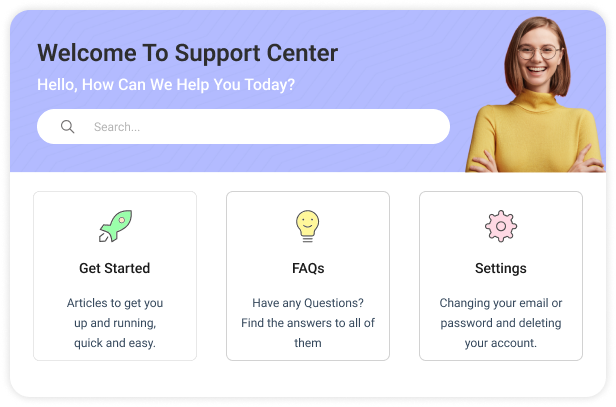
One of the highest-ROI features in any ITSM solution. A well-built help center allows end-users to find answers to common questions on their own, whether it’s a password reset guide, a VPN setup walkthrough, or a hardware request form. This directly reduces incoming ticket volume and frees your team to focus on higher-complexity issues.
4. AI Capabilities
AI is no longer a differentiator in ITSM tools. It is becoming table stakes. Look for AI that surfaces suggested responses based on ticket content, auto-categorizes and routes tickets, flags sentiment in user messages, and learns from resolved tickets to improve over time. The AI help desk capabilities available today can dramatically accelerate resolution without adding headcount.
5. SLA Management
Service level agreements define your team’s commitments to users. Your ITSM platform needs to let you set SLA targets by ticket type, priority, or department, and then automatically track, alert, and escalate when those targets are at risk. Without this, SLA compliance is impossible to enforce at scale.
6. Reporting and Analytics
You cannot improve what you cannot measure. Strong reports and tracking capabilities should cover first response time, resolution time, CSAT scores, ticket volume trends, agent performance, and SLA compliance, all accessible in real time without needing a data analyst.
7. Omnichannel Support
Your users contact IT through email, web forms, live chat, and sometimes even messaging apps. The best ITSM tools bring all of those channels into a single omnichannel helpdesk workspace, so no request falls through the cracks just because it came in through a different channel.
8. Team Collaboration
IT issues often require input from multiple people. Look for internal notes, @mentions, ticket collision detection (so two agents don’t respond to the same ticket simultaneously), and team collaboration features that keep your team aligned without creating confusion.
9. Asset Management
For IT-specific ITSM deployments, asset management is critical. The ability to link a ticket to a specific device, software license, or configuration item gives agents immediate context and reduces back-and-forth with the end-user.
10. Pricing Transparency
This one matters more than people admit. Hidden costs, per-feature add-ons, and opaque enterprise pricing make it nearly impossible to budget accurately. Prioritize ITSM software that publishes clear, predictable pricing and lets you understand exactly what you are paying for at each tier.
Boost IT Support With the Right ITSM Tool
The right ITSM tool doesn’t just close tickets faster – it builds a support operation your team is confident running and your users actually trust. Whether that means reducing a 5-day resolution backlog to same-day, enabling HR to manage employee requests on the same platform as IT, or finally giving leadership the reporting they need to make resourcing decisions – the right platform changes what your team is capable of.
The tools on this list represent the best of what’s available in 2026 across a range of team sizes, budgets, and use cases. Start by being honest about where you are today – your ticket volume, your team’s technical depth, and what’s costing you the most time. Then match that to the tool that solves those problems first, with room to grow.
If you’re a growing team looking to get started without a lengthy implementation or an enterprise price tag, ProProfs Help Desk is worth a serious look. The AI capabilities, shared inbox, self-service knowledge base, and transparent pricing make it one of the easiest ITSM solutions to get value from – fast.
Frequently Asked Questions
How much do ITSM tools typically cost?
ITSM tool costs range widely based on features, user count, and vendor. Entry-level tools start around $15–$20 per user per month. Mid-range platforms typically fall between $30–$60 per user per month. Enterprise ITSM solutions like ServiceNow use custom pricing that can run significantly higher. Several tools on this list offer free plans or 15-day trials.
Are there free or open-source ITSM tools available?
Yes. Open-source options like OS Ticket exist and can work for very small teams or pilot projects. ProProfs Help Desk also offers a genuinely free plan for a single user that includes all premium features. The trade-off with open-source tools is higher maintenance burden, limited automation, and less support - all of which add hidden costs as your team scales.
What is ITIL and why does it matter for ITSM tools?
ITIL (Information Technology Infrastructure Library) is a globally recognized framework for IT service management. It provides standardized processes for incident management, problem management, change management, service request management, and more. Many ITSM tools are "ITIL-aligned," meaning they support these processes out of the box. Choosing an ITIL-aligned tool helps organizations standardize service delivery and align IT operations with business goals.
What is Enterprise Service Management (ESM)?
Enterprise Service Management is the practice of extending ITSM principles and tools beyond the IT department to other business functions - HR, Finance, Facilities, Legal, and more. Instead of each department building separate processes and tools, ESM creates a unified service management approach across the organization. Tools like InvGate Service Management are built specifically for ESM, while others support it to varying degrees.
How does AI impact ITSM tools?
AI is transforming IT service management in several concrete ways: auto-classifying and routing tickets, suggesting responses based on ticket content, deflecting tickets through intelligent self-service, predicting recurring problems before they escalate, and generating insights from historical ticket data. A study by Rezolve.ai in 2024 found that organizations using AI-powered ITSM tools achieved a 75% reduction in resolution times.
When should my organization upgrade its ITSM tool?
The clearest signals are: your current tool is being discontinued, your team has grown beyond what email or spreadsheets can handle, you're missing automation that costs your team time daily, you have no visibility into SLAs or performance metrics, or you're paying for a complex platform that your team uses for basic ticketing only.
FREE. All Features. FOREVER!
Try our Forever FREE account with all premium features!

 We'd love your feedback!
What did you like & how can we make it even better?
 Thanks for your feedback!
 Ask Your Question
Have a question? Get expert help to make your decision easier.