

Having worked closely with growing businesses and lean support teams, I’ve noticed a clear pattern. In the early stages, you need smart systems, not heavy investments. Every decision is about maximizing value while keeping operations cost-effective.
That’s exactly why so many growing businesses start looking for free help desk software before they’re ready to invest in an enterprise platform.
In my experience, the right free help desk tool isn’t just about saving money. It’s about building a support system early, one that helps you organize requests, assign ownership, track response times, and keep customers confident that someone is on it. All that without any heavy investment.
Fortunately, today, there are many free tools that actually feel professional, not like temporary trials. In this guide, I’ll walk you through the top 11 free help desk platforms that cost you nothing, but still deliver real structure from day one.
What Is Free Help Desk Software?
Free help desk software is a tool that helps businesses manage customer or employee support requests without paying upfront costs. Instead of handling everything through scattered emails or spreadsheets, it organizes queries into support tickets. This makes it easier to track issues, assign them to the right team members, and ensure timely responses.
For startups and small teams, free help desk software is often the first step toward building a more structured and professional support system.
Here’s what free help desk software typically brings to the table:
- Converts customer emails and messages into trackable support tickets
- Helps prevent missed requests and delayed responses
- Offers basic ticket assignment and workflow management
- Includes simple dashboards to monitor open and closed issues
- Works well for growing teams testing support processes early
- Many free plans can later scale into paid versions with advanced features
11 Free Help Desk Software Options You Shouldn’t Miss
Now, I’ll walk you through each tool’s main features, benefits, drawbacks, and pricing; everything you need to make the right choice. I’ve carefully reviewed and compared these options to help you find the one that best fits your support needs.
Note: This list includes two kinds of free help desk ticketing software: some offer a forever-free plan (with a few limits), while others offer a free trial for a limited period so you can explore their features before deciding whether to upgrade.
Let’s take a quick look at what each tool has to offer.
| Free Help Desk Software | Best For | Pricing | User Ratings (Capterra & G2) |
|---|---|---|---|
| ProProfs Help Desk | AI-Assisted Help Desk for Customer Delight | A free plan is available for growing teams. Paid plan starts at $19.99/user/month. | 4.9 (Capterra) |
| Zendesk | Large Businesses & Enterprises | Paid plans start at $55/user/month (14-day free trial available). | 4.3 (G2) |
| Spiceworks | Open-Source Ticketing System | Free for all users. | 4.3 (Capterra) |
| Freshdesk | Multichannel Communications | A free plan is available for up to two agents. Paid plans start at $15/user/month. | 4.4 (G2) |
| HubSpot Service Hub | HubSpot Users | A free plan is available with limitations. Paid plans start at $15/user/month. | 4.4 (G2) |
| BoldDesk | Help Desk Customization | A free plan is available with limitations. Paid plans start at $12/user/month. | 4.5 (G2) |
| Zoho Desk | Contextual Users | Paid plans start at $14/user/month (15-day free trial available). | 4.5 (Capterra) |
| HelpCrunch | Creating a Knowledge Base | Paid plans start at $12/user/month (14-day free trial available). | 4.8 (Capterra) |
| LiveAgent | Chat-Based Support | Paid plans start at $15/user/month (30-day free trial available). | 4.5 (G2) |
| SysAid | AI-Powered ITSM | Custom pricing (30-day free trial). | 4.5 (G2) |
| Hiver | Gmail-Based Support | A free plan is available with limitations. Paid plans start at $19/user/month. | 4.7 (Capterra) |
1. ProProfs Help Desk – Best for AI-Assisted Help Desk for Customer Delight
When I first started looking for a help desk tool, I didn’t expect a free option to offer so much, but ProProfs Help Desk completely surprised me. Even in its free plan, it offers a full range of features that make handling support tickets smooth and stress-free.
I can manage tickets coming in from email, chat, website forms, portal, and more, all in one place. The ticket forms are easy to set up, so customers can reach out without any hassle.
What really makes a difference for me are the automation features like SLA tracking, automated workflows, and ticket routing, which help ensure nothing gets delayed or overlooked. The built-in AI saves time by summarizing tickets and suggesting responses. It even uses sentiment analysis, which helps me quickly spot when a customer might be upset or frustrated.
I also use labels to categorize and prioritize tickets, so I never lose track of important issues. Plus, with the self-service options, I’ve reduced repetitive queries by directing customers to helpful resources before they even submit a ticket.
Pros:
- Role-based permissions to control agent access and responsibilities
- Omnichannel support to provide a seamless experience across channels
- Filters to quickly find tickets based on status, type, or urgency
- Customer Delight Suite to offer 360-degree support
Cons:
- Cloud-only – no offline access
- No dark theme
User rating: 4.9 (Capterra)
Pricing: A free plan is available for growing teams (inclusive of all premium features). Paid plan starts at [automate-price].
Don’t take my word for it. See how ProProfs Help Desk helped Steve Organek, the founder of Shavershebang.com, reduce response times.

2. Zendesk – Best for Large Businesses & Enterprises
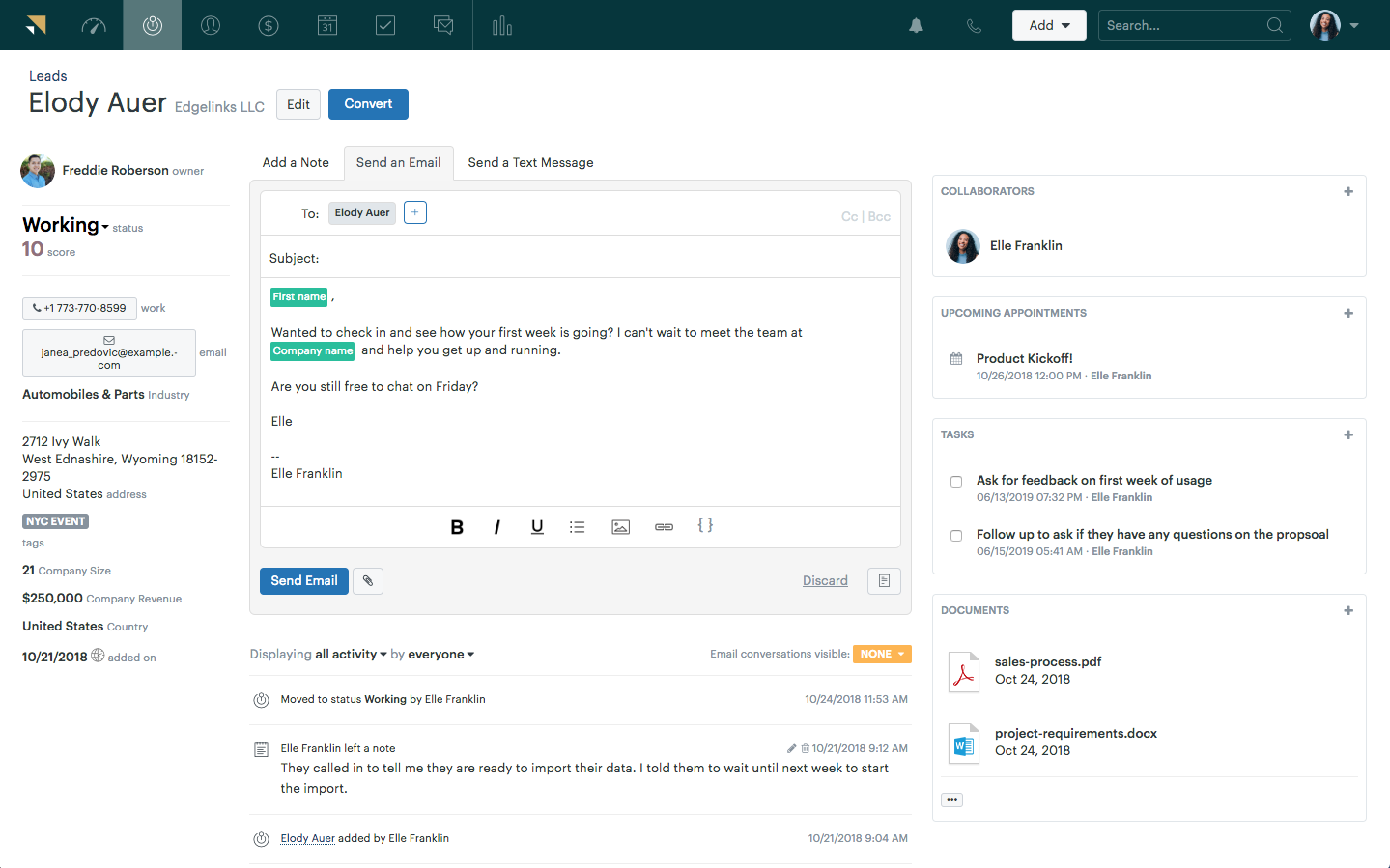
Unlike the ProProfs Help Desk, Zendesk doesn’t offer a forever-free plan—instead, it gives you a free trial. I tried it when our enterprise needed a robust help desk solution, and while the trial was limited in time, it showcased powerful features right away. I could manage multi-channel tickets from email and web, use basic automation tools, and set up macros to streamline repetitive replies.
Zendesk really shines in high-volume environments, perfect for large teams or enterprise-scale support. The system connects agents, offers rich customer context in one view, and includes smart workflows that help reduce manual effort. It’s not just a ticketing tool—it feels like a full support ecosystem.
However, once the trial ends, the paid plans are on the pricier side. So while it’s one of the best free help desk software trials for enterprise testing, be prepared for a significant investment if you decide to stick with it.
Pros:
- Omnichannel support to offer consistent assistance across email, chat, etc
- Internal notes to promote team collaboration
- Basic automation and pre-set macros to save time
- Reporting and analytics dashboard for better insights
Cons:
- Can be expensive to scale with multiple agents due to per-agent pricing
- Feature complexity can be overwhelming for small teams
User rating: 4.3 (G2)
Pricing: Paid plans start at $55/user/month (14-day free trial available).
3. Spiceworks – Best Open-Source Ticketing System
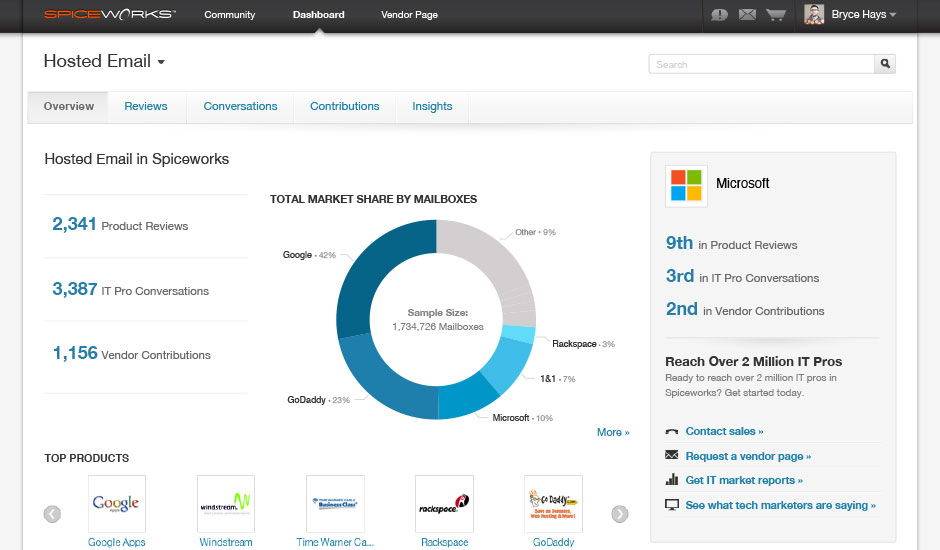
A friend of mine used Spiceworks to run IT support at a mid-sized firm, and for a free tool, it handled more than you’d expect. It’s completely open source and free for all users, with no trial periods, no hidden costs. They used it to manage internal support tickets, set up basic automation, and respond to users efficiently.
The email-to-ticket feature works reliably, and the built-in knowledge base reduces repeated requests. The interface is simple, and assigning or escalating tickets is quick. It’s best suited for internal IT help desks that need something functional without investing in a paid system.
The only downside he mentioned was that since it’s self-hosted, you’re responsible for maintenance and updates, which may not suit everyone. But if you’re comfortable managing that, Spiceworks can be a good option.
Pros:
- Active directory integration to sync users and manage access without manual setup
- Mobile app support to respond to and manage tickets remotely
- Custom ticket fields to organize and prioritize requests based on your team’s workflow
- Community-built plugins to extend functionality with tools tailored by other IT pros
Cons:
- Notifications and email alerts can be inconsistent
- Mobile app lacks some key functionality present on the desktop
User ratings: 4.3 (Capterra)
Pricing: Free for all users.
4. Freshdesk – Best for Multichannel Communications
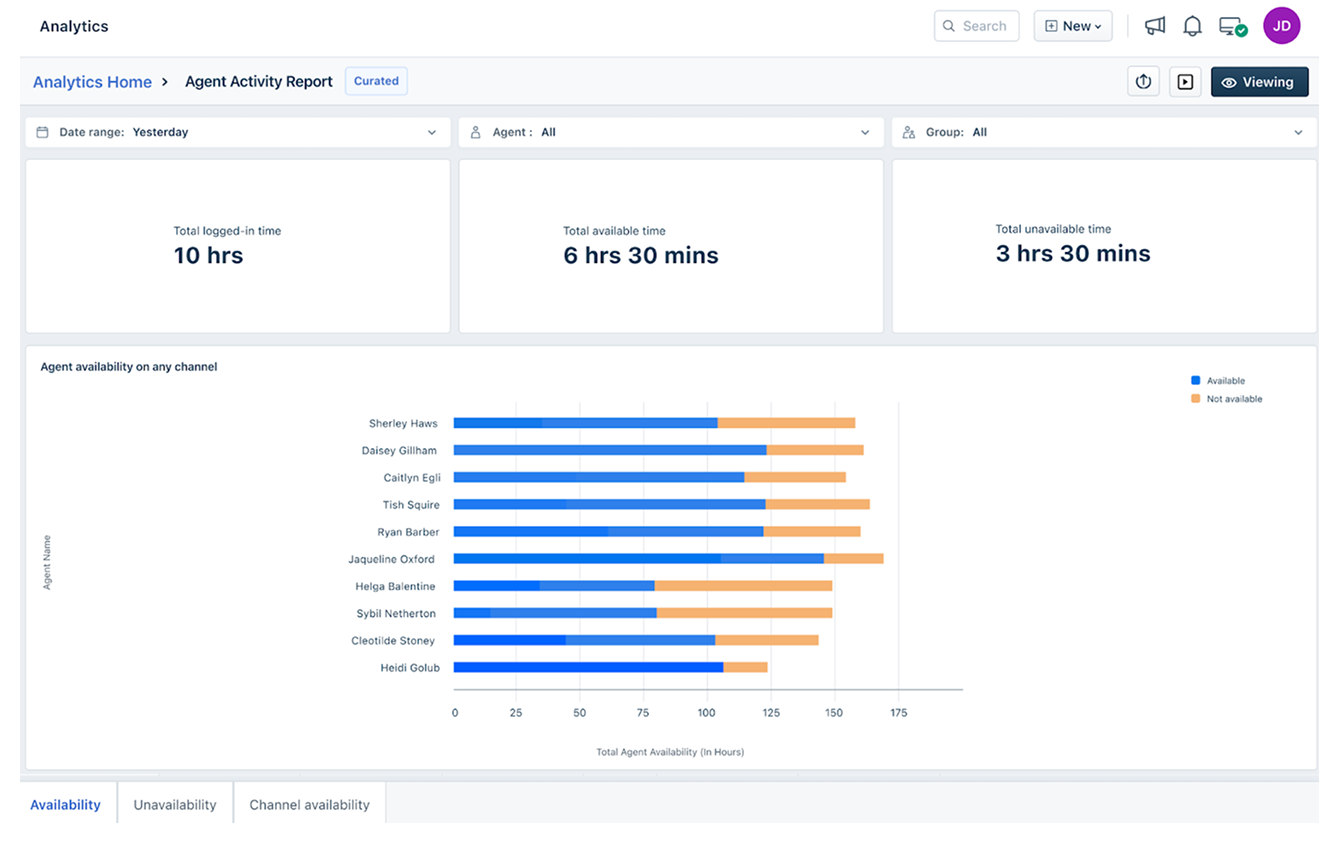
I used Freshdesk a while back when our team needed a solid, no-cost help desk solution, and it genuinely delivered more than we expected. What I really liked was its multichannel communication. We could handle emails, chats, and social media queries all in one place, which made it ideal for a growing support team.
The AI features (Freddy AI) helped us stay ahead of ticket backlogs with smart routing, sentiment analysis, and even content suggestions. We also relied heavily on the self-service tools, especially the multilingual knowledge base and customizable customer portal.
Plus, with analytics dashboards, SLA-based routing, and automation rules, Freshdesk felt like a premium tool, just without the price tag.
Pros:
- Shared inbox to bring all customer conversations together
- Custom roles & access to keep internal data secure
- Pre-filled ticket templates to quickly create tickets with standardized formats
- Article versioning to track every change in your knowledge base
Cons:
- Advanced automation and SLA management require paid upgrades
- AI capabilities like Freddy AI Copilot and AI ticket handling are not included in the free plan
User rating: 4.4 ( G2)
Pricing: A free plan is available for up to two agents. Paid plans start at $15/user/month.
5. HubSpot Service Hub – Best for HubSpot Users
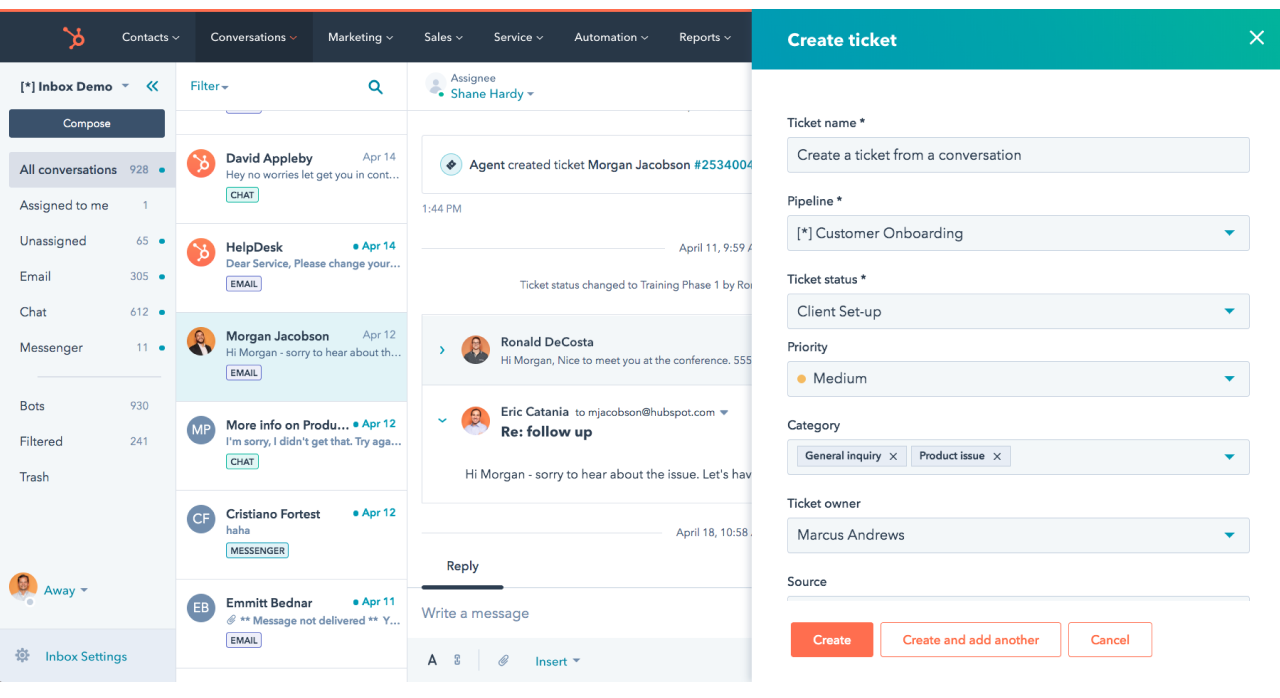
HubSpot Service Hub is a great help desk tool, especially if you’re already using HubSpot for sales or marketing. It gives you a free ticketing system that connects directly to your CRM, so you can keep track of all customer conversations in one place. I liked how easy it was to use, everything felt smooth and organized.
The AI features really helped us move faster. Features like ticket summaries and reply suggestions saved time, and the system could even tell how the customer was feeling with sentiment analysis. Plus, with support for email, chat, phone, and even WhatsApp, we didn’t miss a thing.
Some advanced features, like SLAs and custom workflows, require a paid plan, which can be a bit limiting at times, but for basic support needs, the free version does the job well.
Pros:
- AI ticket summaries to quickly understand what each ticket is about without reading everything
- Skills-based routing to make sure each ticket goes to the right team member
- Sentiment analysis to spot frustrated customers early
- CRM connection to see the full customer story without switching tools
Cons:
- Reporting and analytics capabilities are limited on the free tier
- Paid tiers can be expensive as team size and needs grow
User Rating: 4.4 (G2)
Pricing: A free plan is available with limitations. Paid plans start at $15/user/month.
6. BoldDesk – Best for Help Desk Customization
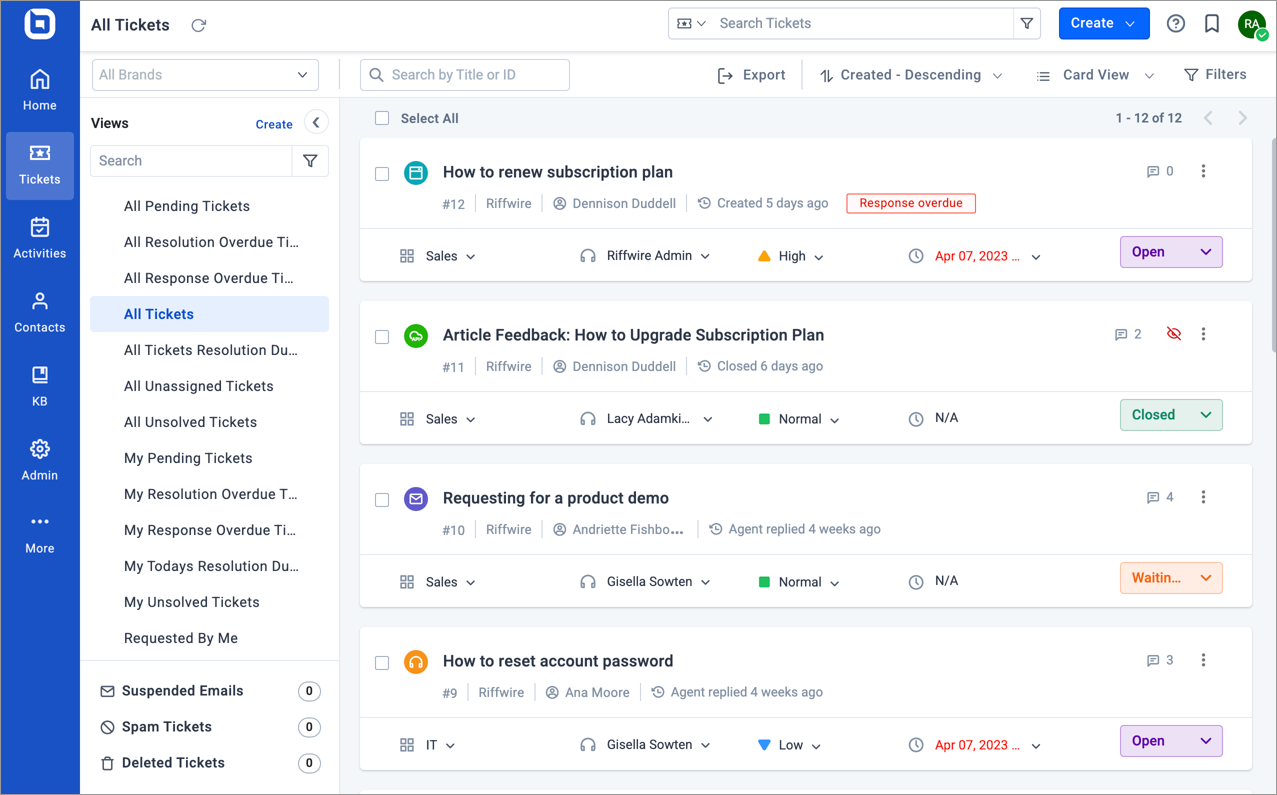
I used BoldDesk at my last company, and it was surprisingly good. What stood out the most was how much you could customize. From ticket views and workflows to agent permissions, it felt like I could shape the platform exactly how our team worked.
The AI ticketing system saved us a lot of time, and having all our channels—email, chat, and even WhatsApp- in one place was super helpful. Plus, the knowledge base and AI Copilot made it easier for customers to help themselves and for us to respond faster.
There’s definitely a lot packed into the tool, so it takes a little time to explore everything. But once you’re set up, it’s super efficient and their support team is quick to help if you need it.
Pros:
- Mobile app to deliver customer support on-the-go with full mobile functionality
- CSAT tracking to monitor and improve customer satisfaction with built-in feedback tools
- Seamless integration with popular tools like Microsoft Teams, Slack, and more
- Analytics dashboard to track performance metrics to drive data-backed improvements
Cons:
- Live chat and multichannel support may be restricted without a paid subscription
- More advanced automations like SLA escalation and macros are part of higher tiers
User rating: 4.5 (G2)
Pricing: A free plan is available with limitations. Paid plans starts at $12/user/month.
7. Zoho Desk – Best for Contextual Users
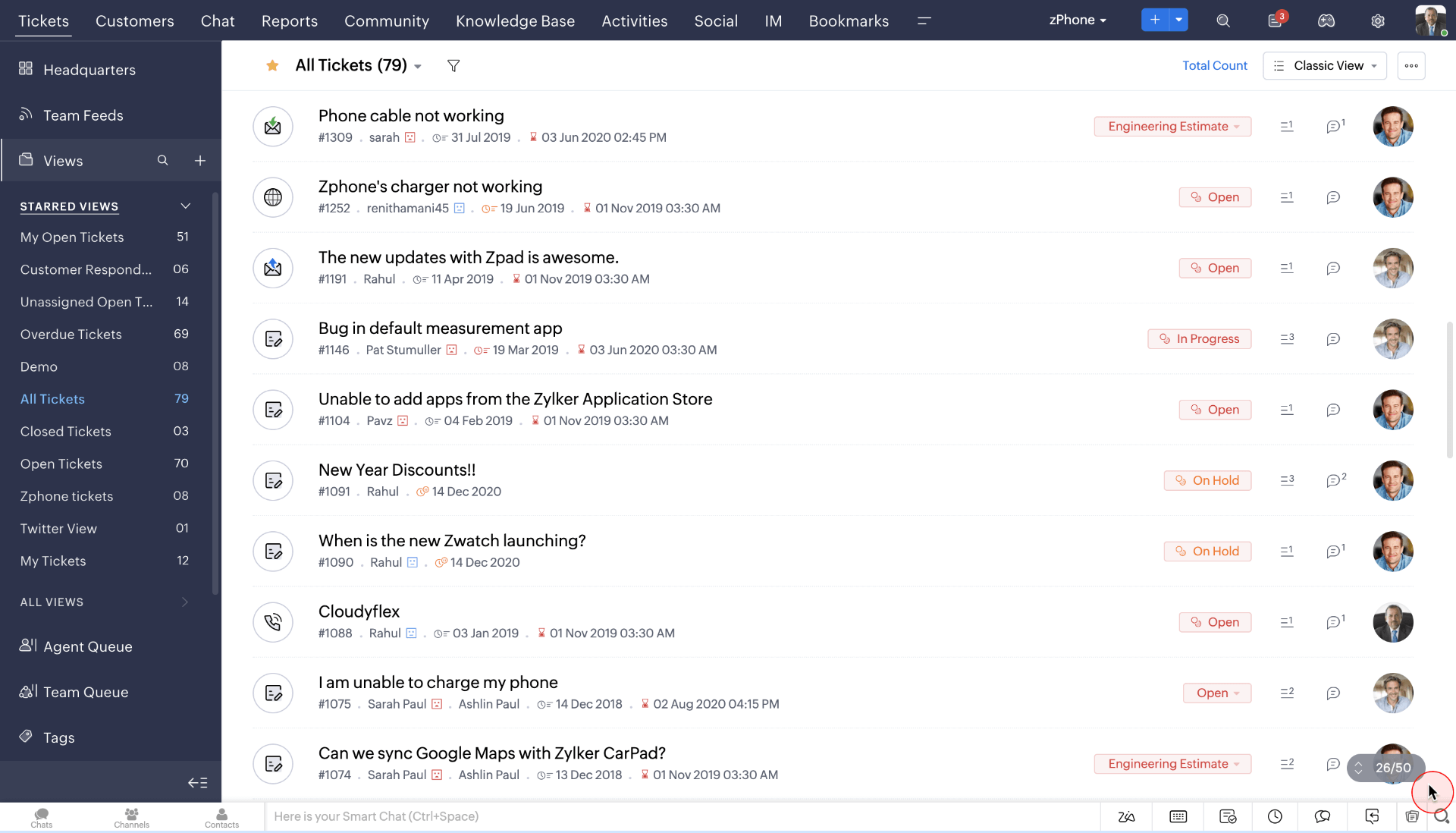
Zoho Desk is another popular free help desk tool, especially for teams that rely on rich customer context to deliver support. It pulls in requests from email, chat, and social media into a single interface and pairs each ticket with detailed customer history, helping agents respond more effectively.
The free plan is surprisingly robust, offering automation, multi-channel support, and a self-service portal. Zia, the built-in AI, helps with things like tagging tickets and suggesting answers based on tone and sentiment.
While there’s a slight learning curve due to the number of features packed in, some limitations on customization in the free tier might restrict fast-growing teams. Still, for a zero-cost solution, Zoho Desk holds its ground as one of the best free help desk options available.
Pros:
- Time tracking to track how long agents spend on each ticket for better accountability
- Ticket escalation rules to ensure urgent issues are never left unattended
- Multi-language support to offer help in your customer’s preferred language
- Customizable SLAs to align service goals with actual support workflows
Cons:
- Advanced automation and reporting features require paid plans
- Interface and feature setup can feel complex for new users at first
User Rating: 4.5 (Capterra)
Pricing: Paid plans start at $14/user/month (15-day free trial available).
8. HelpCrunch – Best for Creating a Knowledge Base
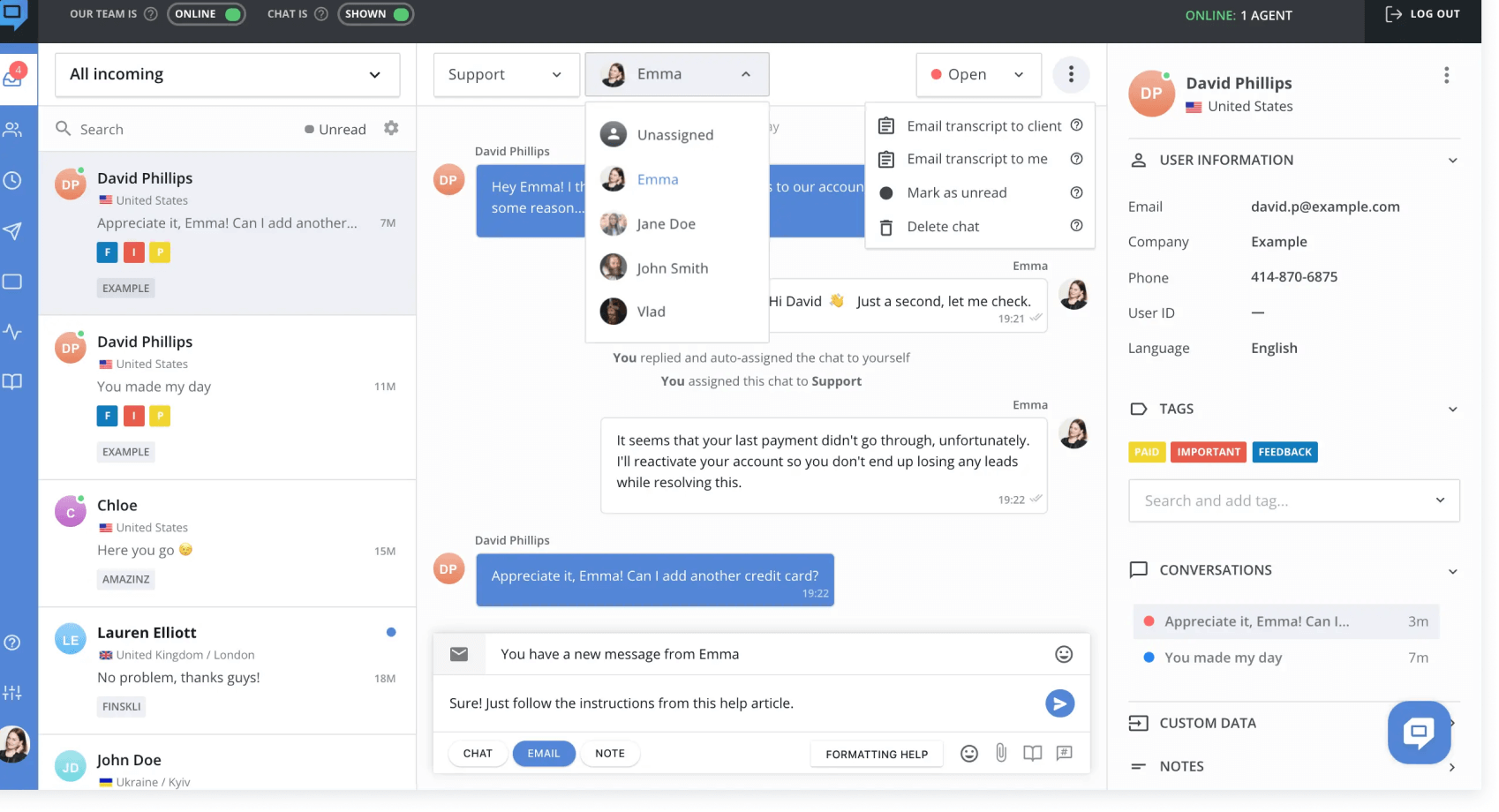
I came across HelpCrunch while looking for a free help desk tool, and it’s been a really good option. It combines live chat, email support, and a knowledge base in one place, which is super handy if you’re trying to manage customer conversations without jumping between tools.
What I like most is how easy it is to create a clean, helpful knowledge base. That makes it perfect if your goal is to help customers help themselves, like reducing basic support requests with self-service.
The free plan gives you live chat, basic automation, and email tools, which is pretty generous. Just keep in mind that some of the advanced features (like detailed reports or complex automations) need a paid plan. But for most small teams, the free features are more than enough.
Pros:
- Multi-language support to help customers in different languages
- Easy-to-use knowledge base builder for creating and managing help articles and FAQs
- Automated email follow-ups to connect with prospects and customers
- Live chat integration to give customers the answers they need instantly
Cons:
- Advanced automation and features behind paid tiers
- Mobile app and some integrations can feel limited
User Rating: 4.8 (Capterra)
Pricing: Paid plans start at $12/user/month (14-day free trial available).
9. LiveAgent – Best for Chat-Based Support
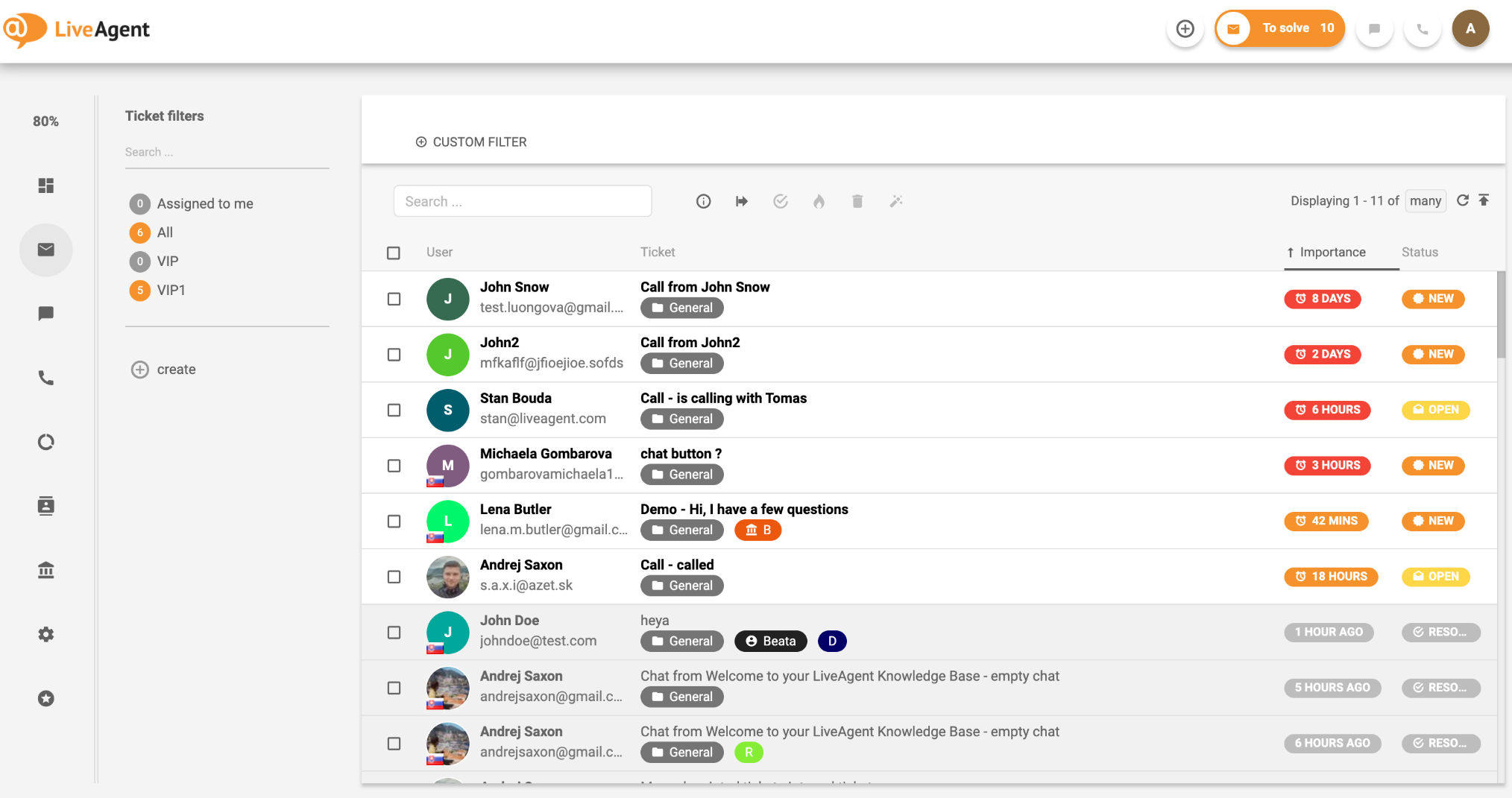
LiveAgent really helped us improve how we support customers, especially through live chat. It’s quick and easy to set up and works great for chatting with visitors in real time. What I liked most was how it handled both live chats and support tickets in one place. That meant we could help people instantly while still managing more detailed questions through email or tickets.
If you’re focusing on chat-based support, this tool is a great pick. The chat widget is super fast, and customers don’t have to wait around for replies. Plus, you can connect LiveAgent to your website, email, and even your social media accounts to handle everything from one dashboard.
On the downside, I found LiveAgent’s dashboard a little old-fashioned. It works fine, but there are a lot of features, so it might feel a bit confusing at first, especially if you’re new to it.
Pros:
- All-in-one inbox to see emails, chats, and social messages in one spot
- Built-in customer profiles to store and view customer info easily
- Quick replies to save time with ready-to-use responses
- Agent collision detection to avoid multiple agents working on the same ticket
Cons:
- Free plan is limited compared to higher-tier features (e.g., advanced automations)
- Customization and workflow complexity may be lower than some dedicated help desk systems
User Rating: 4.5 (G2)
Pricing: Paid plans start at $15/user/month (30-day free trial available).
10. SysAid – Best for AI-Powered ITSM
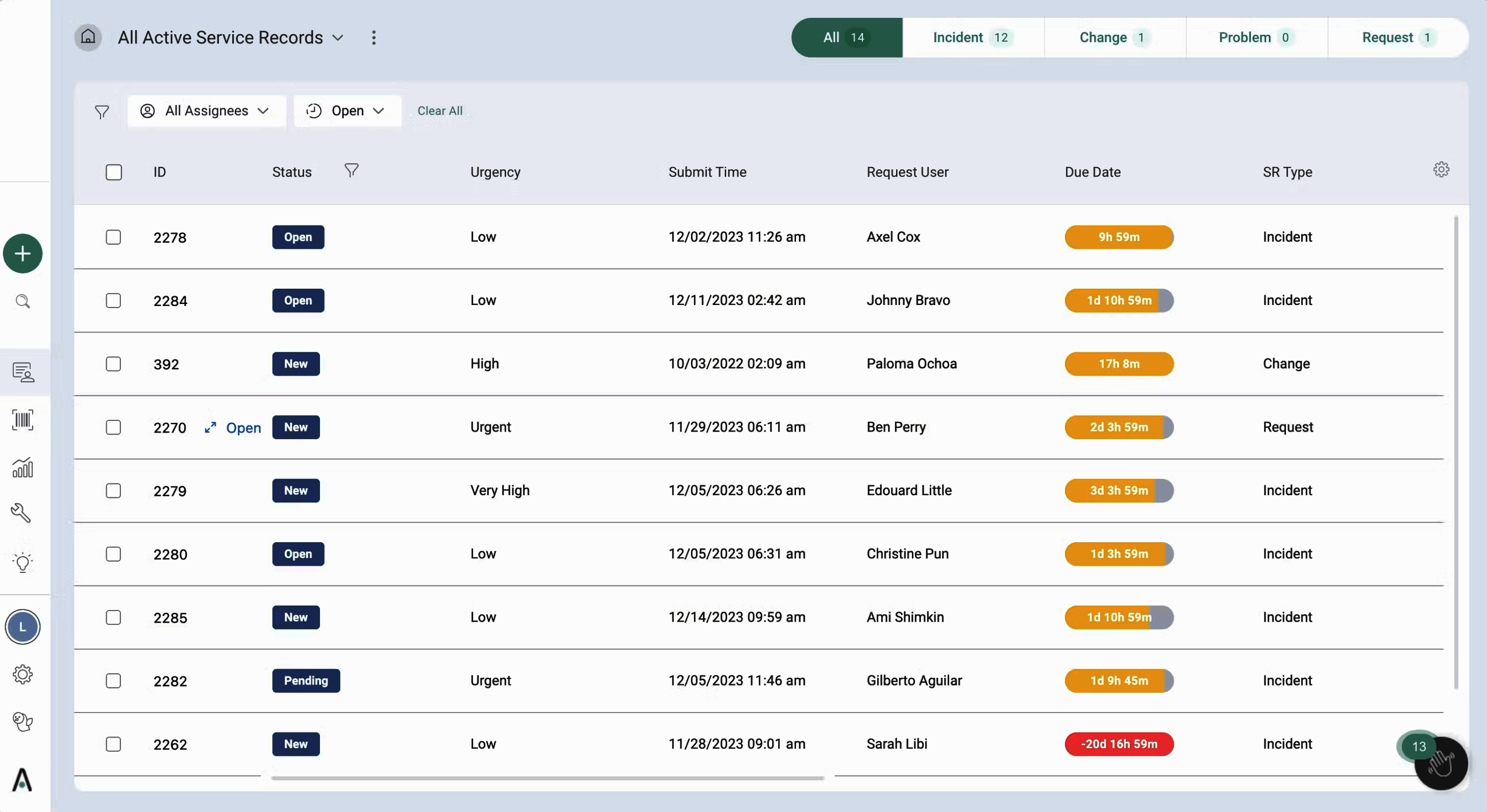
I’ve used a fair share of help desk tools over the years, and SysAid quickly became one of the more capable options I worked with, especially when I needed something efficient without a steep learning curve. It’s built for IT service management, and its AI-powered automation really makes a difference.
For a free help desk solution, it delivers solid value. Features like automated ticketing, IT asset management, and remote access made our support flow feel less chaotic. I especially appreciated how it handled common requests like password resets on its own.
If I had to point out a downside, the interface feels a little dated in places, but once you get used to it, everything works reliably and as expected.
Pros:
- Smart ticket automation to auto-sort and route tickets to the right technician, saving tons of manual effort
- Remote control access to fix user issues in real-time, no matter where they are
- Screen recording hotkey to send screen recordings directly with one click
- Codeless UI configuration to customize without writing a single line of code
Cons:
- Some integrations and advanced features may require additional setup or cost
- Mobile app functionality may be more limited compared to desktop
User Rating: 4.5 (G2)
Pricing: Custom pricing (30-day free trial available).
11. Hiver – Best for Gmail-Based Support
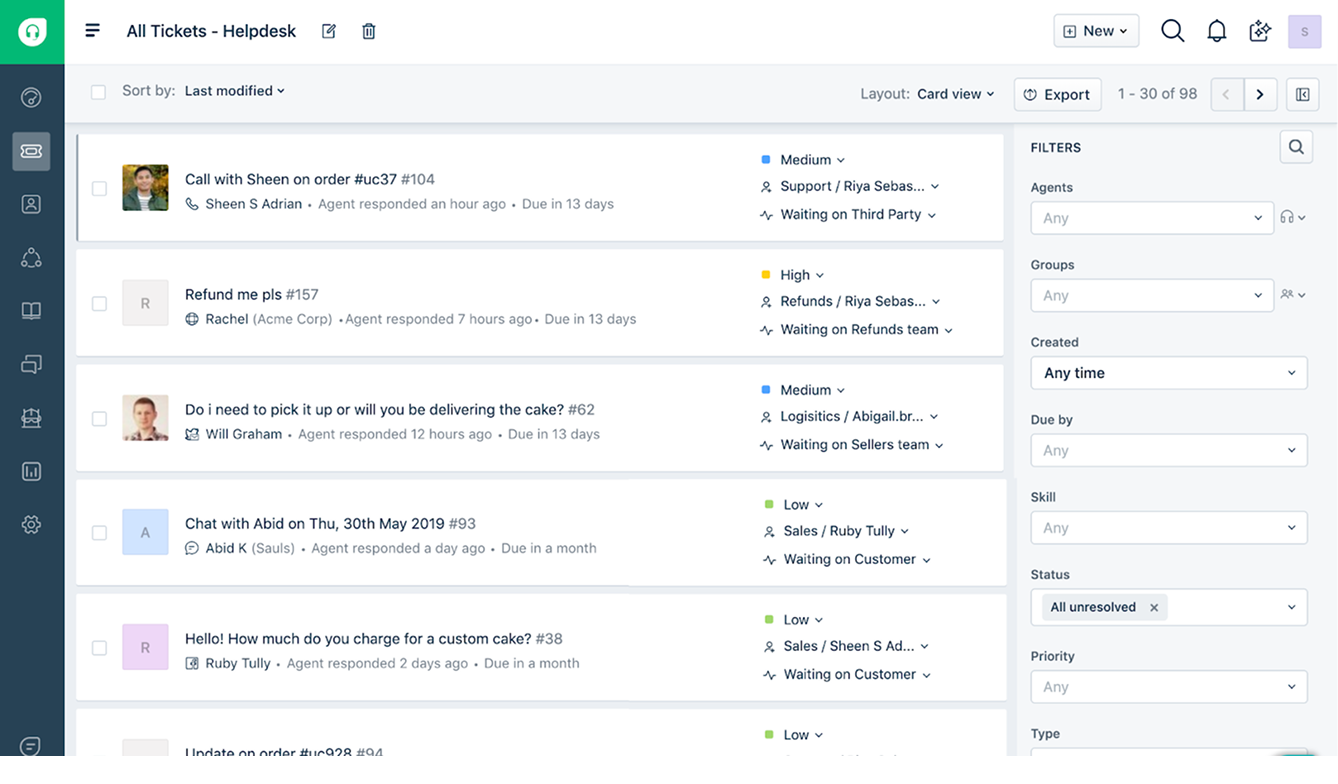
I found Hiver when I was looking for a help desk tool that didn’t require a big change in how my team worked. Since we were already using Gmail every day, Hiver was a perfect fit. It turns your Gmail inbox into a fully functional help desk, and I honestly found it really easy to get started.
You can assign emails to teammates, add notes, avoid reply overlaps, and track performance all without leaving Gmail. The free plan works well for small teams that need the basics.
However, some advanced features like automation aren’t included in the free plan. But for a simple and effective support setup inside Gmail, it works really well.
Pros:
- Email notes to add private notes to emails to coordinate with your team
- Email tags to organize your emails with easy-to-use labels
- SLA tracking to keep an eye on response times
- Customer context panel to see the full conversation history in one place
Cons:
- Works best with Gmail, so non-Google teams may find it restrictive
- Occasional performance and inbox loading issues reported by users
User Rating: 4.7 (Capterra)
Pricing: A free plan is available with limitations. Paid plans start at $19/user/month.
Free Help Desk Software: My Top 3 Picks!
Still deciding? Here are my top 3 picks to make your choice easier.
1. ProProfs Help Desk
ProProfs Help Desk offers a complete set of features even on its free plan, including smart ticket labeling, automation, and AI-powered assistance. With features like sentiment analysis, and easy ticket forms, it makes support smooth and efficient. It also helps cut down repeat queries with self-service options.
2. Spiceworks
Spiceworks is a completely free, open-source help desk tool well-suited for internal IT support teams. It offers reliable features like basic automation, and a built-in knowledge base to streamline responses. While it requires self-hosting and manual upkeep, it’s a solid choice for those comfortable managing their own system.
3. HelpCrunch
HelpCrunch offers a solid free help desk solution that combines live chat, email support, and a knowledge base in one platform. It’s especially useful for small teams aiming to reduce tickets through self-service. While advanced features require a paid plan, the free tier covers the essentials well.
What Makes Free Help Desk Software So Useful for Growing Teams
Free help desk software isn’t just a budget-friendly option. It’s often the smartest way to bring structure into support before things spiral. From my experience, even a simple free tool can completely change how a team handles customer questions, internal requests, and day-to-day service operations. Here are some of the biggest benefits.
1. Keeps Every Support Request Organized
When support lives inside a shared inbox, it’s easy for emails to get missed or answered twice. A free help desk turns every query into a ticket, so nothing slips through. You get a clear view of what’s open, what’s pending, and what’s resolved, all in one place.
2. Helps Small Teams Respond Faster
Speed matters, especially when customers expect quick answers. Free help desk software helps teams assign tickets, prioritize urgent requests, and avoid delays caused by confusion. Even with limited staff, you can stay responsive and deliver support that feels professional and reliable.
3. Improves Accountability Across the Team
One of the biggest challenges in support is knowing who owns what. With a help desk system, each ticket is assigned to a specific agent or department, creating clear ownership. This supports collaborative resolution by keeping everyone aligned, reducing internal back-and-forth, and ensuring customers aren’t left waiting because each request has a clear owner and shared visibility.
4. Makes Support Scalable as You Grow
What works at 20 customers won’t work at 200. Free help desk tools give startups and growing businesses a foundation early, so support doesn’t become chaos later. You can build workflows, track recurring issues, and gradually adopt more advanced features when the team expands.
5. Provides Useful Insights Without Extra Cost
Even free plans often include In-depth reporting that helps you understand support volume, response times, and common customer issues. These insights are valuable because they show where your team is stretched, what questions keep coming up, and where automation or documentation can reduce workload over time.
FREE. All Features. FOREVER!
Try our Forever FREE account with all premium features!
Key Features to Look for in Free Help Desk Tools
Free help desk tools can vary widely in functionality. Some only handle basic ticketing, while others include automation, reporting, and self-service options. Choosing the right one means focusing on features that improve organization, speed, and support quality. Here are the most important ones to look for.
1. AI-Powered Suggestions & Ticket Summarization
AI is quickly becoming a must-have, even in free help desk tools. The best platforms can suggest replies, summarize long ticket threads, and help agents respond faster without starting from scratch. This is especially useful when support volume increases and your team needs quick context. Even basic AI assistance can reduce manual effort and improve response quality.
2. Omnichannel Support
Customers don’t just reach out through email anymore. They use live chat, web forms, social channels, and sometimes even messaging apps. A good free help desk tool should bring all these conversations into one place. Omnichannel support helps teams avoid scattered communication and ensures every request is tracked, no matter where it starts.
3. Ticket Prioritization
Ticket prioritization is one of the most important features to look for, even in a free plan. Not every support request deserves the same urgency. A good help desk should let you mark tickets as high, medium, or low priority based on issue type, customer importance, or keywords like “urgent” or “payment failure.” This helps teams focus on what matters first and prevents critical tickets from getting buried.
4. Knowledge Base Integration
A built-in knowledge base can dramatically reduce repetitive support work. The best free ticketing system lets you create help articles, FAQs, or internal documentation that agents and customers can access quickly. When integrated into the ticketing workflow, it helps teams respond with consistent answers and empowers customers to solve simple issues on their own.
5. Reporting & Support Analytics
Even if you’re starting small, visibility matters. Free help desk tools should offer reports on ticket volume, response times, and agent workload. These insights help you understand where bottlenecks exist and how support performance changes over time. Strong reporting turns support from guesswork into a measurable, improvable business function.
Start Smart: How to Select the Best Free Help Desk Tool
Choosing the best free help desk software isn’t just about cost. The right one should fit your support workflow today and still scale as your team grows. Here are the key factors to evaluate before picking one.
| What to Check | Why It Matters | Quick Tip |
|---|---|---|
| Ticketing Basics | The tool should reliably turn emails and requests into trackable tickets | Start with tools that support email-to-ticket by default |
| Ease of Use | A complex system slows down small teams instead of helping them | Pick something your team can adopt in one day |
| Ticket Prioritization | Helps urgent issues get handled first instead of buried in the queue | Look for priority tags or keyword-based sorting |
| Automation & AI Support | Reduces repetitive work and speeds up responses | Even basic AI reply suggestions can save hours weekly |
| Omnichannel Support | Customers reach out through more than just email today | Choose a tool that supports chat, forms, or social channels if needed |
| Knowledge Base Integration | Self-service reduces ticket volume over time | Prefer tools that let you link articles directly in replies |
| Reporting & Visibility | Without insights, support becomes guesswork | Check for dashboards showing response time and open tickets |
| Upgrade Path & Limits | Free plans often come with caps on users or features | Make sure scaling won’t require a painful migration later |
Yes, You Can Deliver Delightful Support for FREE!
Managing customer support doesn’t have to mean juggling endless emails or spending money you don’t have. The best free help desk ticket software can help you organize requests, respond faster, and stay on top of your workload—all without extra costs.
The options we’ve looked at come with different strengths, but what matters most is choosing a tool that won’t limit you as your needs grow. Whether it’s handling more tickets, working across different channels, or tracking performance, you need something that can grow with you.
Personally, I would recommend the ProProfs Help Desk for its forever-free plan, which includes premium features like AI-powered ticketing, automation, reporting, multichannel support, and more. It’s simple, effective, and lets you do more without needing to upgrade right away.
FREE. All Features. FOREVER!
Try our Forever FREE account with all premium features!

 We'd love your feedback!
What did you like & how can we make it even better?
 Thanks for your feedback!
 Ask Your Question
Have a question? Get expert help to make your decision easier.